Botanical Name: Urginea indica (Roxb.) Kunth.
Family: Liliaceae
Introduction:
In folk it is using for piles, anuvasanam by the oil / ghrita preparation of this plant more useful.
Doctor R. R. Seth of the Jiwajii Industrial Research Laboratories in Gwalior, India, reported that a wild-onion plant known as Urginea indica may turn out to be most useful. A search was made to obtain a cheap substitute for grain starch, which was not cheap in India because any kind of grain itself was so essential for food. The search seemed to be successful, in that a white powder suitable as a substitute starch for sizing and finishing in textiles was obtained.
Names in different Indian languages
| English | Indian Squill, Sea Onion (red and white varieties). |
|---|---|
| Hindi | |
| Kannada | |
| Malayalam | Kattulli |
| Sanskrit | Vana-palaandu |
| Tamil | Narivengayam |
| Telugu | |
| Unani | Unsul-e-Hindi, Isqueele– Hindi, Piyaaz-Dasti, Piyaaz– Sahraayi, Jangali Piyaaz |
| Folk |
Synonyms
Kolakanda, Vajrakanda
Drimia indica Roxb. non-(Wt.) Baker
Classification according to Charaka, Susrutha & Vagbhata
| Charaka | |
|---|---|
| Susrutha | |
| Vagbhata |
Varieties & adulterants – (CV – controversy, AD – adulterants)
Urginea maritime – substitute
Urginea coromandeliana Hook. f. non-Wight -CV
Morphology
Tuberous herb from Liliaceae family.
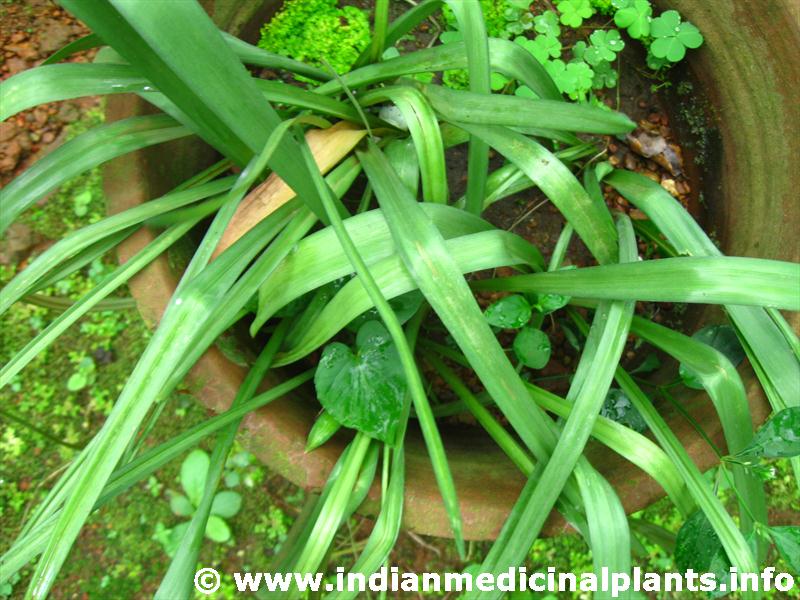
A herb resembling onion herb, bears flowers first followed by the leaves.
Leaves – simple, fleshy , sheathed ,18 -50 cms long and 05 cm wide
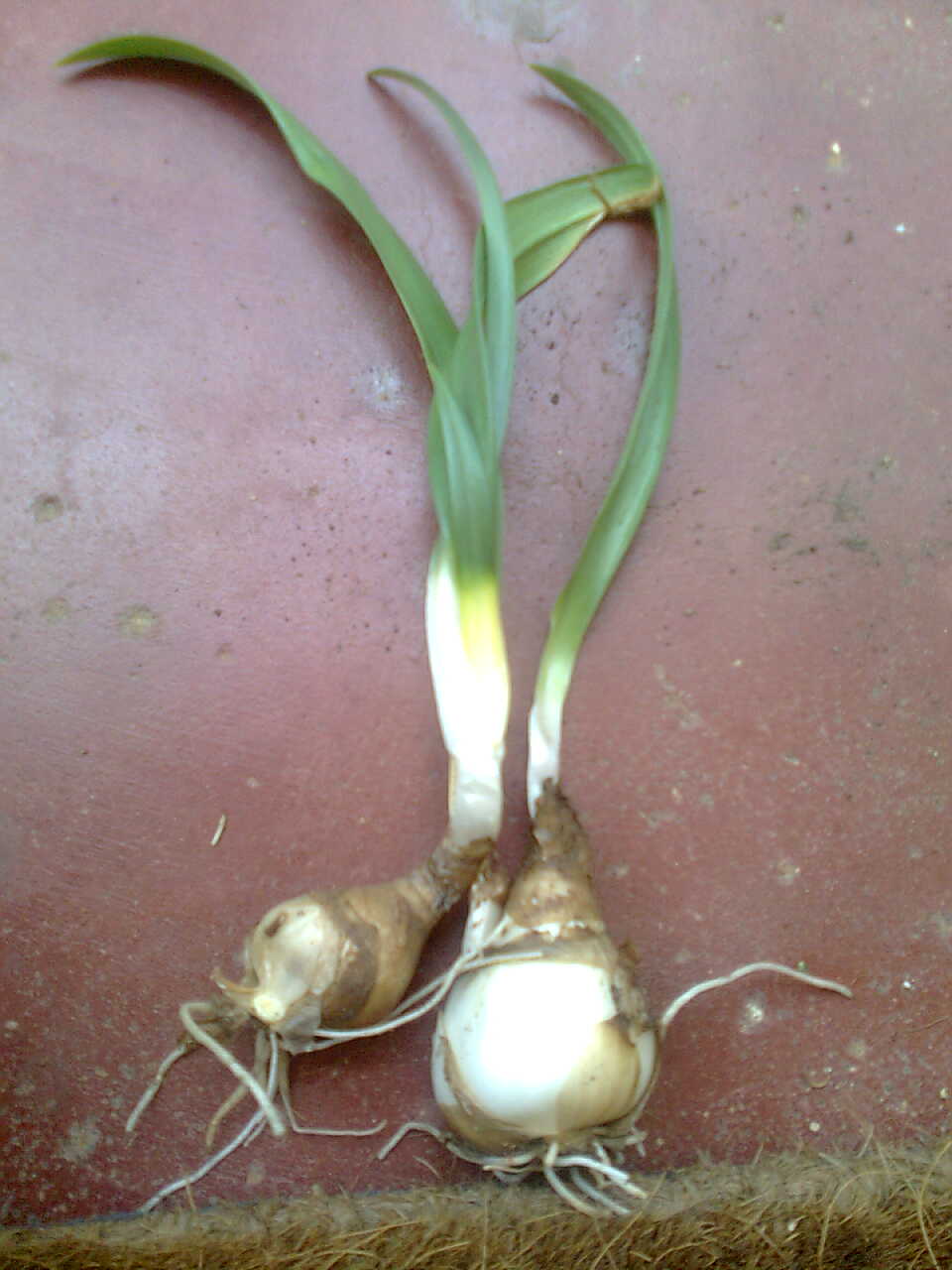
Flowers – white, bell like arise from the flowers silk Ovary is divided into 3 compartments each containing 5 to 10 flat seeds, Tuber – small like lemon. It bears flowers in summer and fruits in rainy season.
Distribution & Habitat
Western Himalayas, Konkan and along the Coromandel Coast.
Chemical constituents:
scillarens A and B. Bulb, stigmasterol, sitosterol , campesterol, hentriacontanol, octacosanoic acid.
Karma –
Diuretic, cardiac tonic, blood purifier , hair tonic, antispasmodic, emetic
Srotogamitva
Dosha : Vataghna, kaphaghna, pittakar.
Dhatu : Rakta (cardio tonic, expectorant, useful in pruritus and skin disorders). meda (useful in renal disorders), rasa (emmenagogue).
Mala : Mutra (useful in retention of urine) and excreted through skin, breath and urine.
Indication:
Asthma, cough, piles, skin disease, cholesterol , hair fall
Part used:
Bulb
Dosage:
Powder 2-4 g
Decoction 50-100 ml
External uses : Vitiates blood and develops ulcers. Its paste is used in skin disorders and oedema.
Internal uses : Cardio tonic but intravenous administration increases the blood pressure, but orally it dose not increase that much pressure. It is useful in chronic cold, chronic cough and chronic lung disorders. It stimulates renal tubules and thus increases urine formation. hence it is used in kidney disorders and retention of urine. Being an emmenagogue it is used in dysmenorrhoea and ammenorrhoea. Also useful in pruritus and skin diseases.
Therapeutic Uses:
- Taila prepared by bulb useful in piles as anuvasana vasthi