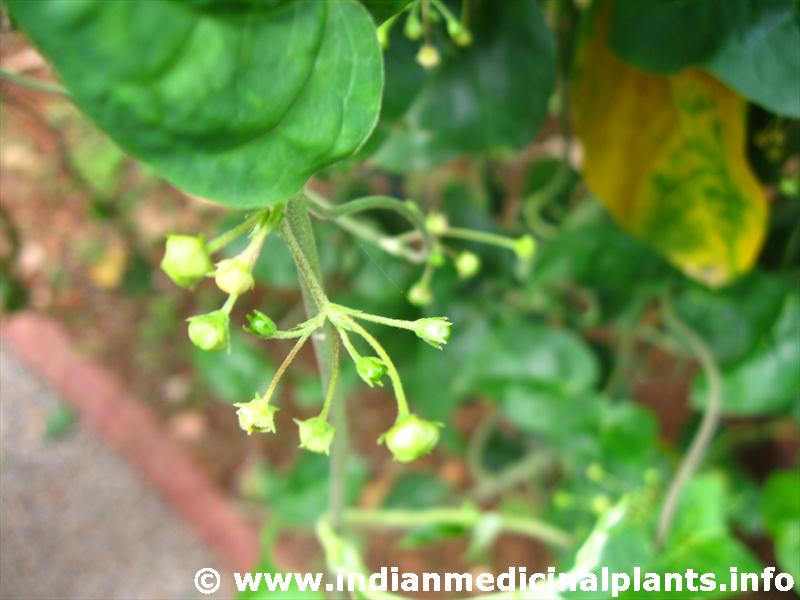
Botanical Name: Tylophora indica (Burm. f.) Merrill.
Family: Asclepiadaceae
Introduction:
In folk it is used for whooping cough and asthma.
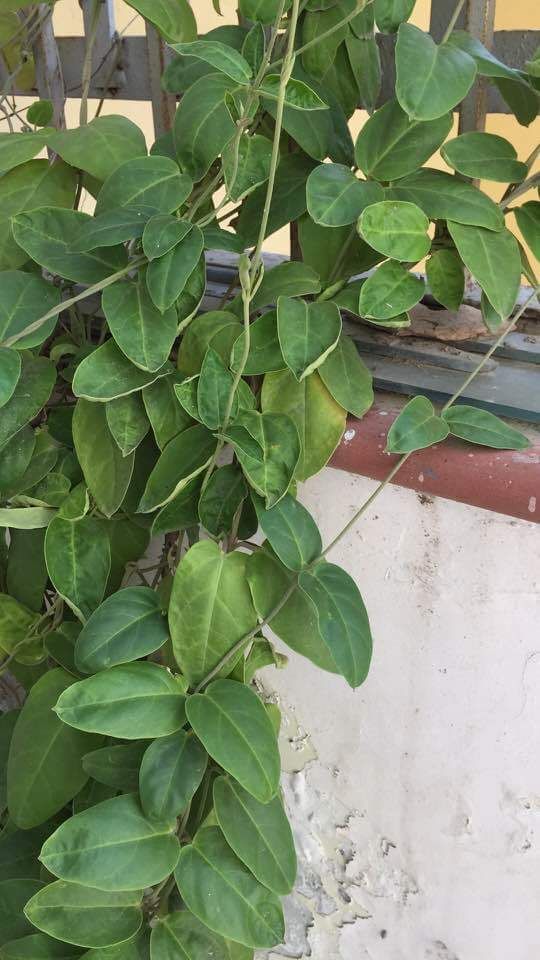
Names in different Indian languages
| English | Emetic Swallow Wort, Indian or Country Ipecacuanha |
|---|---|
| Hindi | Jamgli pikvam, antamul |
| Kannada | Nipaladaberu, antamula |
| Malayalam | Vallippala |
| Sanskrit | Lataksiri |
| Tamil | Nay Palai, Nangilaippiratti, nancharuppan |
| Telugu | Vettipala, verripala, tellayadala, kakapala |
| Unani | |
| Folk |
Synonyms
Antamuula, Muulini, Arkaparni.
Tylophora asthamatica Wight & Arn.
Classification according to Charaka, Susrutha & Vagbhata
| Charaka | |
|---|---|
| Susrutha | |
| Vagbhata |
Varieties & adulterants – (CV – controversy, AD – adulterants)
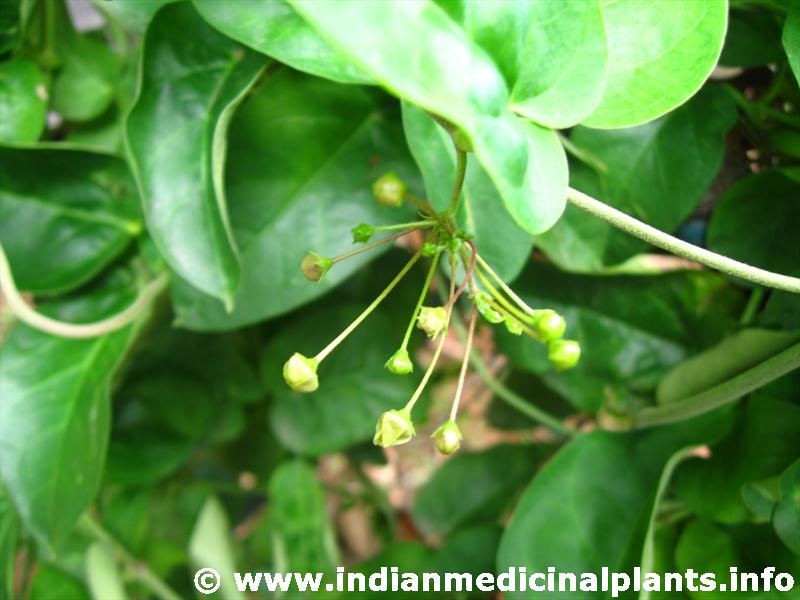
Morphology
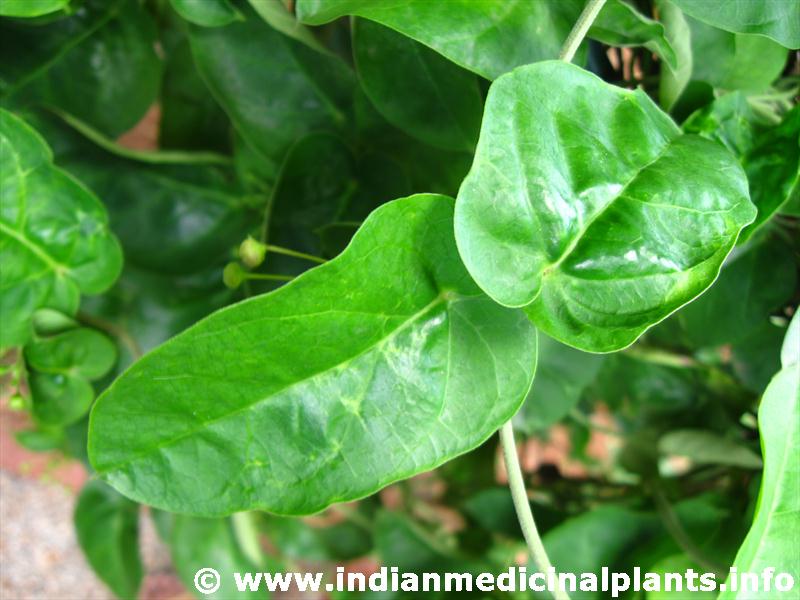
It is a lactiferous slender, climber
Leaves – simple, opposite, oblong-ovate
Flower- yellowish, umbel
Fruits – fusiform
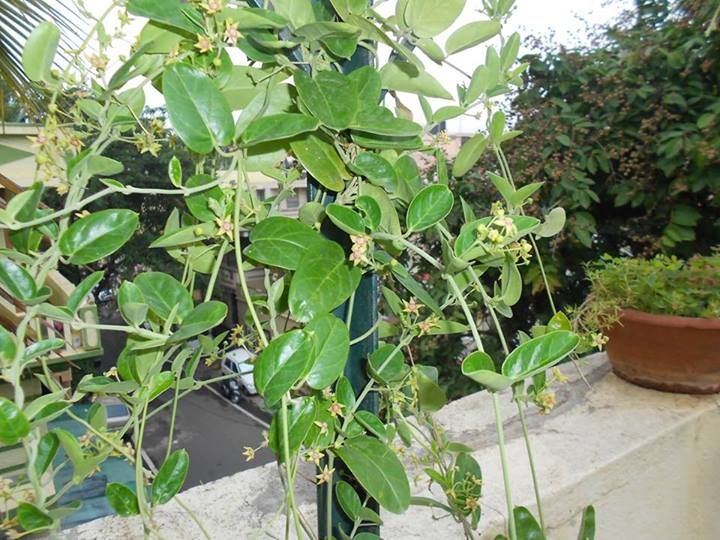
Distribution & Habitat
All over India
Chemical constituents:
tylophorine, tylphorinine, desmethyl tylophorine,desmethyl tylophorinine,
, kaempferol. tylophorinidine and gamma-fagarine.
Karma –
Anti cancerous, emetic, aromatic, purgative, expectorant
Chemical named Desmethyltylophorine gave good results in leukemia.
Indication:
Asthma, gout, ulcer, piles, whooping cough
Part used:
Whole plant
Dosage:
Leaf juice 10-15 ml
Powder 2-4 g
Decoction 50-100 ml
Therapeutic Uses:
- Decoction useful in whooping cough.