Botanical Name: Trichosanthes lobata Roxb.
Family: Cucurbitaceae
Introduction:
It is one of the drug among the Panca Tiktas in Rasa Tarangini. it is used extensively as diet and medicine. Patola root used in during the eighth month of pregnancy.
Which is bitter in taste. But this may be only a substitute of wild and bitter variety of T. dioica which my be scarcely available. Similarly Patoli has mostly been mentioned and used by Vagbhata for either of the two bitter varieties of Patola.
Names in different Indian languages
| English | Wild snake gourd, bitter snake gourd |
|---|---|
| Hindi | Jamgali cicinda, tikta cicinda |
| Kannada | Kiripodla, kadupodavalu |
| Malayalam | Patolam, kattupadolam, kaypanpatolam, peppatolam |
| Sanskrit | Patola, tikta patola |
| Tamil | Kattupeppudal, peppudal |
| Telugu | Cetipotla, cedupotla, kommupotla |
| Unani | Parwal |
| Folk |
Synonyms
Trichosanthes villosula Cogn.
Classification according to Charaka, Susrutha & Vagbhata
| Charaka | Trptighna, Trsnãnigrahana |
|---|---|
| Susrutha | Patolãdi, Aragvadhadi |
| Vagbhata | Patolãdi, Aragvadhadi |
Varieties & adulterants – (CV – controversy, AD – adulterants)
1. Madhura (sweet) – vegetable herb
2. Tikta (bitter) – medicinal herb
3. Patolikã
4. Patoli
5. Rãja Patola
6. T. dioica – vegetable herb [CV]
7. T. cucumerina –wild – medicinal herb[CV]
8. T.anguina
M. dioica
M. sahyadrica
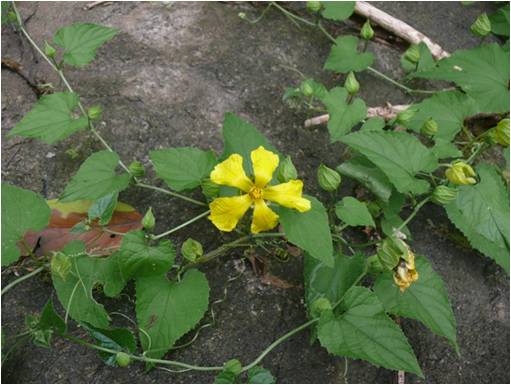
T. cucumerina
T. nervifolia
Morphology
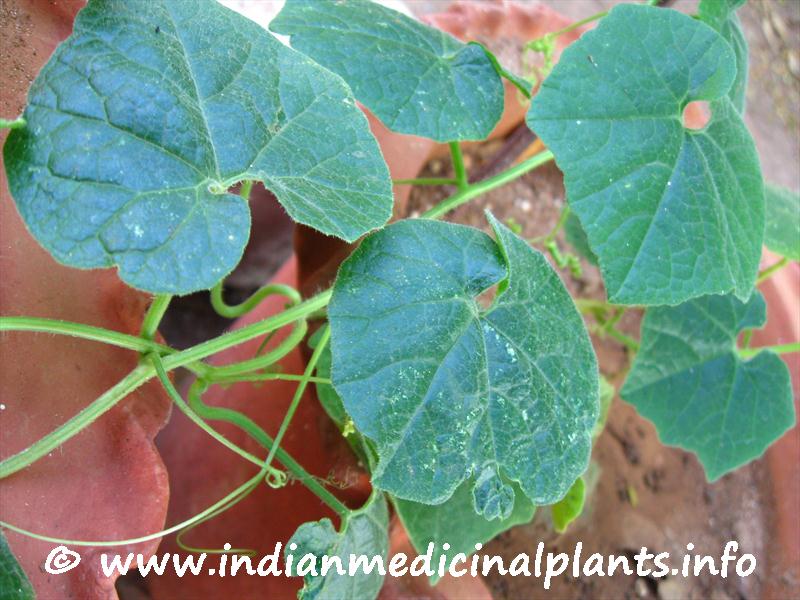
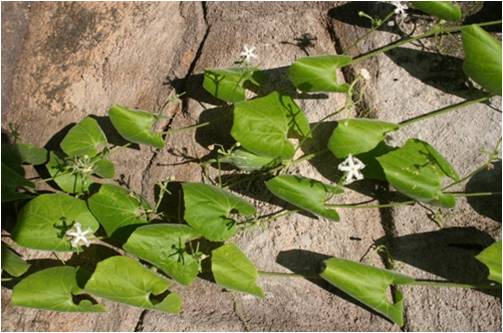
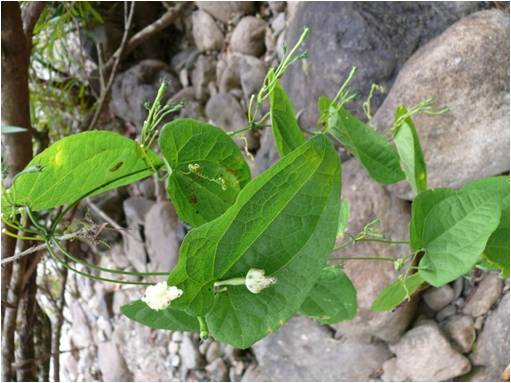
A annual monocecious climber with wooly stem having tendrils .
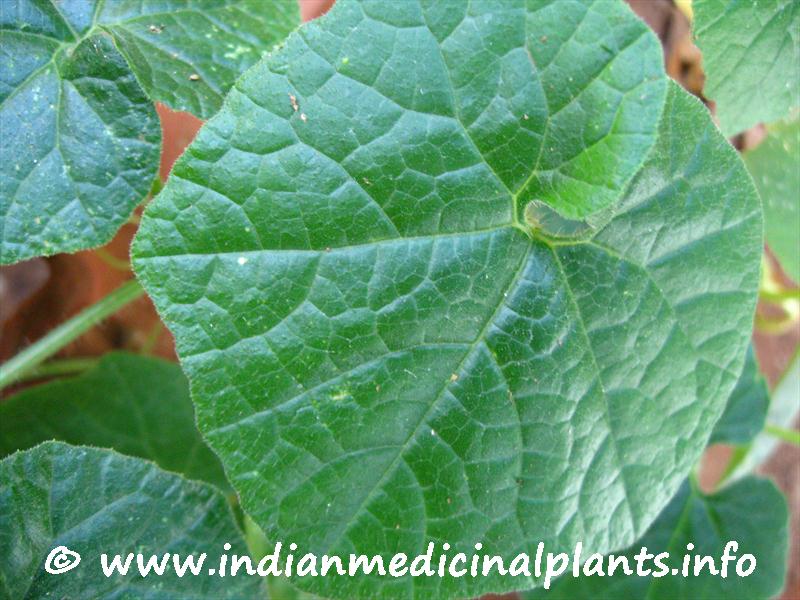
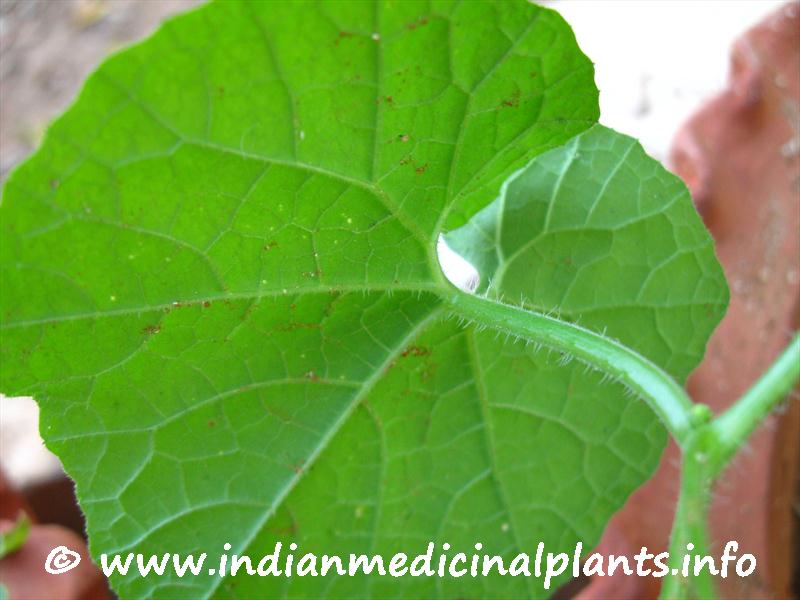
Leaves- simple, 7.5 x 5 cm., ovate-oblong, cordate, acute, rough on both surfaces, more or less 5 lobed.
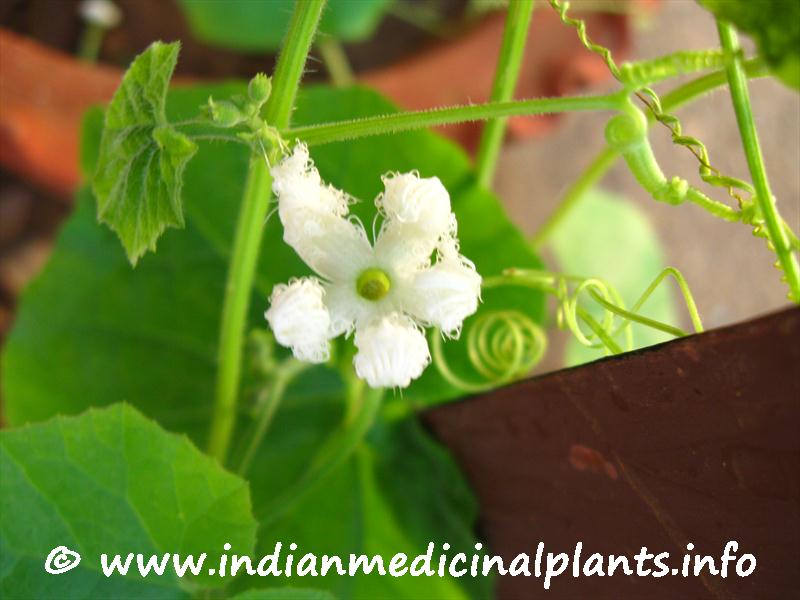
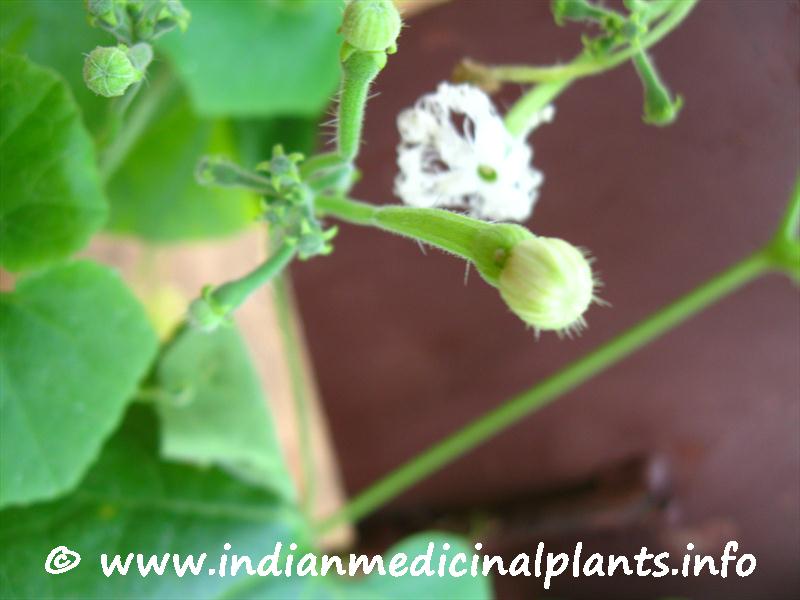
Flowers- white, dioecious. Male in axillary raceme females axillary. Calyx-tube about 5. cm. Anthers free.
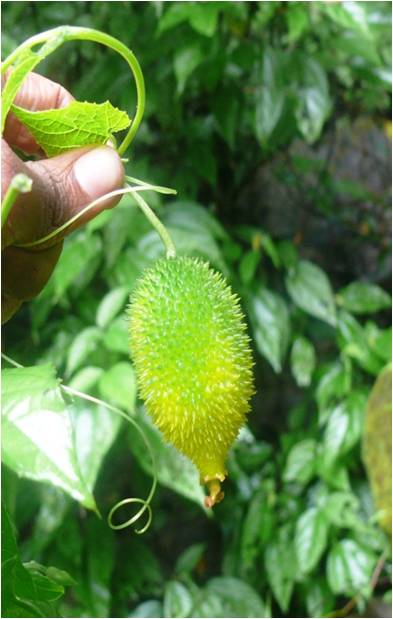
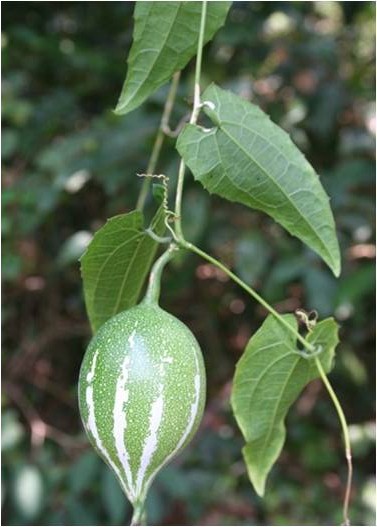
Fruit- ovoid, fusiform, oblong or nearly spherical, smooth, orange-red when ripe, seeds half-ellipsoid, compressed, surrounded with red pulp.
Distribution & Habitat
Throughout the plains of India, extending to Assam and Bengal, western Ghats. Also cultivated.
Chemical constituents:
nicotinic acid, riboflavin, vitamin C, thiamine, hydroxytryptamine, cucurbita-dienol. Colocynthin, trichosanthin, hentriacontane
Seed— linoleic, oleic, oleostearic (trichosanic) acids.
Root— Colocynthin, trichosanthin; hentriacontane.
Properties:
Rasa Tikta, Katu
Guna Laghu, Rüksa
Virya Usna
Vipaka Katu
Karma Kapha-pittahara, Varnya, Dipana, vranahara, hridya,
Virechana (root),
Laxative, thermogenic, digestive, caediotonic, suppurative, anti inflammatory, hypoglycaemic.
Different properties are present in the different parts of the same plant. The best example of it is patol.
Patola leaves – pittaghna; stalk – kaphaghna; fruit – tridoshaghna; root – purgative. Patol leaves are used in rasagat, raktagat, mamsagat jwara (Charaka – Jwara chikitsa);
According to Bavamisra
Leaf – pittahara
Fruit – Tridosha hara
Root – purgative
Srotogamitva:
Dosha : thridoshaghna
Dhatu :raktha, mamsa, Shukra
Mala :purisha
Organ : liver, skin
Indication:
Jvara, kustha, kandu, amlapitta, daha,visarpam, arsas
hyperacidity, jaundice, haemorrhoids, skin disease,psoriasis,boils, cough, asthma, ulcers, fever
Part used:
Whole plant
Dosage:
Leaf juice 10-15 ml
Powder 2-4 g
Decoction 50-100 ml
Internal uses:
External uses Root paste is used in headache as it is an analgesic, helps in wound cleansing and healing. Leaf juice is applied over wounds and alopecia.
Internal uses
Digestive system It improves the taste of mouth, appetite and also digestion. It is cholagogue, improves peristalsis, laxative and anthelmintic. Higher dose causes vomiting and diarrhoea (purgation). It is used in anorexia, loss of appetite, liver disorders, jaundice, ascites, piles and helminthiasis. Leaf juice induces emesis.
Circulatory system Patol is blood purifier and anti-inflammatory, so it is use in blood disorders and inflammations. Used in jaundice, as it is purgative.
Respiratory system Kaphaghna. Useful in cough caused by kaphadosha. The whole plant strengthens the chest.
Skin Kushtaghna. Effective in skin diseases with pruritus.
Temperature It is used in pittajwar’. typhoid, chronic fever.
Satmikaran Useful in weakness and has an antidote property.
Important Yogas or Formations:
Patolãdi ghrtam, Patolãdya cürna, Patoladi-kvatha, Patolãdi gana kvãtha, Kalingadi kvãtha.
Therapeutic Uses:
- leaf use with jaggary for jwara
- decoction useful to cleaning ulcer.
Descriptions on Ayurveda books / Nighandu:
1
2
3
4
5
6
7
8
9
10
11
12