Trianthema Portulacastrum


Botanical
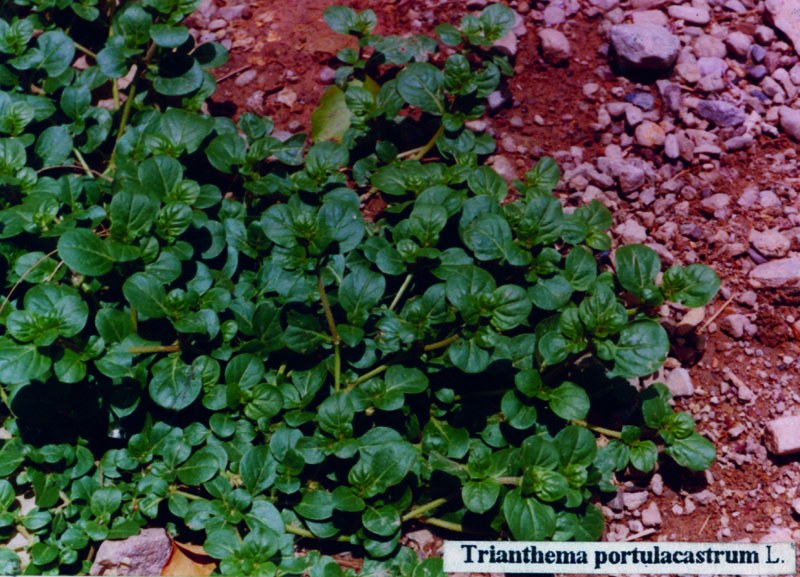
Name: Trianthema portulacastrum Linn.

Family: Aizoaceae

 Introduction:

 This drug used  as diuretic. It is also used as a Rasãyana. Some people says this plant is not punarnava it is varshabu, according to them  punarnava and varshabu are different.


image1

x

Names in different Indian languages

English Horse Purslane.
Kanada
Malayalam Vella Thazhutama
Hindi
Telugu
Unani Biskhaparaa
Sanskrit Varshaabhu, Sveta punarnava ( CV)
Tamil Sharunai
Folk Pathari, Bisakhaparaa


Synonyms

Varshaabhu, Vrshchira, Vishakharparikaa, Shilaatikaa, Shothaghni, Kshdra.

 Trianthema monogyna Linn

Classification according to Charaka, Susrutha & Vagbhata


Charaka Vayahsthpana, Kasahara, Anuvusanopaga, Svedopaga
Susrutha Susruta Vidarigandhadi
Vagbhata


Varieties & adulterants – (CV – controversy, AD – adulterants)  


1. Rakta – B. diffusa

2. Sveta Punarnavä – Trianthema portulacastrum

3. B. erecta – white coloured species

4. B.repens

5. T. monogyna

6. Boerhavia verticillata – substitute

Morphology

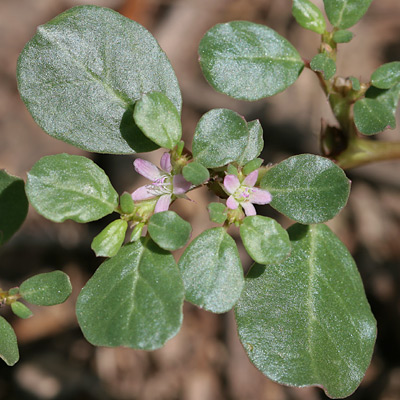
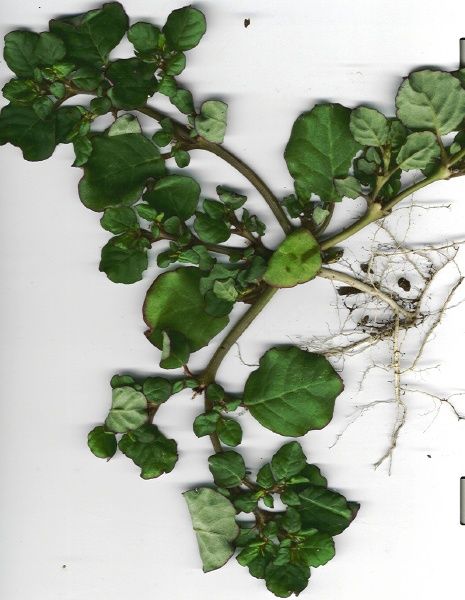
A diffuse prostate glabrous herb. stems often tinged purplish.

Leaves— opposite, broadly obovate, unequally paired.

Flowers—solitary, white or pinkish; calyx lobular.

Fruits— Capsules, containing one seed.

Seeds— reniform, dull black.


Chemical Constituents

trianthemine, punaranavine , ecdysterone,


image2

Properties—

Rasa  Madhura  Tikta  Kasäya

Guna Laghu, Rüksa

Virya  Usna

Vipaka Katu

Karma– Kapha-vata hara, sothahara, tarpana,rasayana,balya,  Dipana

Diuretic, anti-inflammatory, antiarthritic, spasmolytic, antibacterial, cardiac stimulant,  laxative, expectorant, anti inflammatory, analgesic, expectorant, CNS depressant, abortifacient.


Indications— sopha, Pandu, Visaroga, Raktapitta, Vriddhi, Udara, Hridroga, svãsa, mutrachrichra

inflammatory renal diseases, nephrotic syndrome,leucorrhoea, scabies, urinary tract infection, cough, constipation, myalgia, anaemia, bronchitis.  

Part Used— Whole plant, root, leaf.

Dosage Fresh juice 5-10 ml, powder 1-3 g.

External uses : Punarnava is used for local application in the form of poultice or fomentation in edema. The juice of its leaves is used in the eyes for topical application.


image3

Internal uses

Digestive system : It is given internally in agnimandya, toxicity, ascites and constipation. A dose of 3 grains is used to induce vomiting.

Circulatory system : Useful in heart disease, anaemia, oedema. Leaves vegetable is consumed to reduce oedema.


respiratory system : Useful in cough, asthma and urahkshat.

Reproductive system : Menorrhagia, (root decoction of red variety is used). Seeds are, aphrodisiac. Eye diseases: Cataract, chronic conjunctivitis, blepharitis, (roots rubbed in honey is locally applied).

Urinary system : Acts as a diuretic in dysurea.

Skin : Useful in reducing swelling and foul smelling in skin disorders.

Temperature : Antipyretic, especially in quaternary fever.

Satmikaran : As a rasayan therapy in- general debility.

Antidote to snake poison and rat bite (used internally).

Srotogamitva

Dosha Vatakaphaghna (red -variety increases vata).
Dhatu : Rakta – meda (anaemia), rakta (useful in bleeding disorders ,jaundice.

mala : Mutragami.
Organs : Heart, respiratory tract.
(hogweed vegetable – mainly used to reduce oedema).


Important Yogas or Formations

Punarnavadi Kvãtha, Punamavarista, Punarnavãdi mandura, Punãrnavadi taila, Punarnavã rasayana. Punarnavashtak, Punarnavasav

Important research work  going on


(1) cholesterol and blood sugar level

(2) haemostatic effect

(3) diuretic activity

(4) anti-inflammatory activity

(5) Cardio tonic effect

(6) fibrinolytic activity

(7) chronotropic effects

(8) hepatoprotective activity

(9) effect on calcium channel


Therapeutic Uses—

(1) Nidränãsa— Decoction of Punarnavã is very useful (H. S.).

(2) Sotha— Ghee prepared with the decoction and paste of Punarnava is given (C.D.).

(3) Alarka visa— sveta Punarnavã is given with Dhattüra fruits (A.S.Ut. 46)

(4) Plihodara— sveta punarnáva root is pounded with rice- water and given orally.

Descriptions on Ayurveda books / Nighandu:

1

2

3

4

5

6

7

Leave a Comment

Your email address will not be published. Required fields are marked *

Scroll to Top