Botanical Name: Tinospora cordifolia (Willd.) Miers ex Hook. f. &Thoms.
Family: Menispermaceae
Introduction:
It is one of the non-controversial drug used in Ayurvedic medicine. It used for Grãhi, Väta hara, Dipaniya, Kapha-Raktahara and Vibandhahara , Medhya Rasayãnas
Names in different Indian languages
| English | Tinospora, gulancha tinospora |
|---|---|
| Hindi | Gulanca, giloy, amrta |
| Kannada | Amrtaballi, yuganiballi, madhuparni |
| Malayalam | Chittamrtu, amrtu |
| Sanskrit | Guduci, amrta |
| Tamil | Amrutavalli, cintilikkoti |
| Telugu | Tippantiga, amrta |
| Unani | Gilo, Gulanchaa. Sat-e-Gilo (extract) |
| Folk |
Synonyms
Ayurvedic, Guduuchi, Guduuchikaa, Guluuchi, Amrita, Amritaa, Amritalataa, Amritavalli, Chinnaruuhaa, Chinnodbhavaa, Madhuparni, Vatsaadani, Tantrikaa, Kundalini. Guduuchi sattva (extract).
Classification according to Charaka, Susrutha & Vagbhata
| Charaka | vayahathapana, daha prasamana, trshna nigraha, stanya sodhana |
|---|---|
| Susrutha | guducyadi, patoladi, valli pancamula, kakolyadi, aragvadhadi |
| Vagbhata | guducyadi, patoladi, aragvadhadi |
Varieties & adulterants – (CV – controversy, AD – adulterants)
1. Gudüci
2. Kandodbhavã Gudüci. – Tinospora sinensis / T. malabarica – [AD]
3. Padmã Guduci
4. T. Crispa – [CV]
Morphology
T. cordifolia
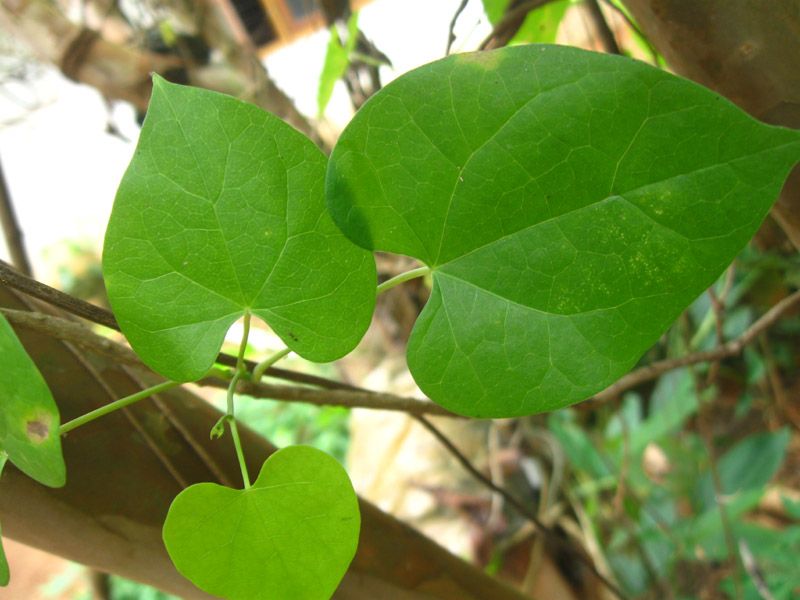
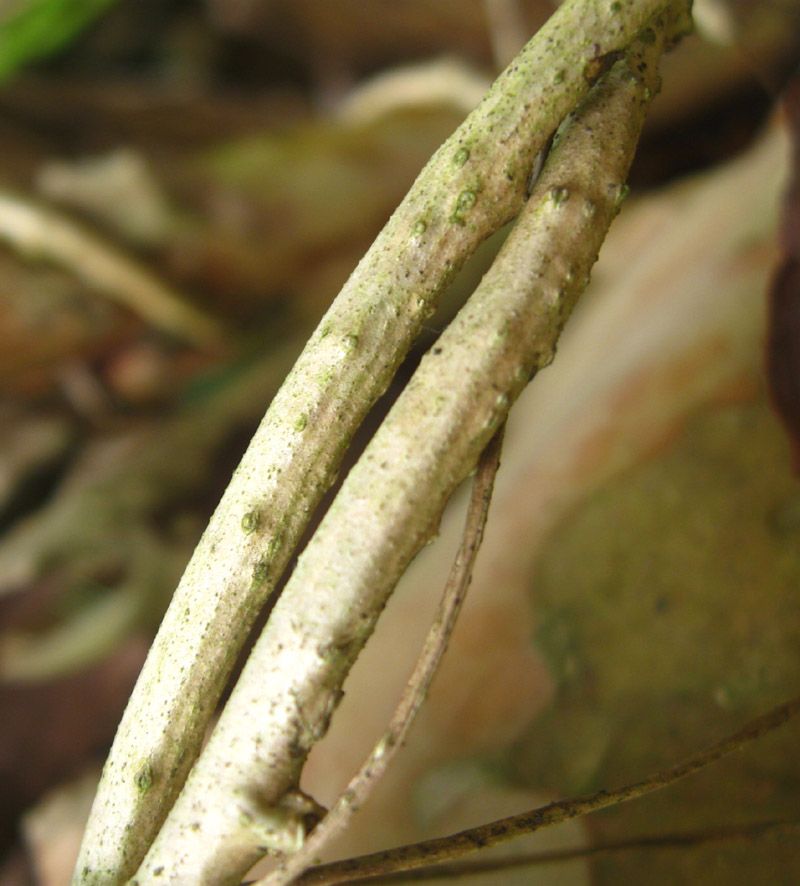
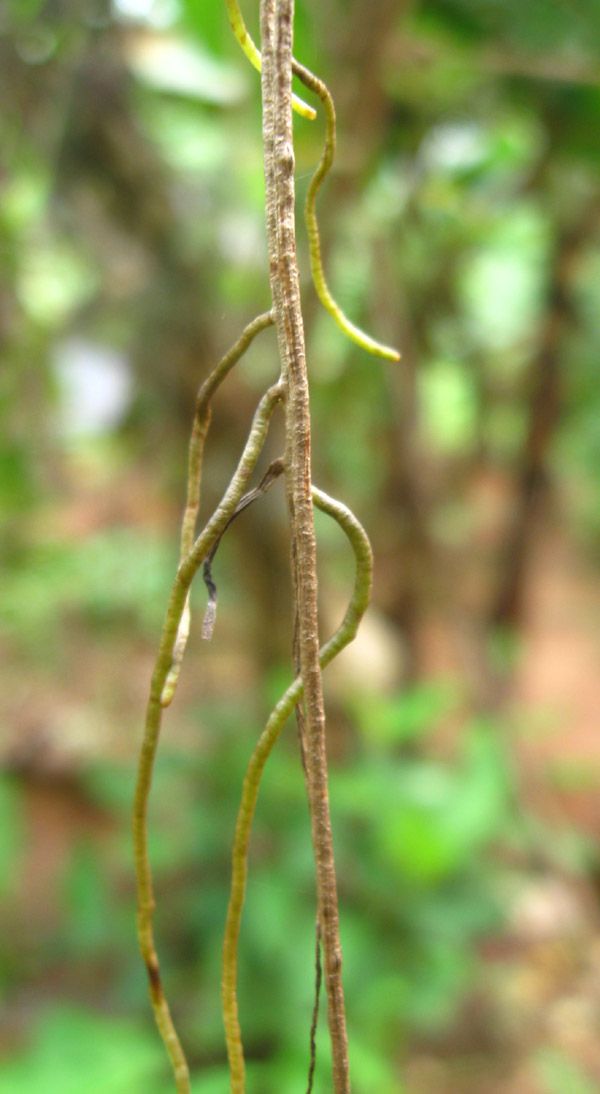
It is a large climber with succulent, corky and grooved stems; branches possess slender pendulous fleshy roots.
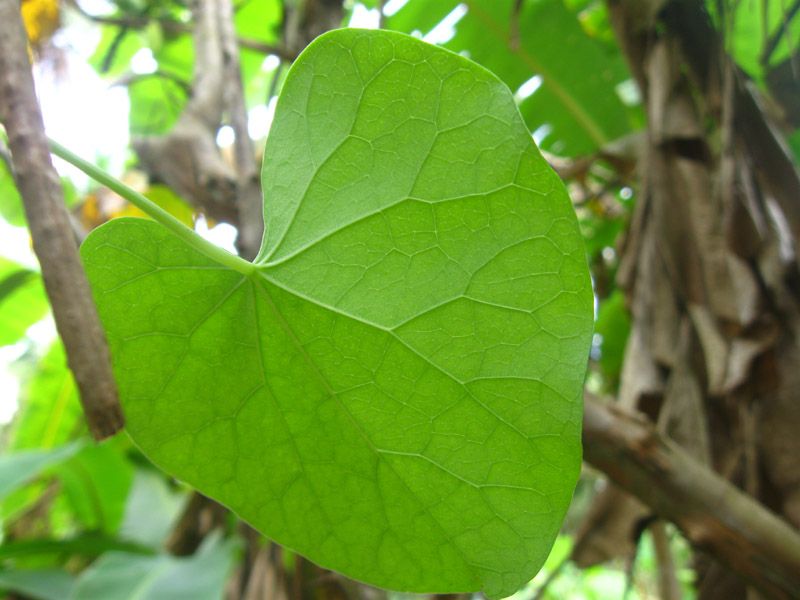
Leaves- membranous, glabrous, 5-10 cm long, cordate; petiç.2.5-7 cm long.
Flowers- in racemes of about 5 cm; axillary, terminal or from the old wood, pale yellowish white in colour.
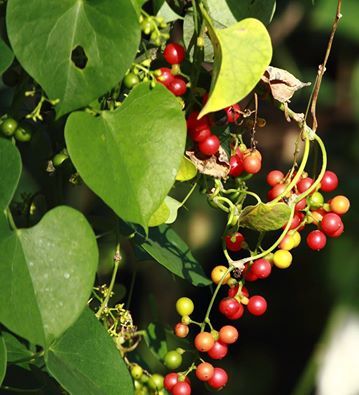
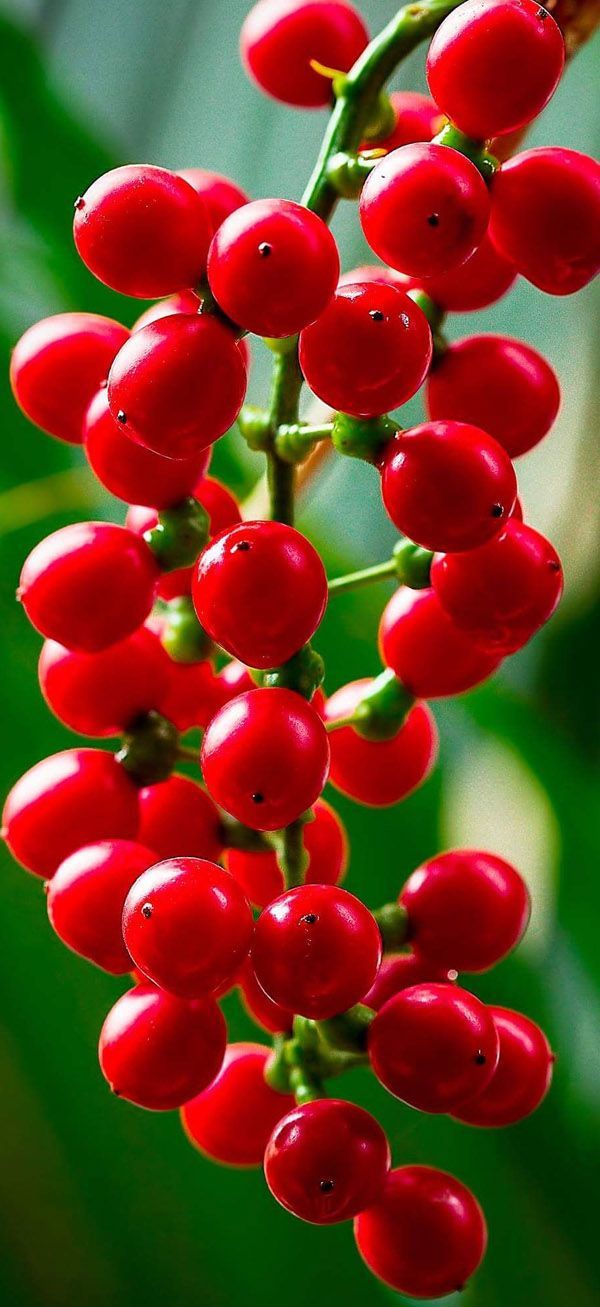
Fruits- carpels, dorsally convex, ventrally flat, size of a large pea.
T. sinensis
It is a large climber with 2 cm diameter stem, old branches are smooth and shining, more or less warty light coloured papery bark, yong parts covered with whitish hairs.
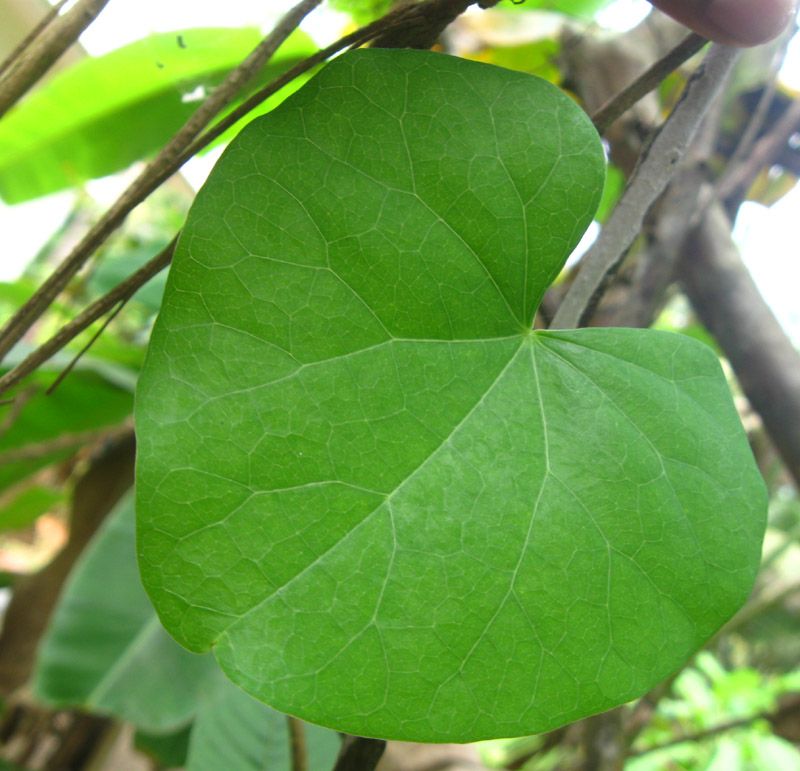
Leaves- membranous, sparingly pubescent above, broadly ovate-cordate,8-24 cm long, petioles 6-14 cm. long, striate.
Flowers- arranged in pseudo racemes arising from the old branches, simple, pedunculate, yellowish green coloured.
Fruits- drupes 1-3, scarlet or orange coloured.
Distinguishing microscopic characters of T. cordifolia & T. sinensis—
| Tissue | T. cordifolia | T. sinensis |
|---|---|---|
| 1.Schlerenchymatous sheath |
Become disintegrated into scattered irregular patches in the cortical region. | Broken into areas capping the vascular bundle and remain persistent even after further screening growth. |
| 2.Crystal | Absent | A large crystal of calcium oxalate is present within the lumen of each cork cell. |
| 3.Mucilage cells | More | Less . |
| 4. Vascular strands | Fewer | Greater |
| 5. Xylem | well developed, in each strip of vascular strand |
Poorly developed |
| 6. Pith |
very narrow and composed of thin walled cells |
– |
7. Starch content |
More | Comparatively poor. |
Distribution & Habitat
Both species are distributed almost throughout India.
Cultivation— Propagated by cuttings of stem. It can be grown in almost any types of soil and under varying climatic conditions.
Chemical constituents:
T. Cordifolia—
Berberine,columbin, chasmanthin, palmarin, tinosporon, tinosporic acid, tinosporol
diterpenoid , tinosporin ,Tinosporide ,cordifolide ,Tinosporidine ,beta sitosterol isolated stems; cordifol, heptacosaflol , octacosanol , furanoid diterpene, tinosporide , 1, 8-norclerodene glucosie— tinosporaside, glycosider, cordifolisides A-E and two phenyl propane glycosides ,Isocolumbin, tetrahydropalmatine, magnoflarine and palmatine
T. sinensis —
Berberine,columbin, chasmanthin, palmarin, tinosporon, tinosporic acid, tinosporol , sitosterol, tetracosanoic acid , tinosporin ,Tinosporinone , allyloxyl,dibenoylethane , Kokusaginine ,glucoside,
Properties:
Rasa – Tikta, Kasãya (leaf is considered as Madhura by
Kaiyadeva)
Guna – Guru, Snigdha
Virya – Usna
Vipãka – Madhura
Karma – Tridosa amaka, Medhya, Rasãyan, Dipaniya, Grãhi, Medohara, Kadüghna, Jvara hara, Dãha-prasamana
antipyretic, diuretic, antiperiodic, anti-inflammatory, antirheumatic, spasmolytic, hypoglycaemic, hepatoprotective
Properties of other variety of Gudüci
Rasa— Katu;
Virya— Usna
Vipãka— Katu.
It is especially useful in visa rogas, vatikaa & Paitika.
Srotogamitva:
Dosha : Tridosha.
Dhatu: Rakta, meda. dravdhatu. shukra ( rasayani.)
Mata : Mutra
Part used
Stem, leaf, areal roots.
Dose— Stem powder 3-6g; decoction (1/20) – 50-100 mI; Infusion (1/10) – 30-60 ml; fresh juice 10-20m1; Gudüci Sattva 1-2g;
Indications— Jvara, Trsnã, Vtarakta, Pãndu, Kämalã, Dãha, Prameha, Kushta, Chardi, Krmi, Kandü, Raktãras, Medoroga, Visarpa, Kãsa, Jarã Vyãdhi.
Fever, rheumatism, body pain, cold, skin disease, urinary tract infections, cough, asthma, diabetes, hyper lipidimea, seminal weakness, jaundice, ulcer, liver and spleen disorder
Gudüci Sattva—
The process of Sattva (cold water extract) is not traceable in the Brhat Trayl texts. It is mainly developed during the medieval period. The process involves, cursing of Gudüci stems and extracting in the cold water at room temperature (i.e.; without heating). After repeated extractions the cold- infusion is dried and the obtained solid powder is called as “Guduci Sattva’. It has been in extensive use in India as a valuable tonic, alterative and anti-pyretic.
Internal uses:
Digestive system Useful in thirst, vomiting, loss of appetite, abdominal pain, liver disorders. jaundice, acid-peptic disorder, dysentery and worms. It increases appetite.
Circulatory system : Raktavahasrotogami. Guduchi satva is effective in cardiac debility, blood — disorders. rheumatoid arthritis, splenomegaly. gout and anaemia.
Respiratory system : Useful in cough
Reproductive system : Aphrodisiac being shukragami. snigdha and madhur vipak.
Urinary system : Effective in prameha, mainly in diabetes and disorders of urinary bladder.
Skin : It is used in skin disorders like dermatomes and erysipelas etc. It is also useful in syphilitic ulcer.
Temperature : Juice of Guduci is used in chronic lever and typhoid fever. It reduces burning. normalizes temperature, improves appetite and increases the strength.
Satmikaran : Useful in weakness and good rasayana for all seven dhatus.
Important Yogas or Formations:
Guduchyadi churna, Guduchyadi kwath. Guduci swathva, Ameutarishta, Guduchi Taila
Important research work going on
1. anti-rheumatic and diuretic
2. anti-inflammatory property
3 inhibition of constrictor response of histamine and acetyl choline on smooth muscles
4. Hepatoprotective activity
5. The antioxidant activity
6. serum and tissue cholesterol, phospholipids and free-fatty acids levels.
Therapeutic Uses:
1. Medhya.-. The fresh juice of Guduci (20m1 twice daily) may be used (C.S.Ci.1/1).
2. Jvara.—
(a) Guduci Svarasa (juice) + Satãvari svarass equal parts (l0 ml each) are mixed together and given along with jaggary in vãta jvara (S.S.Ut. 39/174)2.
(b) Decoction prepared with Guduci, Parpata & Amalaki (500- l00 ml) may be administered in case of Pitta Jvara (Ha. Sam.3/ 2/71).
3. Prameha— Guduci Svarasa with honey (A.H.Ci.1216)4.
4. Slipada— Guduci Svarasa along with ginger oil (Taila) is given orally (C.D.42/1 6).
5. Amlapitta-.- Leaves of Gudüci, Nimba and Patola are made into juice and administered along with honey (B. P.Ci.10/16)’.
6. Chardi— Gudüci Hima Kasãya may be given orally along with honey (Bha.Pra,Ci. 17/21).
7. Vãtarakta— Chronic administration of Guduci in either juice or paste or powder or decoction form will definitely cure Vãtarakta (B.P.Ci. 29/41 & V. M. 23/10)