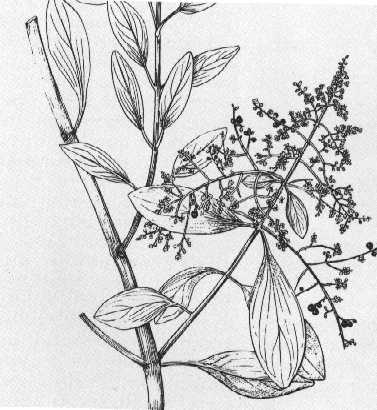
Botanical Name: Salvadora persica Linn.
Family: Salvadoraceae
Introduction:
Latin name : Salvadora = Salvadore – Spanish Botanist persica peach – old generic
In kerala ‘uka’ is used as coffee , but according to most of authors ‘pilu’ is considered as Salvadora persica
Names in different Indian languages
| English | Mustard tree. Salt Bush tree, Tooth Brush tree |
|---|---|
| Hindi | Pilu, jhak |
| Kannada | Goni mara, kankhina |
| Malayalam | uka |
| Sanskrit | Pilu (smaller variety ) |
| Tamil | Perungoli, kotumavali, cittuva |
| Telugu | Gogu, varagoggu, gunia |
| Unani | Miswaak, Araak |
| Folk |
Synonyms
Pilu , Pilukaa, Sransi, Angaahva, Tikshnavrksha.
Salvadora persica L. var. wightiana Verde.
Salvadora indica Wt.
Classification according to Charaka, Susrutha & Vagbhata
| Charaka | |
|---|---|
| Susrutha | |
| Vagbhata |
Varieties & adulterants – (CV – controversy, AD – adulterants)
Large variety is called brihat peelu (Salvadore oleoides).
Salvadora oleoides
Morphology
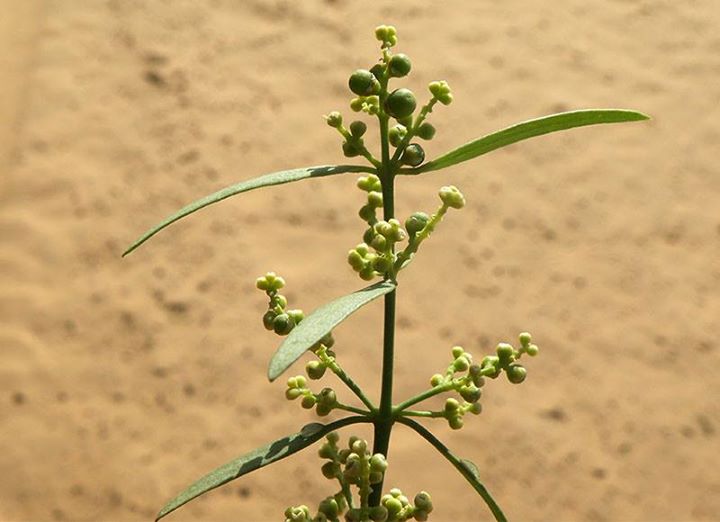
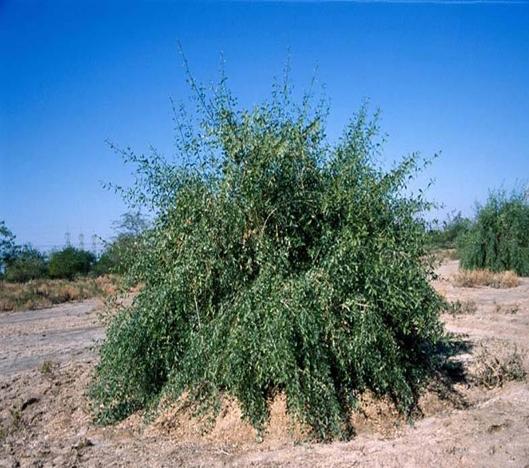
The shrub grows from 0.3 to 1 ml high. Trunk is uneven with numerous branches which are bent downwards and break easily.
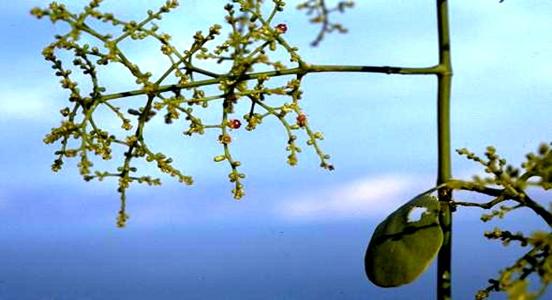
Leaves – facing upwards, fleshy. thick, oval, 2.5 to 5 cm. long and 2.5 cm. broad, flowers greenish, grow at the tip of the branches.
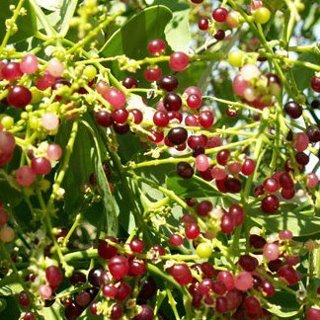
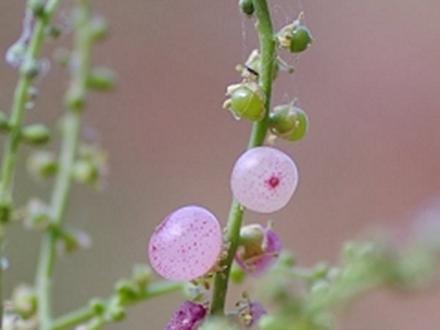
Fruits – very small, fleshy. red on ripening and give a pungent odour on breaking. Fruit contains a single seed.
Flowering is followed by fruiting in summer.
Distribution & Habitat
North India
Chemical constituents:
Gammamonoclinic sulphur, benzyl glucosinolate, salvadourea
Properties:
Guna : laghu, snigdha, tikshna;
Rasa : katu, tikta madhur;
Virya : ushna;
Dosha kaphavatashamak, pitta vardhadk;
Ripe fruit : madhur vipaki and anushna, therefore tridoshahara
Karma –
Arsoghna, vastisamana, vidahi
Carminative,deobstruent, diuretic, lithotriptic, laxative
Srotogamitva:
Dosha : Kaphaghna, vataghna, pittavardhak.
Dhatu : Shukra , rasa.
Mala : Purisha (ripe fruit – laxative), nasal worm infestation.
Organ : Respiratory tract.
Indication:
Gulma, vata raktha, raktapitta, udaram, grahani, krimi
rheumatism, tumours, splenomegaly, scurvy ,cough
Part used:
Whole plant
Dosage:
Leaf juice 10-15 ml
Powder 2-4 g
Decoction 50-100 ml
uses:
External use : Seed oil being anti-inflammatory and analgesic, is used in rheumatoid arthritis for massage. Root bark is irritant and causes rash, itching and burning by applying on the skin. Warm leaves are applied locally in piles, tumours and painful joints. Branches are used as tooth brush. Seed powder and bark of root is applied in snake bite.
Internal uses : Ripe fruit acts as a laxative, seeds as purgative and leaves as purifier, flowers and fruits are inhaled to give relief in common cold and breathlessness by clearing respiratory passage. Fruit juice is used for nasal administration in worm infestation of the nasal cavity. Fruit is used in impotency and root bark in amenorrhoea.