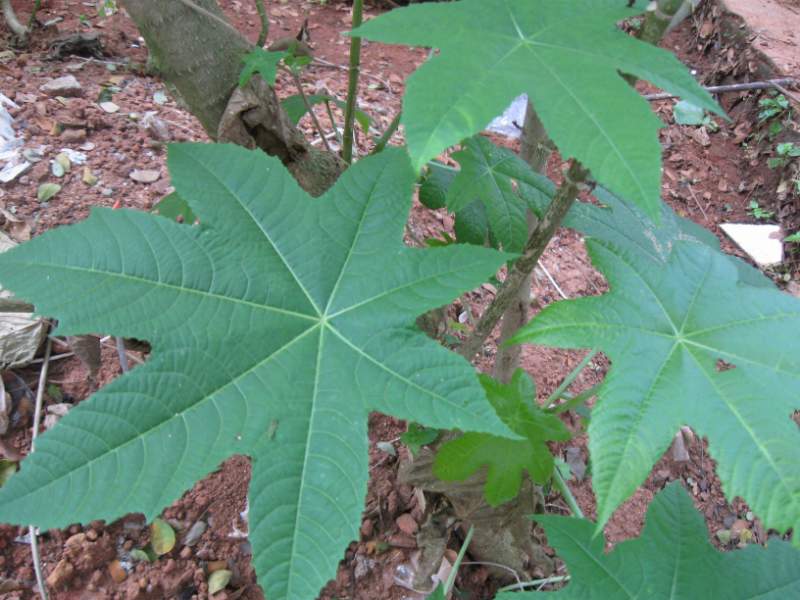
Botanical Name: Ricinus communis Linn.
Family: Euphorbiaceae
Introduction:
Eranda is the one of the most important virechana drug. Leaves giving highly toxic resin.
Names in different Indian languages
| English | Castor seed |
|---|---|
| Hindi | Erand, erandi |
| Kannada | Haralu, manda, oudla |
| Malayalam | Avanakku |
| Sanskrit | Eranda, pancangulah |
| Tamil | Amanakku, kottimuttu, amanakkam ceti |
| Telugu | Erandamu, amudamu |
| Unani | Bedanjeer, Arand |
| Folk |
Synonyms
Chitrabija, Triputi; Tribija, Vaataari, Chanchu, Manda, Uruvaka, Gandharva-hastaa, Panchaangula, Vardhamaana, Uttaanpatraka, Vyaaghrapuchha, Chitraa
Classification according to Charaka, Susrutha & Vagbhata
| Charaka | Bhedaniya, Angmardaprasamana, Svëdopaga |
|---|---|
| Susrutha | Vidirigandhadi, Adhobhagahara, Vatasarngamana |
| Vagbhata | Vidarigandhadi |
Varieties & adulterants – (CV – controversy, AD – adulterants)
1. Sveta (white)
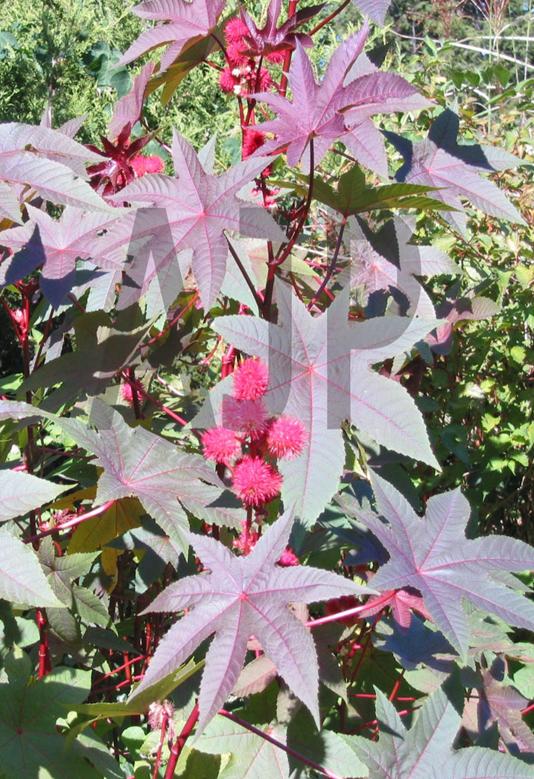
2. Rakta / Citraka (red)
3. Sthula Eranda.
4. Euphorbia acaulis -[CV]
5. Croton tiglium -[CV]
Morphology
An evergreen, glabrous shrub, 2-5 m high.
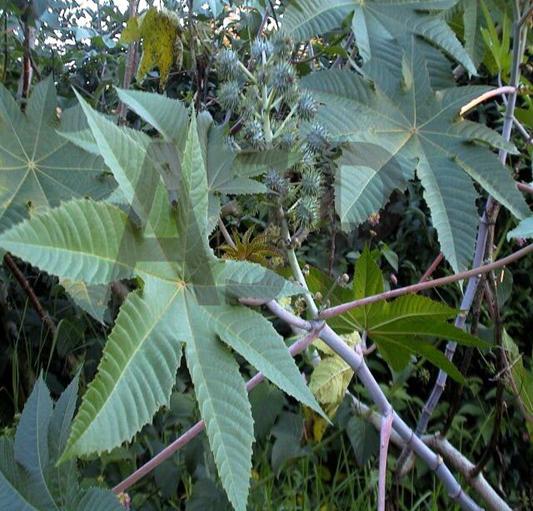
Leaves— palmately 7-many-lobed, loboes oblong to linear, acute or acuminate.
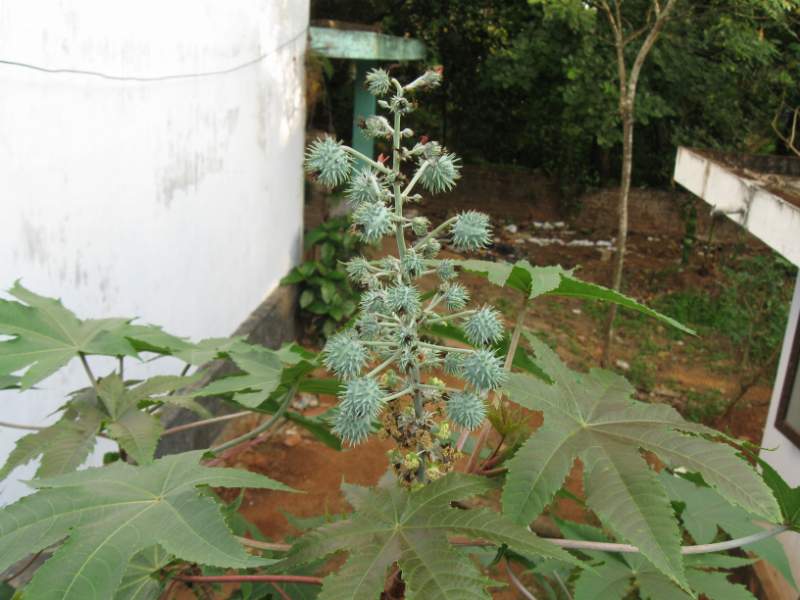
Flowers— in large terminal subpanicled racemes; in a dense globose head of branched filaments and anthers; yellowish
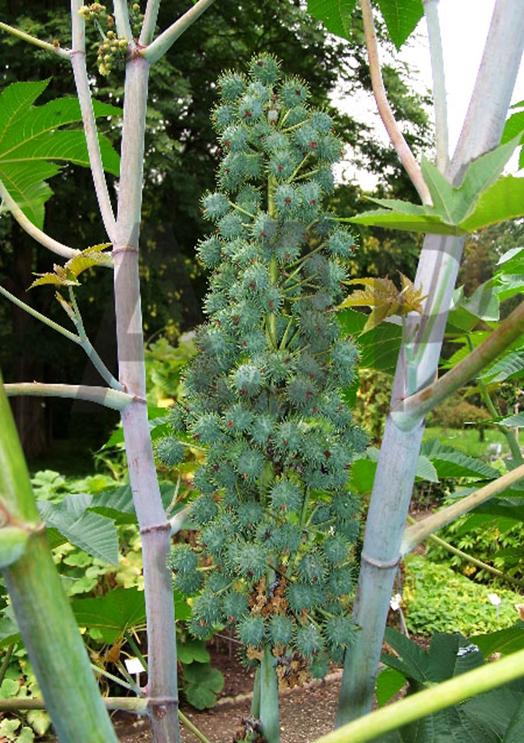
Fruits— Capsules, globosely oblong, smooth or echinate.
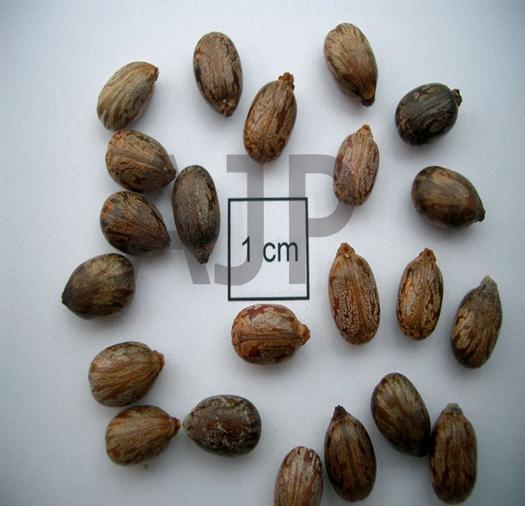
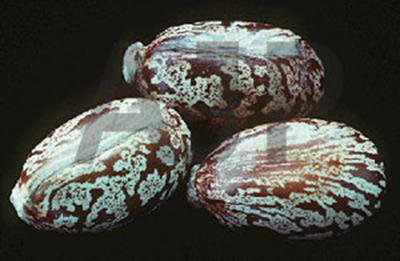
Seeds— oblong, smooth, mottled.
Flowers and fruits occur almost throughout the year.
Habitat & Distribution
Cultivated throughout India and commonly found in the wild.
Chemical Constituents
Seeds & Leaves— ricinine (toxic alkaloid),
Seed coat— Lupeol, lipids, phosphatides etc.
Seed oil— arachidic, ricinoluc, palmitic, strearic acids: hexa decanoic, hydrocyanic & uric acids; squalene and tocopherols etc.
Properties—
Rasa Madhura, Katu, Kasãya
Guna Snigdha, Tiksna, Sukshma
Virya Usna
Vipãka Madhura
Karma Kapha-vãtahara, virechana, Vrsya-(root), deepana, kushtaghna
Purgative, anti-inflammatory, carminative, fever, ascites
Indications— Vãta vyãdhi, kamala, Pliharoga, Udãvarta, Vastisula, Gulma, Antravrddhi, sirahula, Prameha, Vãtarakta etc.
helminthiasis, dysuria, arthritis, pain in the urinary bladder, dysuria, abscesses, lumbago, sciatica
Part Used— Root, leaf, seed, oil
Dosage— Root powder 3-5 g, decoction 50 to100ml; seed 1-5 numbers; oil. 5-10 ml.
Internal uses
Nervous system Due to its properties of decreasing vata. rejuvenating, analgesic. medhya. relieving body ache it is used in diseases due to Vata such as hemiplegia. facial palsy, sciatica, tremors as well as headache and body ache. Castor oil is best as purgative.
Digestive system : It is deepan being ushna veerya. bhedan by tikshna guna anthelmintic by its property of snigdha. Therefore it is used in ascites. abdominal colic. tumours, hepatosplenomegaly and piles. Oil taken at breakfast cures chronic constipation. To make it palatable, it is always taken by preparing emulsion with hot tea. Black masala prepared from castor roots is a very good carminative.
Circulatory system : It is useful in cardiac pain.
Respiratory system : It is kaphaghna by its ushna and tikshna property, therefore it is useful in bronchitis and asthma with predominance of kapha. This effect is attributed to the presence of kapha in stomach while castor oil effectively removes kapha by purgation.
Urinary system Dysuria and bladder pain are relieved by reducing pain and diuretic action.
Reproductive system : Aphrodisiac together with shodhan property of drug is a rare combination which is found in castor oil. It is madhur. snigdha, aphrodisiac (root also), lactogenic, (tikshoa) and uterine shodhan, Therefore it is used in conditions of spermatorrhoea, lactogenic disorders and vaginal disorders. It is best in rheumatic arthritis.
Satmikaran Balya and anti-ageing. antidote and reduces general debility. Paste of tender leaves prepared in water is given in snakebite. Its emetic and purgative effect removes the snake poison from the body. (Paste is locally applied at the site of snake bite). This action can also be seen in aconite and opium poisoning. Juice of castor leaves is given in jaundice where bile is drained into the intestine.
Skin : In skin diseases it is given for shodhan.
Temperature : When kapha pitta doshas are in the lower part of intestine (or colon), purgative property of castor oil helps to relieve the fever.
Rasadhatu ; Castor oil is excreted through breast milk in lactating women. Castor oil massage and castor leaves applied locally act as galactagogue. It reduces excessive thirst and acts as an appetizer.
Srotogamitva:
Dosha Vata kapha pitta.
Dhatu Shukra root (aphrodisiac),beneficial to skin, rakta (complexion), raktaprakopan, vayasthapan (rasayiin), majja (promotes interdict), hepatosplemomegaly, lactogenic.
Important Yogas or Formations
Erandmuladi kadha, Erand-Saptaka kashaya. Rãsna-erandãdi Kasaya, Simhanãda guggulu, Vãtãri guggulu, Hingu triguna taila, Erandãdi taila,
Important research work going on
(1) CNS activity
(2) action on liver
(3)action on GI tract
(4) Anti-inflammatory effects
Therapeutic Uses—
(1) Slipada— Eranda taila mixed with cow’s urine may be taken for one month while consuming diet of rice & milk (S.S.Ci. 19).
(2) Käsa— Ksãra of Eranda leaves is mixed with Trikatu, oil & jaggary is useful on oral administration (C.S.Ci. 18).