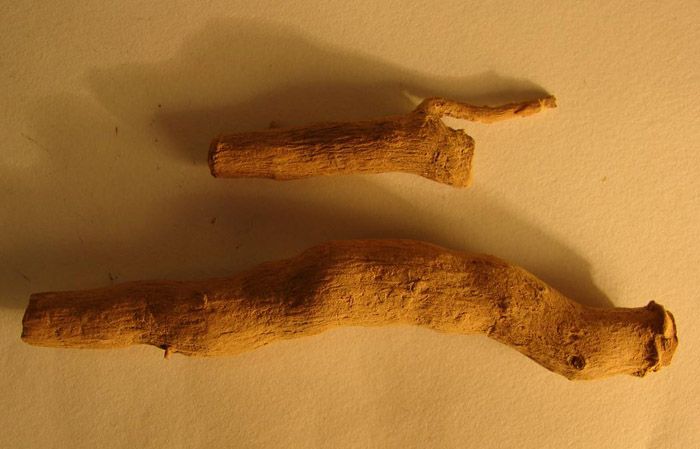
Botanical Name: Rauvolfia serpentine Benth. ex Kurz.
Family: Apocynaceae
Introduction:
This drug used in epilepsy,unmada etc. reserpine separated from this plant .
Sarpagandhaa of Ayurvedic texts was not the Sarpagandhaa of modern medicine.
Bapalalji reported that according to Bengali Kavirajas, Rauwalfia serpentina is one of the 3rd types of Rãsnã
Names in different Indian languages
| Hindi | Chotã chãnd, candrabhaga |
|---|---|
| Telugu | patalagandhi |
| Tamil | Sivan amalpodi |
| English | Serpentina root |
| Marathi | Adakayr |
| Gujarathi | Amalpodi |
| Kanada | sutranabi |
| Malayalam | Amalpori, chuvanna amalpori |
| Sanskrit | sarpagandha |
| Folk | Chhotaa Chaand |
Synonyms
Nakuli , Sarpachhatrikaa, Varshaasu Chhatrikaaraa, Candramara, Dhavala , Sarpasugan Sugandha, Muktã, Nakulestã
Classification according to Charaka, Susrutha & Vagbhata
| Charaka | |
|---|---|
| Susrutha | |
| Vagbhata |
Varieties & adulterants – (CV – controversy, AD – adulterants)
1. R. tetraphylla – AD
Morphology
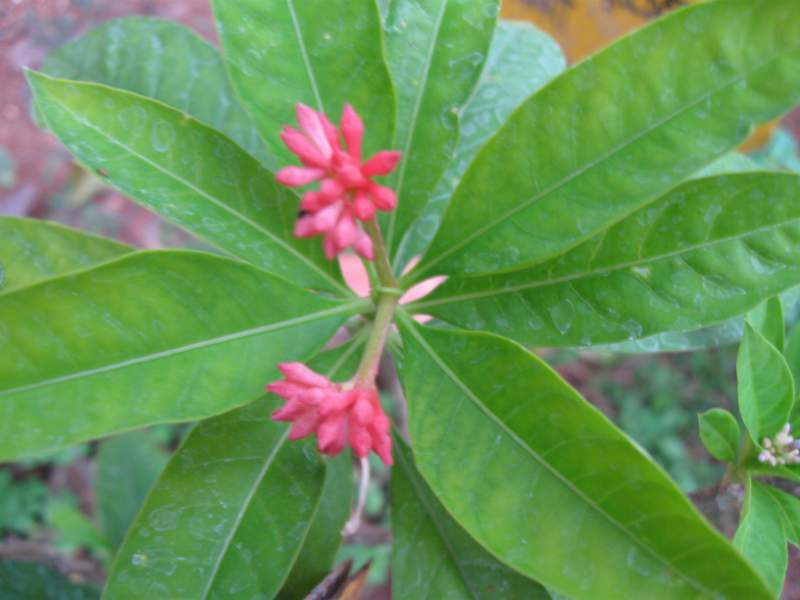
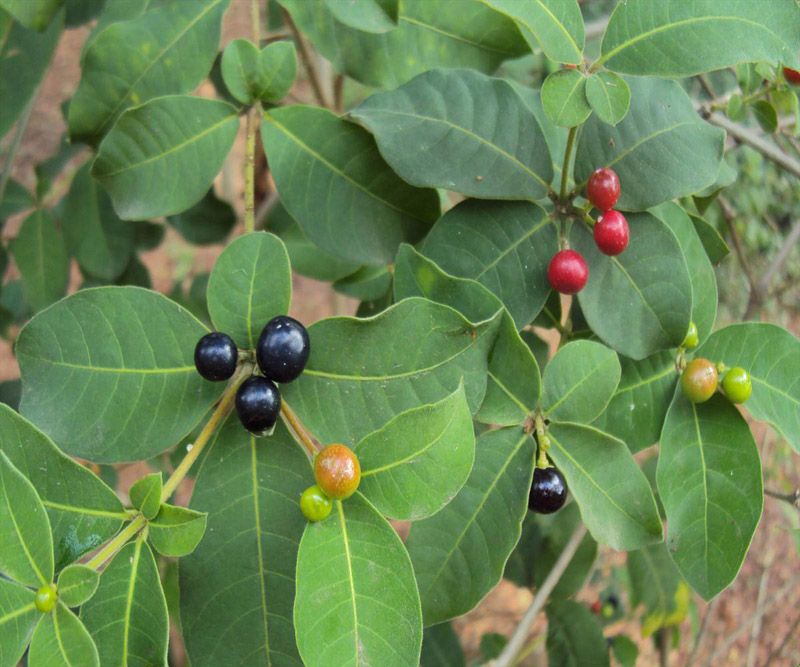
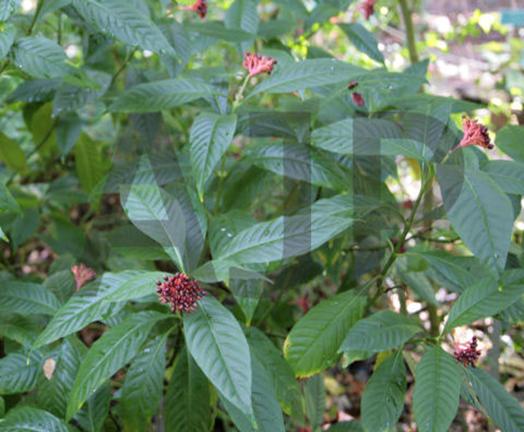
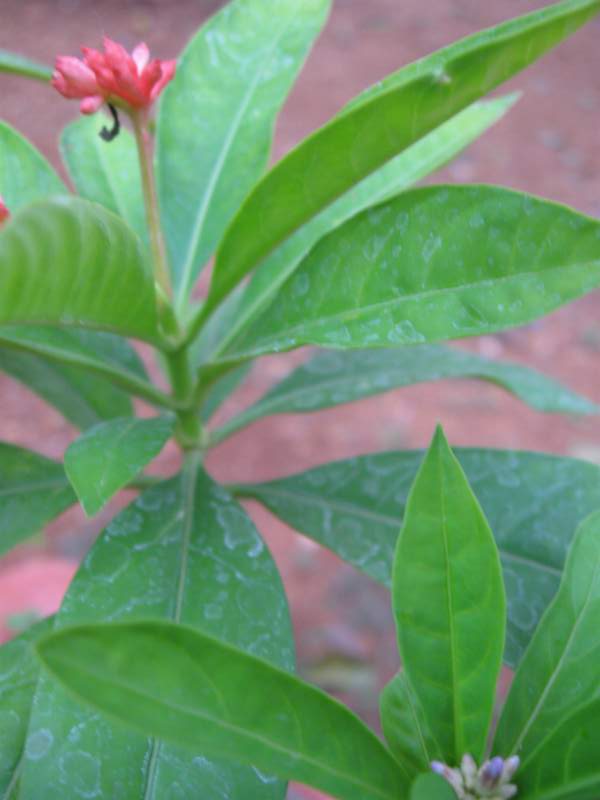
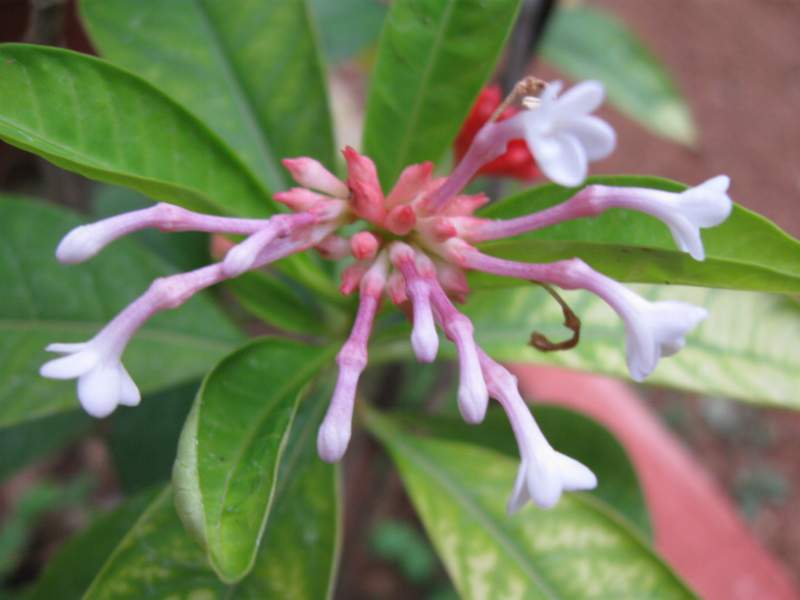
Glabrous under-shrub with red pedicels and calyx.
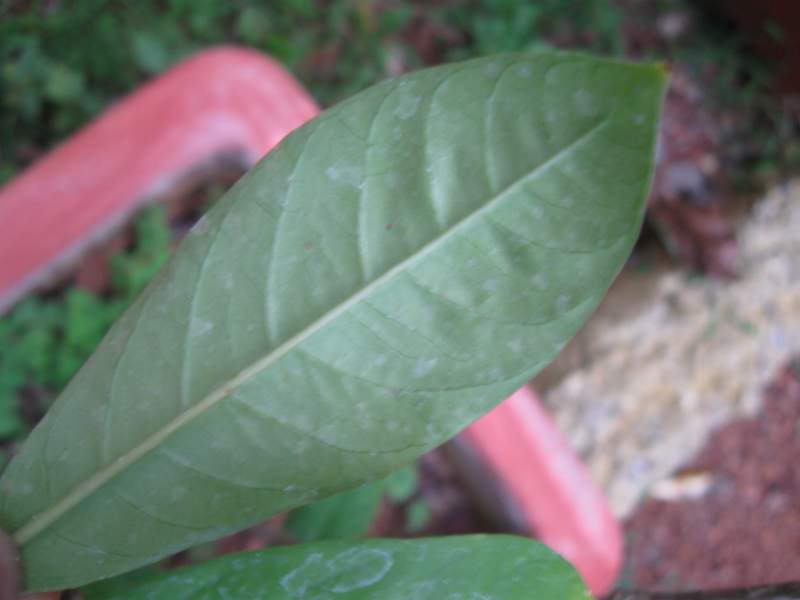
Leaves in whorls 3-4, rarely opposite, elliptic-lanceolate or obovate acute or acuminate.
Flowers— white, tinged with violet in irregular corymbus cymes. Corolla is salver- shaped, tube cylindric, white or fanged with red.
Fruits— obliquely avoid drupes, purple-black when ripe, Seeds ovoid.
Flowers and fruits almost throughout the year but mainly during February-May.
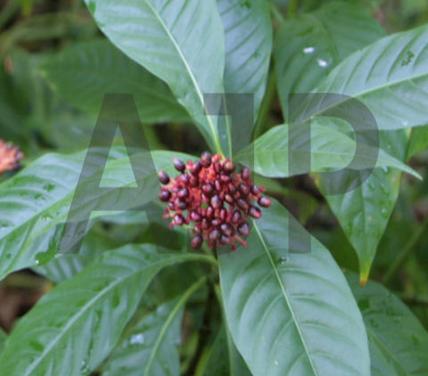
Distribution
Grows in waste places and shady forests in India. It is now considered as an endangered species in many parts of India.
Habitat: All over India, mostly in Bihar. Bengal, Konkan and Uttar Pradesh. Also found in Burma, Sri lanka. Java and Andamans.
Chemical composition: It contains salt, resin, white juice, gum, potassium carbonate, phosphate. calcium. cautic and manganese. In addition to these, there are about twenty five elements usually observed. Ajmalicidine, ajmalicine, rouhjmbiiie . Indobinine, reserpiline, reserpine, sarpagine, serpentine, serpentinine, yohimbine, ajmalimine, ajmaline, rauwolfinine (perakenine), sandwicolidine, serpinine etc. Reserpine (an indole alkoloid) is the antihypertensive principle having tranguillizing property also. Ajmaline in combination with other hypotensive agents, is used in the treatment of HTN complicated with sarrythmia.
Properties—
Rasa Tikta
Guna Rüksa
Virya Usna
Vipãka Katu
Karma Kapha-vata hara, Nidrajánaka
Laxative, anthelmintic, thermogenic, diuretic, sedative
Indications— Apäsmara, Unmãda, Sirãgata vãta, Anidra, Bhrama, süla, Raktasammarda.
hypertension, epilepsy, giddiness, fever, wounds, colic, insomnia, hypochondria, neuropsychiatric, disorders, psychosis, schizophrenia
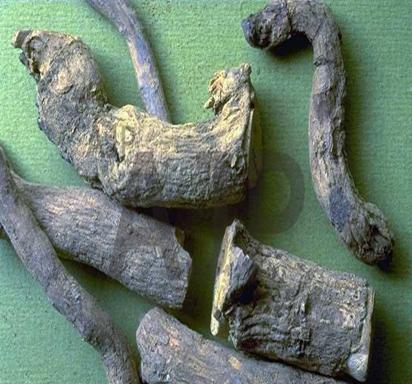
Part Used— Root
Dosage— Insomnia 3-6 g; hypertension 1-2 g.. Schizophrenia 3- 6g.
External uses: Juice of leaves can be applied to the eyes as a remedy for corneal opacity.
Internal uses :
Nervous systems : Being analgesic, sedative koastashamak, it is used in insomnia and irrigative conditions of the nervous systems. As it is used in mental disturbance.
Digestive system : Because of ushna vidrya and tikta guna, it acts as an appetizer; digestive, cholagogue, anthelmintic, Hence it is used in loss of appetite, helmnthiasis etc. For pain in abdomen; 1 part of sarpagandha roots +2 parts of bark of kutaja +3 parts of roots of castor mixed with milk is given.
Circulatory system: salt reduces the heart rate and dilates the blood vessels with lowering of blood pressure. Because of this special property of reducing the blood pressure, it is a universally known medicine. Along with reducing blood pressure it causes drossiness, reduces giddiness and mental tension.
Reproductive system : It reduces libido and increases menstrual bleeding. So it is used for priapism and excessive libido. It reduces pain of dysmenorrhoea. It is also used to increase uterine contraction during labour.
Temperature Because of its tikta rate it is amapachak as well as antipyretic. especially effective in lever caused by vata pitta, contageous fever and insomnia.
Satmikaran : It is antidote to snake bite
Precautions : It should be used only on established disease with mental disturbance. Ii should be used with caution in patients who are mentally as well as physically weak. The result of the medicine is expected within a week but within 3 to 6 weeks results are definitely seen. After stopping the medication its effect is washed out in into 3 weeks. The blood pressure fluctuates according to change of body conditions, which does not happen with this medicine. It causes diarrhoea and bad dreams if given in larger dose. Sarpagandha sometimes causes blocking of nose, weight gain, reduced libido and increased intestinal motility.
Contraindications : Bronchial asthma. duodenal ulcer. hyperacidity, renal pain and mental instability.
Srotogamitva
Dosha : Kaphavataghna.
Dhatu : Maja (sedative). rakta,
Mala : Purisha (laxative).
Organs : Heart, brain (manas- manovahastrotas- major effect).
Prabhav Vataghna . useful on snake bite, snakes which are commonly found In India
Important Yogas or Formations
Sarpagandhadi churna, Sarpagandha yoga. Sarpagandha vati (Maheshwari vats) Saragandhãdi cürna, Sarpagandhaghanavati
Important research work going on
1.Anti cancerous activity
Therapeutic Uses—
(1) Visücikã- Sarpagandha should be given with warm water (Vai. Ma.)
(2) Atisãra- Sarpagandha root and kutaja root are powdered and administered in diarrhoeal disorders .
(3) Sarpa Visa- Root powder of Sarpagandha (10-20 g) is grinned with water and used internally. The same is applied locally as well .