Botanical Name: Ranunculus sceleratus Linn.
Family: Ranunculaceae
Introduction:
Latin name: Ranunculus = water celery, rana frog. inhibiting in marshy places; sceleratus acrid, biting, biller.
This plant mainly using in North india
Names in different Indian languages
| English | Blister Buttercup, Celeryleaved Crowfoot |
|---|---|
| Hindi | Jal-dhaniyaa |
| Kannada | |
| Malayalam | |
| Sanskrit | Kaandira |
| Tamil | |
| Telugu | |
| Unani | |
| Folk |
Synonyms
Kaandira, Kaandakatuka, Naasaa-samvedana, Toyavalli, Sukaandaka.
Classification according to Charaka, Susrutha & Vagbhata
| Charaka | |
|---|---|
| Susrutha | |
| Vagbhata |
Varieties & adulterants – (CV – controversy, AD – adulterants)
Morphology
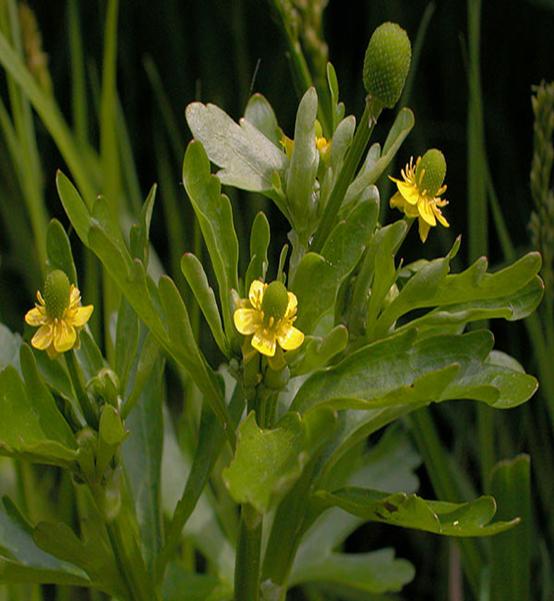
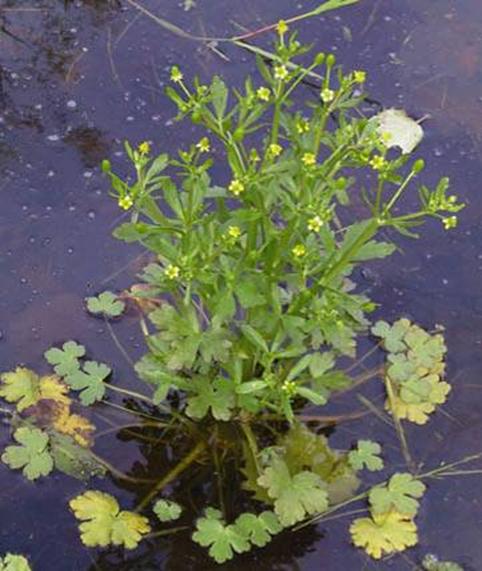
Medium sized herb grows 30-50 cm height
Leaves – simple, pinnatisect
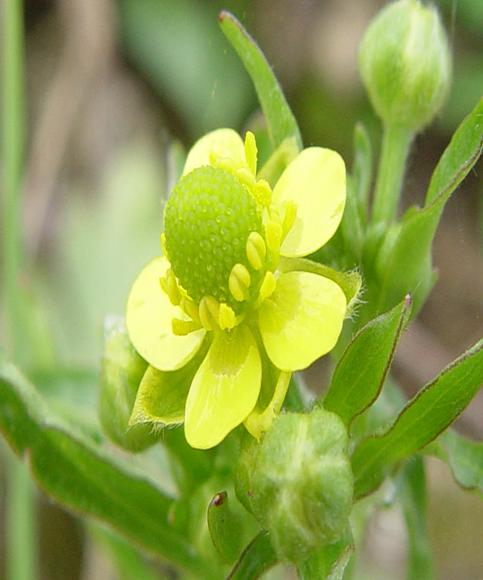
Flower- yellow
Distribution & Habitat
North India
Chemical constituents:
anemonin, protoanemonin, ranunculine, serotonin
Properties:
Guna: ruksha, tikshna;
Rasa: katu, tikta;
Veerya: ushna;
Vipaka Katu
Karma –
highly acrid,rubefacient, vesicant , toxic;
Srotogamitva:
Dosha: Vataghna, kaphaghna, pittavardhak.
Dhatu: Rasa, rakta, meda (tumour) (buboes of plague), shukra
(loss of libido: paste is applied), rakta (spleen).
Mala: Cleans the nasal cavity.
Organ: Stomach (mandagmi), intestines (laxative).
Prabhava: Antidote to poison but itself is toxic.
Indication:
Skin disease
Part used:
Whole plant
Dosage:
Leaf juice 10-15 ml
Powder 2-4 g
Decoction 50-100 ml
Uses
External use: it is applied locally: It is also applied on penis in loss of libido. kaphavatashamak and developes blisters. It is very tikshna and toxic, so it should be used carefully.