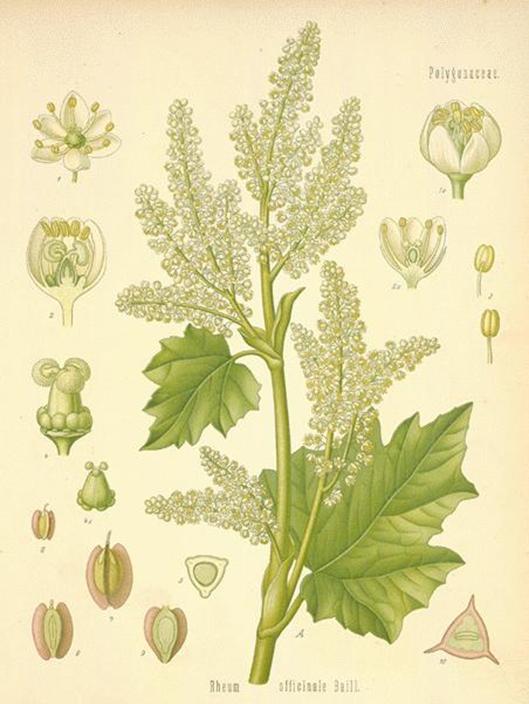
Botanical Name: Rheum emodi
Family: Polygonaceae
Introduction:
Latin name : Rueum: emodi = from the Himalayan mountains.
English name : Indian rubarb.
Sanskrit names : Amlaparni, peetamula, Revandachini.
Names in different Indian languages
| English | Indian rubarb |
|---|---|
| Hindi | |
| Kannada | |
| Malayalam | |
| Sanskrit | PEETAMOOLA |
| Tamil | |
| Telugu | |
| Unani | |
| Folk |
Synonyms
Amlaparni, peetamula, Revandachin
Classification according to Charaka, Susrutha & Vagbhata
| Charaka | |
|---|---|
| Susrutha | |
| Vagbhata |
Varieties & adulterants – (CV – controversy, AD – adulterants)
R. officinale
Rheum moorcroftianum
Morphology
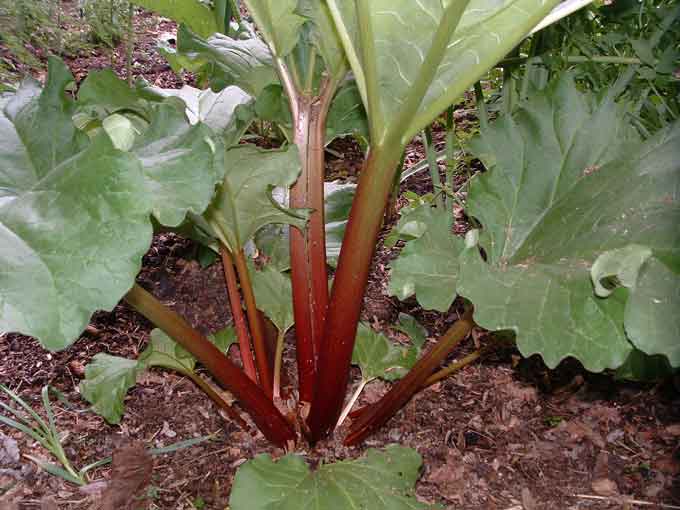
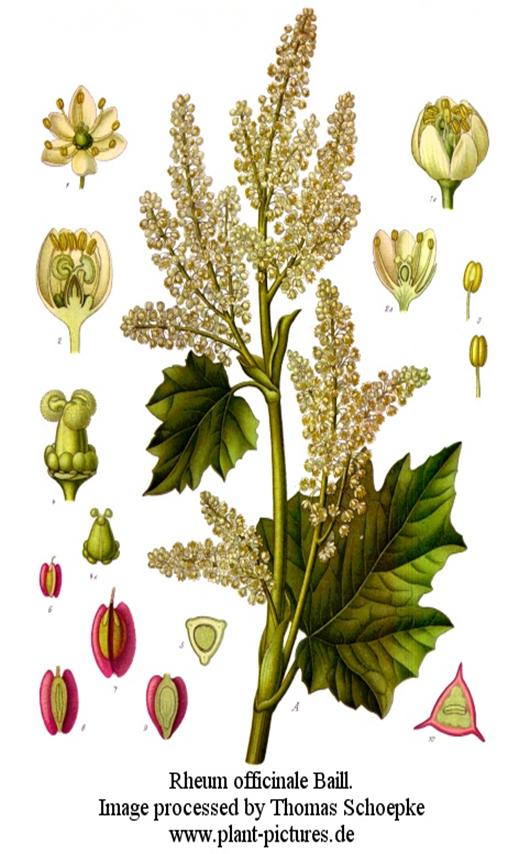
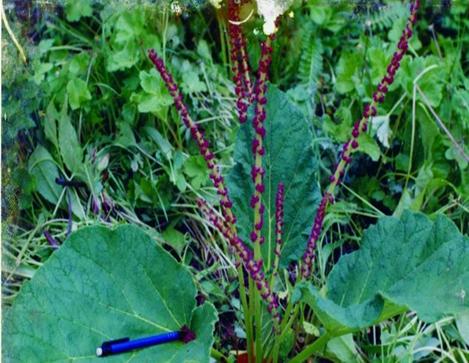
Botanical Description : A tree 1.5 to 2 mtr. high. Bark – greenish grey. Trunk – thick, long with many thick branches bearing leaves.
Leaves – resemble pippal leaves but smaller and their stalks are 30 – 40cms. long. flowers – resemble flowers of Calotropis procera.
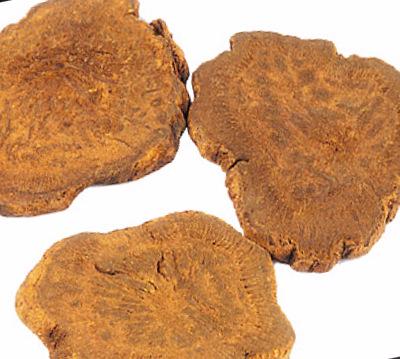
Fruits. violet and 1.5 cm. long. Root – large, thick. brownish yellow. It turns saliva yellow when chewed. Leaves and branches are sour to taste. It bears flowers and fruits in monsoon.
Habitat : Many varieties are found in Himalaya where it grows at the height of 3-4 thousand mfrs. and also in Sikkim and China.
Chemical composition : Leaves contain Oxalic acid white root contain acids, resin, mucin, tannic acid, starch, pectine etc.
Properties:
Guna : laghu, ruksha, tikshna;
Rasa: tikta, kashaya, katu;
Vipaka katu
Virya : ushna;
Dosha kaphapittahar.
External uses : Useful in skin diseases and inflammatory conditions. Internal uses : In small dose of 120 to 350 mgs, it causes salivation, increases appetite, stimulates liver and acts as an astringent. Large dose (1 to 1.5 gm) increases intestinal secretions, peristalsis and causes purgation. It also develops gripping pain and stops diarrhoea abruptly due to its astringent property. It a as an expectorant, diuretic and is useful in amertorrhoea and general debility. Also useful in children’s diarrhoea.
It is excreted through breast milk, urine and stool. Dose : Root 120 mgs. (as a tonic), 1 to 2 gms. (as a purgative).
Srotogamitva:
Dosha : Kaphapittahara.
Dhatu : Rasa (ads on breast milk and appetizer), rakta (liver stimulant).. Mala : Purisha (astringent), mutra (excreted through urine).