Botanical Name: Psoralea corylifolia Linn.
Family: Papilionaceae; Fabaceae
Introduction:
It show two important properties Visaghna and kushtaghna.
Names in different Indian languages
| Hindi | Bavachi, baci |
|---|---|
| Telugu | Bãvanchalu, bogivittulu |
| Tamil | Karpokarisi, karpogam, Karpoogaarisi |
| English | Psoralea seed |
| kanada | somaraji |
| Malayalam | Karkokil, karkokilari |
| Bengali | Habuch |
| Sanskrit | Bakuci |
| Unani | Baabchi, Bakuchi |
| Folk |
Synonyms
Somaraaji, Somavalli, Somavallik, Soma, Chaandri, Vaakuchi, Baakuchi, Avalguja
Classification according to Charaka, Susrutha & Vagbhata
| Charaka | Tikta skandha |
|---|---|
| Susrutha | |
| Vagbhata |
Varieties & adulterants – (CV – controversy, AD – adulterants)
1. Sveta & Krisna varieties
2. Somaraji
Morphology
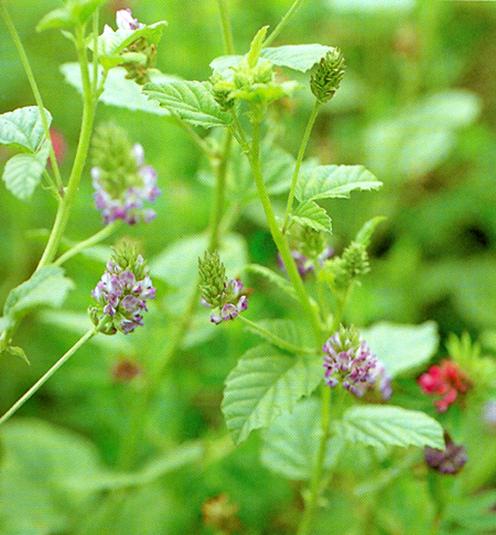
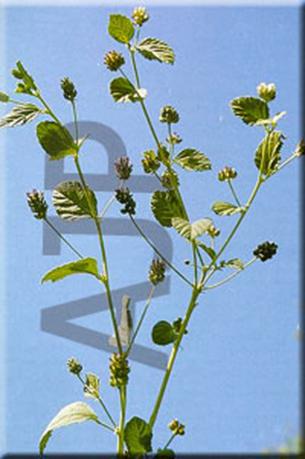
It is an erect annual herb, 1-1.5 m. in height.
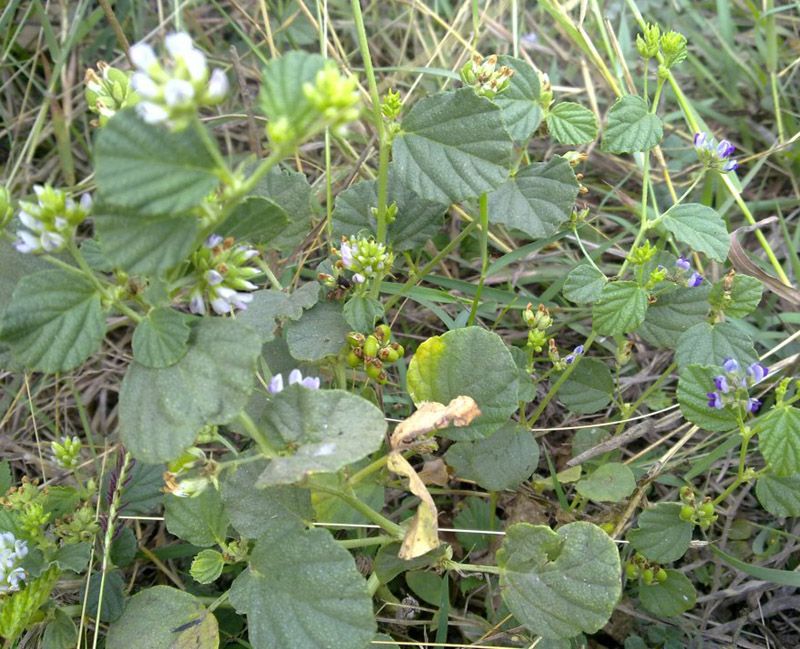
Leaves- simple,broadly elliptic, inciso-dentate, clothed with white hairs on both surface, main nerves 5.
Flowers– in axillary long peduncled heads, bluish-purple or yellow.
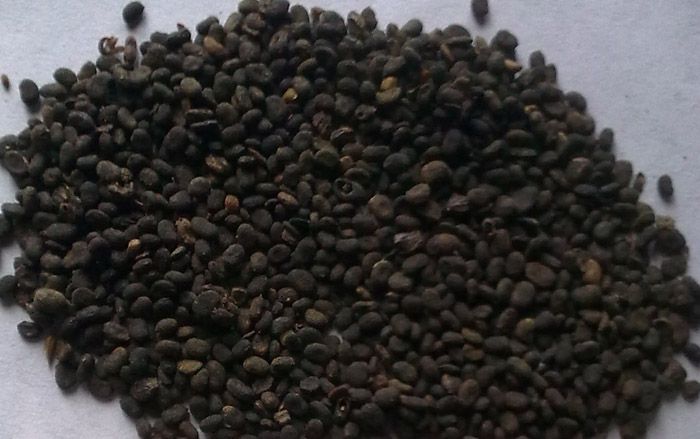
Fruits- pod, indehiscent, ovate, mucronate, dark chocolate to almost black, 3.5-4.5 mm x 2.0-3.0 mm.
Seeds- oblong, smooth, adhering to the pericarp.
(Flowers and fruits during April-June).
Distribution & Habitat
Found all over India on roadsides and in waste places.
chemical constituents—
chalcones, flavones, isoflavones, furanocoumarins , coumesterol, psoralen, isopsoralen, bavachinin
Seeds- Raffinose, psoralen, isopsoralen (angelicin), Corylifolean,
Corylifolean,Corylifolin, Coryfolinin psoralidin, isopsoralidin, bakuchiol, bavachin, isobavachin, methylbavachin, bavachinin, isobavachalcone, neobavaisoflavone, bavachromene, corylidin, barachalacone, bakuchalcone.
Fruits- Corylin, corylinal etc.
Properties—
Rasa- Katu, Tikta
Guna– Laghu, Rüksa
Virya– Usna
Vipãka –Katu
Karma- Kapha-vãtahara, Rasayana, Kesya, Tvacya, Kusthaghna, Balya, deepana, pachana, vishaghna
Diuretic, laxative, dermatitis, ulcers, anthelmintic
Indications— Kustha, Krimi, Pãndu, svitra
leucoderma, vitiligo, leprosy, psoriasis, inflammatory diseases of the skin , scabies,
Part Used— Seeds
Dosage— Powder 2-4 g
External uses: It is useful in skin diseases for wound healing and improves hair growth. Powdered bakuchi or oil prepared from it is used locally in leucoderma, dermatoses, wounds and alopecia. A mixture of bakuchi, karanja and lime juice is used in eczema. Oil of bakuchi and karanja + vaseline is used in chronic skin diseases, White spots of leucoderma turn red in colour after prolonged application of bakuchi.
Internal uses
Nervous system: Since it is a nervine tonic, it is useful in vata disorders.
Digestive system : By its katu and ushna properties it acts as deepana, pachana, anuloman, anthelmintic arid liver stimulant. Hence it is used in indigestion, ama and constipation. It is useful in all types of worms especially round worms, Being a liver stimulant it is useful in piles.
Circulatory system : Since it stimulates the heart and the circulatory system, it is used in cardiac. failure and oedema produced by it.
Respiratory system: Used in cough and asthma since it reduces kapha by its katu rasa and ushna veerya.
Urinary system: Useful in diabetes.
Reproductive system: Since it is a stimulant and an aphrodisiac, it is used in impotency.
Skin : Diaptioretic and kusthaghna. Its oil has a’ specific irritant action on the skin and mucous membrane. On applying the oil on leucoderma, the skin becomes reddish and occasionally blisters may occur. But it does not create any alterations in the normal colour of the skin. The oil acts in leucoderma by activating the melanoblastic cells of the skin leucoderma, the oil must be so applied that it only produces a change a colour and not blisters.
Temperature: Febrifuge, used in chronic fever.
Satmikaran It is a bitter tonic and hence used in anaemia and post-pyrexial debility.
Purification: The seeds of bakuchi are purified by keeping them in cow’s urine or juice of ardrak for seven days.
Srotogamitva : Bakuchi seeds
Dosha : Kaphanashak: Seeds . pittavardhan, kaphavatashaman.
Dhatu: Rakta, meda.
Mala: Anthelmintic, hair ,asthi. majja).
Special action: Bakuchi is the best medicine for leucoderma.
So far as is known P. corylifolia is the only drug that has a dual action i. e. action on both Rouget’s cell and the melanoblastic cells of the skin. In leucoderma the melanoblastic cells are not functioning properly and their stimulation by the oil leads them to form and exuded pigment which gradually diffuses into decolorized areas The oil Bakuchi changes white skin, grey hair, rough, scaly, discolored skin. nails, hairs, etc. to normal color
Important Yogas or Formulations
Bakuci Rasãyana, Somaraji Rasãyana,
Avagujãdi lepam, Mahãnila tailam, Khadirarista.
Important research work going on
(1) action on pigment
(2) stimulation of the intestinal smooth muscle
(3) antifungal activity
(4) antibacterial activity
Therapeutic Uses—
(1) Sadyovrana- Bãkuci leaf paste is applied over cut wound to arrest bleeding (Vai. Ma.)
(2) Bãdhirya- Powder of Musali and Bäkuci is given (V.S.)
(3) svitra- Seed powder of Bãkuci (4 parts) and Haritala (1 part) are grinded with cows urine is given orally (V.M.).