Botanical Name: Pongamia pinnata Pierre.
Family: Papilionaceae; Fabaceae
Introduction:
We come across the references about Karañja in RigVeda and Atharvaveda. Karañja sticks described as the best among the tooth sticks in susthra stana.
Names in different Indian languages
| Hindi | Karanj, Dithouri |
|---|---|
| Telugu | Kanugacettu |
| Tamil | Pongum; ponkamaram |
| English | Indian beech, pongam oil tree |
| Gujarati | Kanajhi |
| Malayalam | Ungh, pongh |
| Kannada | Hongemara |
| Sanskrit | Karanjah |
| Sanskrit | Karanjah |
Synonyms
Cirabilvaka, Naktamãlã, Gucchapuspaka, Ghrtapura, Snigdhapatra
Pongamia glabra Vent.
Derris indica (Lam.) Benett.
Classification according to Charaka, Susrutha & Vagbhata
| Charaka | Kandüghna, Katuka skañdha |
|---|---|
| Susrutha | Aragvadhãdi, Varunãdi, Arkãdi, Syamãdi, Kaphasamamana |
| Vagbhata | Aragvadhãdi, Varunãdi, Arkãdi, Syamadi |
Varieties & adulterants – (CV – controversy, AD – adulterants)
1. P.glabra Vent
2. Karañja
3. Püti Karanja.
4. Kantaka Karañja— Karanja, Naktamãla, Karaja, Ciribilvaka
5. Ghrta Karañja— Prakirya, Pütika, Pütikaranja, Somavalka
6. Karañji— Udakirya, Sakgrandha, Hástivãruni, MarkatiKarabhañjikã
7. Udakirya (Karanja visesa)
8. Angãravallika
9. Cirabilva
10. Valli Karaiija
11. Guccha Karañja
12. Ritha karanja
Morphology
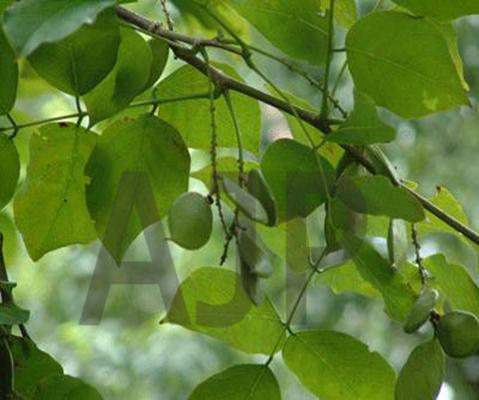
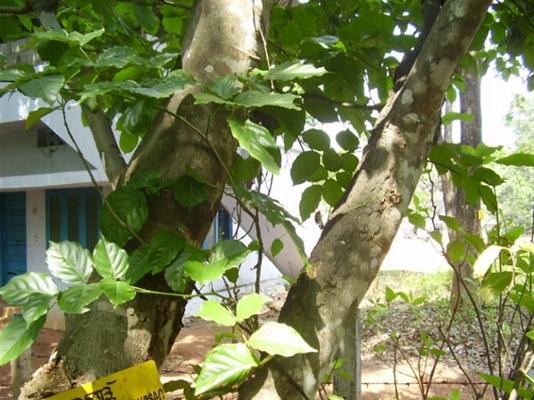
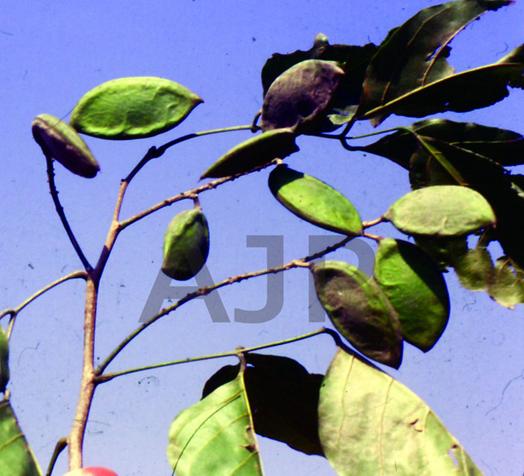
It is a medium-sized glabrous tree, growing about 20 m. bark greyish green or brown.
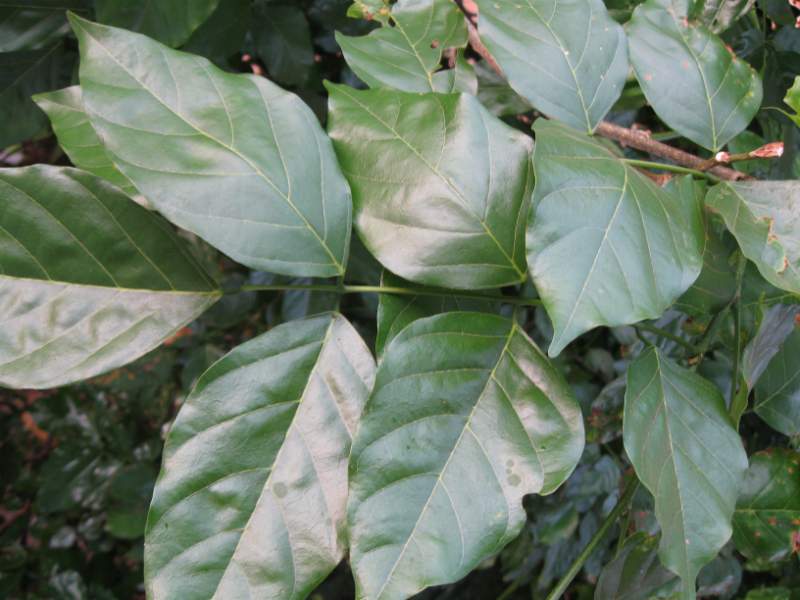
Leaves- Compound, imparipinnate; leaflets 5-7, elliptic , ovate.
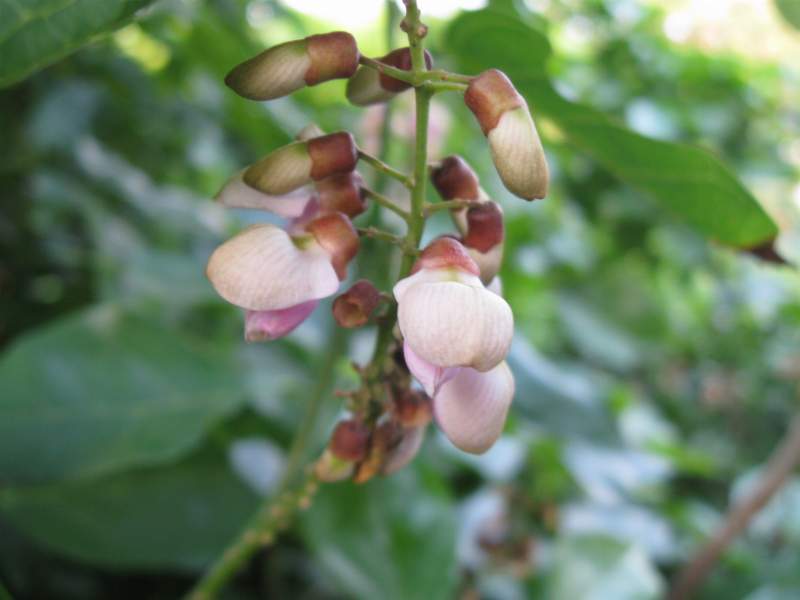
Flowers– in axillary racemes, fragrant, pinkish white, tinged with pink or violet; peduncle as long as the rachis.
Fruits– pods, compressed, woody, glabrous, elliptic obliquely oblong, 5-8 cm long and 2 -3 cm. broad.
Seeds– 1-2, elliptic or reniform, wrinkled, about 2.0 cm long and 1-2 cm. broad with reddish-brown leathery testa
(Flowers and fruits during May- June).
Distribution & Habitat
Throughout India upto 1200 m., also cultivates . Found in central and South India, Sri Lanka.
Chemical composition :
chromenoflavones, chromenochalcones, coumarones, flavone glucosides, sterols, triterpenes , phenylalanine dipeptide
Seeds contain 27% bitter and dark (sherry) coloured fixed oil (pongamia oil). Bark contains bitter alkaloid, resin, mucilage and sugar. Karanjin, pongapIn, 3-meth- oxypongapin, pongaglabrone, kanjone, pongol, g.matin, lonchocarpm,isolonchocarpin, karanja chromene, porgachromene, isopongaflavone, pongamol, glabrin, ovalitenone, kanugin, cemethoxy, kanugin, pongamin, neoglabrin etc
Properties—
Rasa –Tikta, Katu, Kashäya
Guna –Laghu, Tiksna.
Virya– Usna
Vipaka – Katu
Karma Kapha-vãta hara, Sothahara, Bhedana,sophahara, vranahara
Laxative, digestive, carminative,
Indications— Yoniroga, Kustha, Udavarata, Gulma, Arsas, Krimi,vrana , Unmãda etc.
scabies, herpes, leucoderma, flatulence, dyspepsia, diarrhea , skin disease, cough, bleeding piles, ulcers , beri beri
Fruit- Prameha, Arsas, Krimi, Kustha etc.
Oil- Netra roga, Vãta roga, Kustha, Kandü, etc.
Part Used— Root bark, stem bark, leaves, seeds, twigs (as tooth brush), seed oil.
Dosage— Fresh juice 10-20 ml; seed powder 3-5g. bark powder 5g
External use Bark, leaves and seeds are antiseptic, antipmritic and analgesic. Oil derived from the seeds has antiparasitic, wound healing and analgesic properties. used nausea Also useful in various skin diseases and wound& Oil is used for massage in vata disorders, Poultice of leaves removes the bacteria from wounds. Paste of flowers is applied in alopecia.
Internal uses
Digestive system it improves appetite and digestion. It is purgative, anthelmintic and liver Ionic due to ushna and tikshna properties. Leaves and bark are used in loss of appetite, digestive disorders, constipation. helminlhiasis. and haemorrhoids.
Circulatory system Being bitter, it enhances blood flow and its ushna guna reduces swellings. Effective also in rheumatoid arthritic swelling.
Respiratory system Being Kaphaghna & kasahara. it is used in cough: especially in whooping cough, powdered seeds in water used.
Urinary system Useful in urinary disorders as it reduces the quantity of urine by pungent and hot nature. Flowers are used in ikshumeha.
Reproductive system Its ushna and tikta guna makes it keep the uterus in good condition.
Skin : Kushthaghna. effective in all skin disorders. Karanja oil is the best treatment for fatty ulcers of skin.
Important Yogas or Formulations
Karanjadi churna, Karanjadya ghrit, Karanjadi tailam.
Srotogamitva
Dosha : Kaphaghna, vataghna, Leaves : Kapha, vataghna.
Dhatu : Meda, rakta (spleen), pleeha, medogami.
Mala Purisha.
Important research work going on
(1) antibacterial activity
(2) antibacterial activity
(3) Action on lipid metabolism.
(4) antifungal activity
(5) hypoglycemic effect
Therapeutic Uses—
(1) Grañthi visarpa- Paste of Karañja bark may be applied locally (C.S.Ci.21).
(2) Rakta pitta—Seed powder of Karañja should be given with sugar & hones (S.S.Ut.45).
Descriptions on Ayurveda books / Nighandu:
1
2
3
4
5
6
7
8
9
10
11