Botanical Name: Plumbago rosea Linn.
Family: Plumbaginaceae
Introduction:
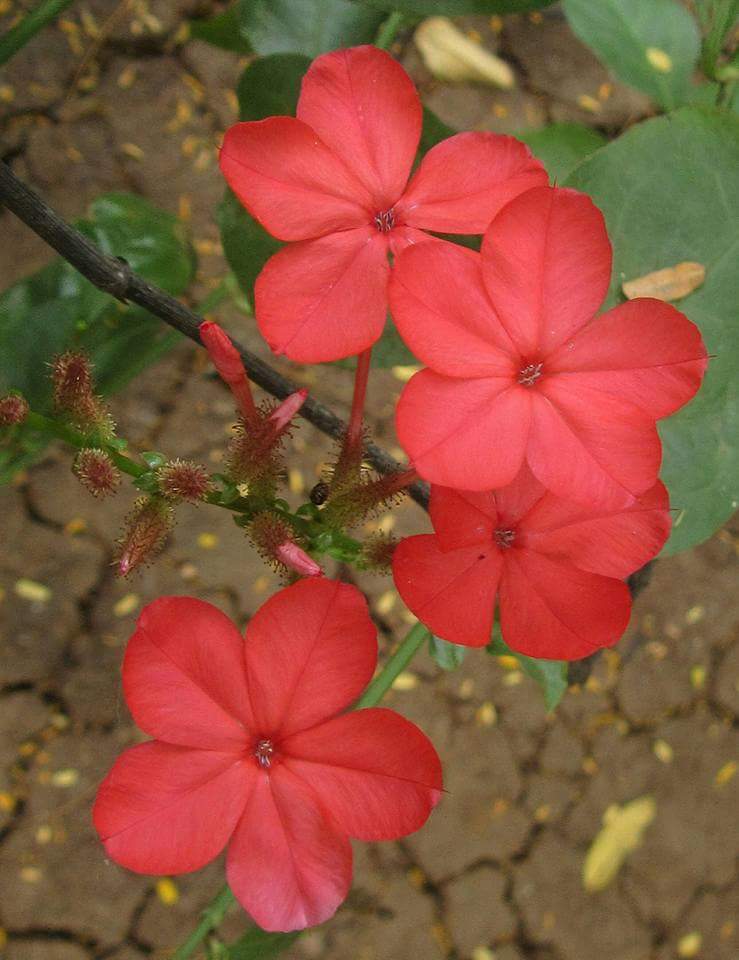
If this drug given in pregnancy, it causes irritation of pelvic organs which leads to abortion. Present research reveals that plumbagin is a cytotoxic/anti-cancer agent.it have rede coloured flower.
Names in different Indian languages
| Hindi | Lalcitra, raktacitra |
|---|---|
| Telugu | Yerracitramulam |
| Tamil | Cenkotiveli |
| English | Rose-coloured Leadwort, fire plant |
| Gujrati | chitrok |
| Marathi | Chitramul |
| Kanada | Kempucitramula. |
| Malayalam | Cetti Kotuveli,. Chuvana koduveli |
| Sanskrit | Chitraka, dahanah, Rakta-chitraka |
| Unani | Sheetraj Hindi |
Synonyms
Chitraka, Agni, Vahni, Jvalanaakhya, Krshaanu, Hutaasha, Dahana, Sikhi.
Plumbago indica Linn.
Classification according to Charaka, Susrutha & Vagbhata
| Charaka | Dipaniya, sulapraamana, Arsoghna, Lekhaniya |
|---|---|
| Susrutha | Pippalyãdi, Mustãdi, Amalakyãdi, Varunãdi, Aragvadhadi |
| Vagbhata | Pippalyãdi, Mustãdi, Varunadi, Aragvadhadi |
Varieties & adulterants – (CV – controversy, AD – adulterants)
1. Sveta
2. pita
3. Asita
4. P. rosea
5. P. capensis
6. P. indica
7. P. auriculata
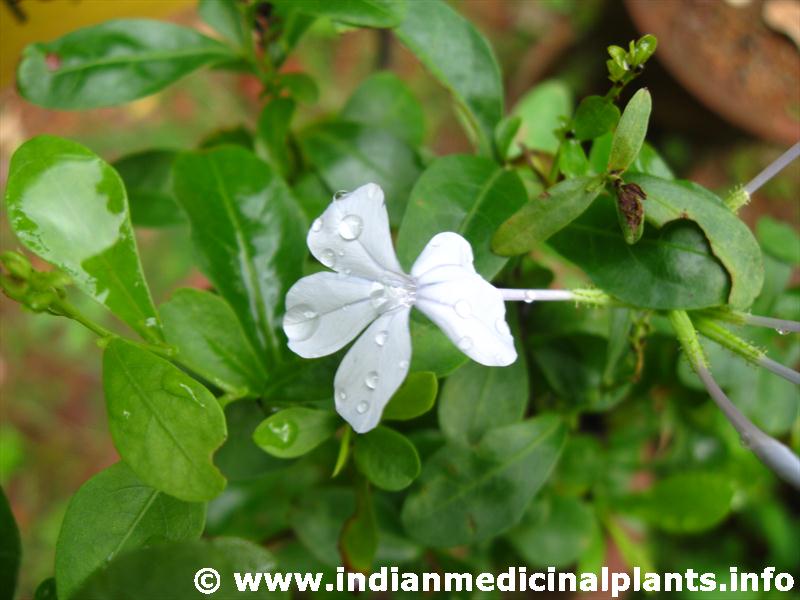
P. capensis – blue variety
Morphology
A perennial herb with 0.5-1.5 m long stems, some what woody, spreading, glabrous.
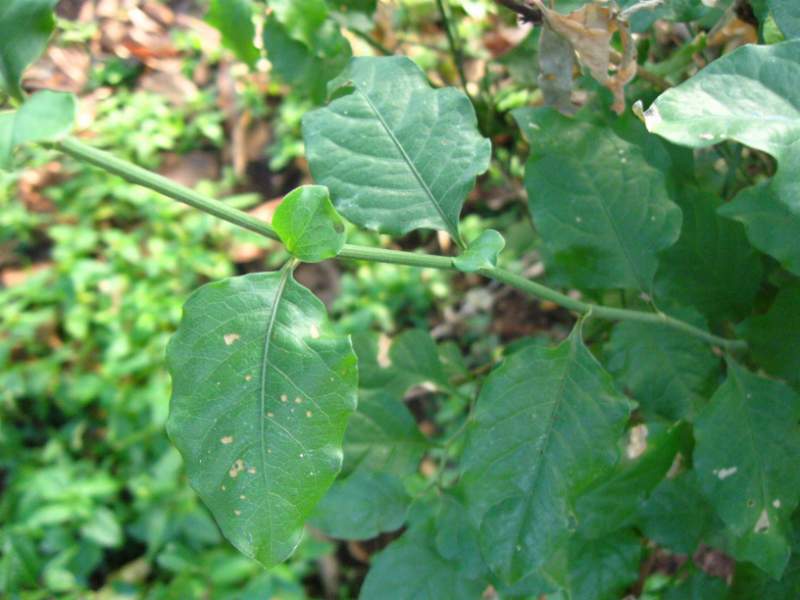
Leaves- simple, alternate, oblong, thin, 3.5- 7.5x 2-4 cm, ovate, subacute, entire, glabrous, reticulately veined, petiole short, amplexicaul at the base.
Flowers- Red, in elongate spikes; rachis glandular, striate. Calyx 1-1.5 cm. long, narrowly tubular, densely covered with stalked glands. Corolla white, slender; tube 2-2.5 cm long.
Fruit- Capsule, oblong, pointed; pericarp thin below, thick and hardened above.
Distribution & Habitat
Found throughout India and sometime cultivated.
chemical composition : Pungent, having yellow and irritant principle called as plumbagin, 91%. Active principle does not dissolve in cold water. In boiling water or ‘alcohol it dissolves easily. Chitranone, plumbagin, lumbagin, droserone, elliptinofle, isozeylinone,isozeylan-one, zeylanone and zeylinone, maritone, plumbagic acid, dihydrosterone, beta sitosterol etc.
Properties—
Rasa Katu
Guna Laghu, Rüksa, Tiksna
Virya Usna
Vipãka Katu
Karma: vata kapha hara, dipana, pacana, grahi,rasayana, arosaghna
Anti inflammatory, digestive, narcotic, gastric & nerve stimulant, rejuvenating
Indication : Arsas, Grahani,Krimi,Udara, kusta,vrana, i, sula, pandu, kasa
cough, bronchitis, helminthiasis, haemorrhoids, fever, leucoderma, scabies, odontalgia, skin disease,.
Parts used : Root.
Dosage : 2 to 4 gm. High dose causes burning and intoxication.
External uses Being irritant and hot, it develops blisters and has scraping action. Its paste causes blisters resulting in discolouration, So it is called as chili-ak (chitra= two colours). In skin disorders like filariasis. oedema, etc. paste causes blisters thus relieving vitiated doshas. Paste is applied in arthritis.
Internal uses
Central nervous system Stimulant in low dose but sedative in higher dose. Useful in nerve weakness and vata disorders.
Digestive system Due to its pungent, hot properties, it acts as an appetizer, digestive, but astringent and anthelmintic. Therefore, it is useful in anorexia, indigestion, abdominal pain. liver disorders, spite. haemorrhoids and worms. Mainly effective in non-bleeding piles.
Circulatory system Chinak vitiates pitta and reduces oedema. so it is useful in oedema, liver and spleen disorders and proctitis.
Respiratory system : It is effective in chronic rhinitis and cough.
Reproductive system It causes uterine contraction, cures menstrual disorders and post partem disorders. It is also used internally and externally in impotency.
Skin : Diaphoretic. useful in skin disorders (vitiligo etc.) 15 to 45 drops of alcoholic extract of chitrak acts as a potent diaphoretic. Application of small quantity of chitrak is used in abscess.
Temperature Febrifuge: It is used in chronic fever (kapha) and malaria. It improves liver function, digestion and helps in splenomegaly. Chitrak is the best medicine for diseases like haemorrhoids, which are caused by abnormality of agni.
Satmikaran : Acts as a bitter tonic in low dose. It is helpful in post pyrexial debility.
Important Yogas or Formations
Chitrakadi gutika, Chitrakharitaki, Chitrak ghrit, Chitrakadi churna, Trimad churna
Improper use of chitrak causes toxicity. Higher dose of it creates irritant and intoxicant effects. It causes burning of tongue; throat, stomach and all over the body, nausea, vomiting, diarrhoea, dysuria, burning micturation. Pulse becomes-feeble and skin becomes wrinkled and cold:
Srotogamitva
Dosha Alleviates vata, kapha and eliminates pitta (gives yellow colour to the stools).
Dhatu Rakta, meda (vitiligo).
Important research work going on
1. Ovulation
2. Anti microbial activity
3. Anti bacterial activity
4. Anti fungal activity
5. Cholesterol level
6. Protrombine time
Therapeutic uses
1. Piles treatment – root powder in butter milk
Descriptions on Ayurveda books / Nighandu:
1