Botanical Name: Pandanus facicularis Lam.
Family: Pandanaceae
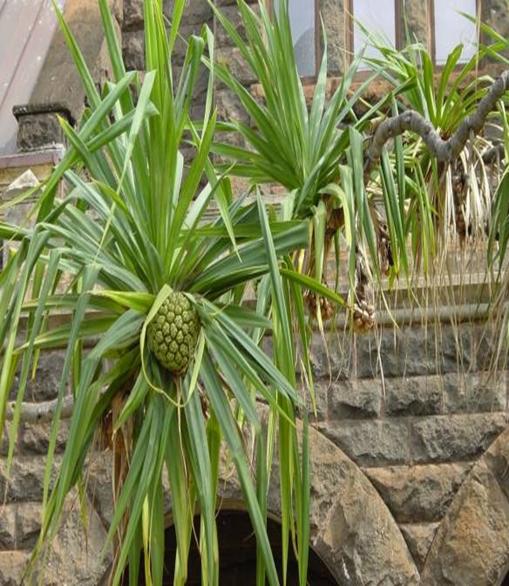
Introduction:
Latin name : Pandanus from a over in Italy. screw pine; leclorius = of roof covered.
Scientific classification: Screw pines make up the genus Pandanus and also belong to the genus Freycinetia (which produces berries) of the family Pandanaceae, order Pandanales. The remaining genus of the family is Sararanga.
Screw Pine, common name applied to any plant of the representative genus of the screw pine family, and to certain plants of a related genus. The representative genus is typical of the screw pine family, which is the only member of its monocotyledonous order. Of worldwide distribution, the order is characterized by reduced, unisexual flowers borne in tight spikes or heads and by ovules with fleshy or mealy endosperm. The screw pine family comprises three genera. Plants in the family have rigid leaves and small, dioecious flowers. The fruits of two of the genera are drupes; those of the third genus are berries.
Names in different Indian languages
| English | Screw Pine |
|---|---|
| Hindi | Kedgi, kevda |
| Kannada | Kedge, mundige |
| Malayalam | Kaita, pookaita, tazhambu, kainari |
| Sanskrit | Ketaki |
| Tamil | Thazhai,Thalay |
| Telugu | Mogali, ketaki, gajangi |
| Unani | Keoraa |
| Folk |
Synonyms
Ketaka, Ketaki, Suuchikaa pushpaa, Jambuka, Trinshunya, Ketakark, Krakchhada
Pandanus tectorius auct. non Soland ex Parkinson.
Pandanus odoratissimus Linn. f.
Classification according to Charaka, Susrutha & Vagbhata
| Charaka | |
|---|---|
| Susrutha | |
| Vagbhata |
Varieties & adulterants – (CV – controversy, AD – adulterants)
Varieties : Two – 1) Male green flowers = Ketak; 2) Female yellow flowers = Suvarna ketaki.
Pandanus Canaranus
Morphology
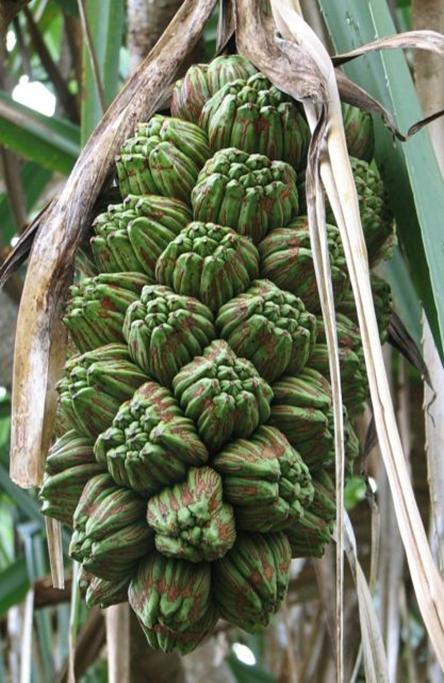
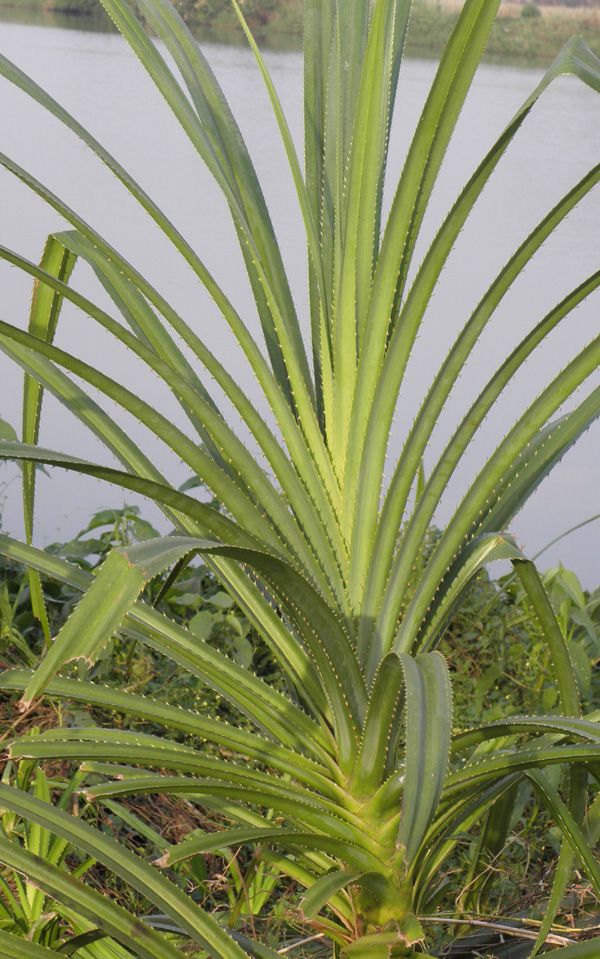
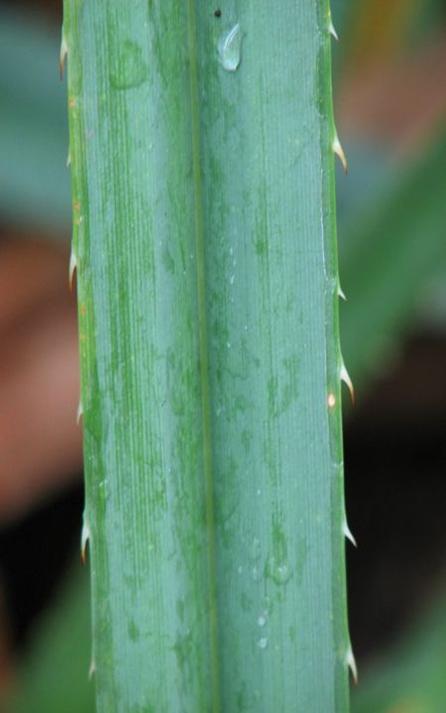
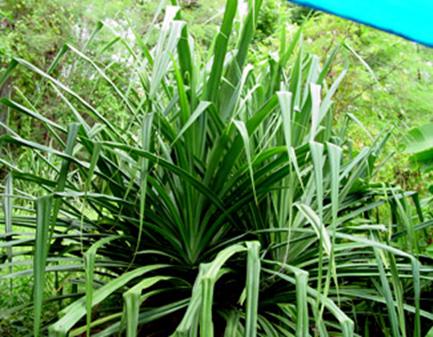
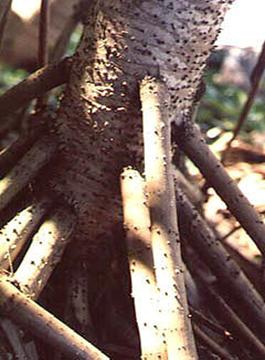
This plant is similar to the plant of date but is only 7 to 6 hands high. Its stalk is crooked with branches. There are many aerial roots vatavriksha and they penetrate into the ground. Mid part of the stalk is tender. Leaves – 4 to 6 mtrs. long and bent, shiny green having marginal spikes. Male flower is white with fragrance, arising from the mid part of the stalk, flowers are homosexual. Female flower is yellow and smaller than male flower and is more fragrant. It is called as survana ketaki. Fruit -. like orange but hard. Flowering occurs in rainy season and fruiting in autumn.
Distribution & Habitat
Throughout India
Chemical constituents:
beta-phenylethyl alcohol. diterpene,d-linalool, phenylethyl acetate, citral, phenylethyl alcohol
Properties:
Guna : laghu, snigdha;
Rasa : madhur,
Tikta, katu;
Vipaka : katu;
Virya : anushna;
Karma –
Keshya,medhya, deepana, pachana, rasayana, balya, netrayam , kamaodeepana karakam
carminative, stomachic, cooling, antiseptic
Srotogamitva:
Dosha : Tridoshashamak, mainly kaphaghna and pittaghna.
Dhatu : Majja (prashamak, toiic), rakta (blood diseases – measles’, small pox), meda (roots in urinary disorders), shukra (flower -aphrodisiac). .
Mala : Sweda (deodorant).
Organ : Uterus (used in infertility), manovaha srotas (pollen grains for nasya).
Indication:
Kusta, krimi, sukladosha
headache, ulcers, dysuria, scabies, skin diseases.
Part used:
Whole plant
Dosage:
Leaf juice 10-15 ml
Powder 2-4 g
Decoction 50-100 ml
uses:
External uses : Its oil is applied topically on painful back. Nasya of pollen grains is given in epilepsy. Oil drops are used in otalgia. Pollen grain powder heals wounds and reduces can be used as deodorant. Fragrance of ketaki reduces mental and physical tiredness and is pleasing to the mind.
Internal uses : It is used as .a brain tonic in weakness of the brain and sense organs. Being an appetizer, digestive and carminative, it is used in anorexia, indigestion and constipation. it is useful in palpitations and blood diseases. Roots are used in urinary disorders. its oil is used to treat infertility and to prevent abortion, flower is an aphrodisiac. It is used in measles small pox and other skin diseases to lessen the rash.
Important Yogas or Formations:
Ketakimuladi taila