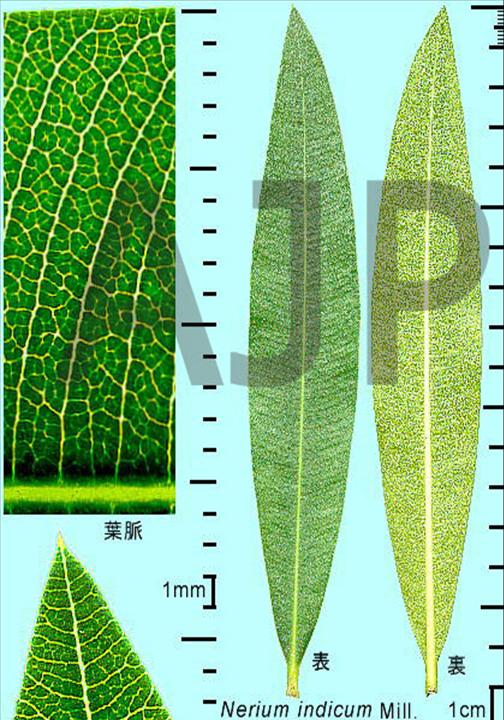
Botanical Name: Nerium indicum Mill
Family: Apocynaceae
Introduction:
In It is used for brushing the teeth. Karavira flowers are described in Mahãbhya.. Caraka advocated Karavira for Snãna (bathing) and Pãna (internal administration). Suruta indicated Karavira Ksära in Asmari treatment.
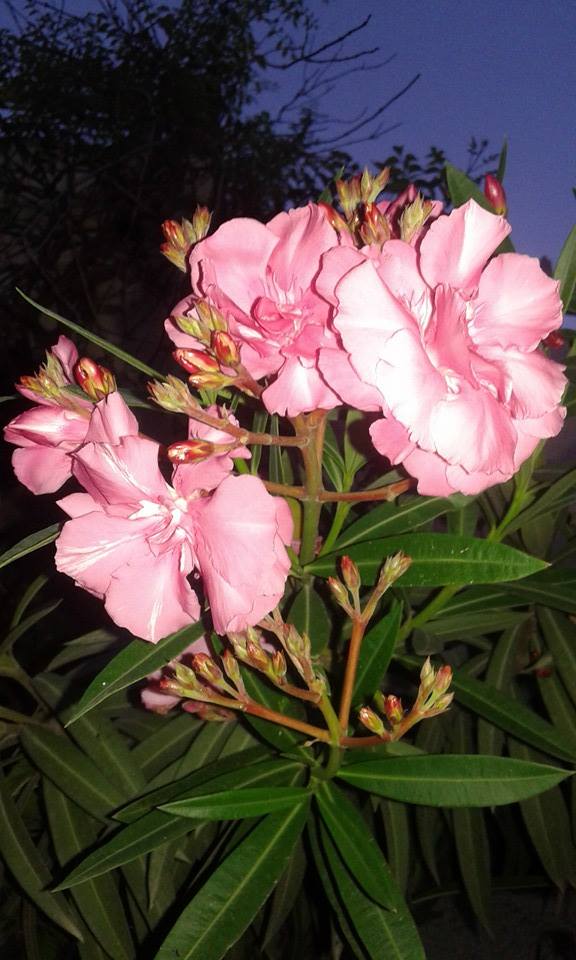
Names in different Indian languages
| English | Indian oleander, White oleander |
|---|---|
| Hindi | Kaner, karber, karu vira |
| Kannada | Kanagilu, paddale, dhavekaneri |
| Malayalam | Arali, kanaviram , karaviram |
| Sanskrit | Karavirah |
| Tamil | Arali, Alari, Aatrulari, Karaviram. |
| Telugu | Ganneru, kasturipattu |
| Unani | Kaner Safed, Diflaa, Samm-ul-maar, Khar-zaharah |
| Folk |
Synonyms
Viraka, Ashvamaaraka, Hayamaaraka, Gauripushpa, Divyapushpa, Shatakumbha, Siddhapushpa (white-flowered var.). Raktapushpa, Raktaprasava, Ravipriya (red-flowered var.)
Nerium odorum Soland
Nerium oleander Linn
Classification according to Charaka, Susrutha & Vagbhata
| Charaka | Kuthaghna, Tiktaskañdha |
|---|---|
| Susrutha | Lãksãdi, sirovirecana |
| Vagbhata | Lãksãdi |
Varieties & adulterants – (CV – controversy, AD – adulterants)
1. sevta,
2.Rakta,
3.Pita (yellow)
4. Krsna – T. peruviana
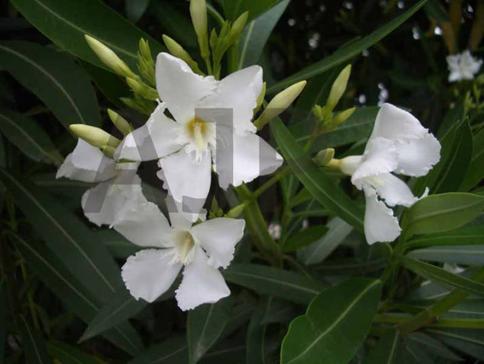
Morphology
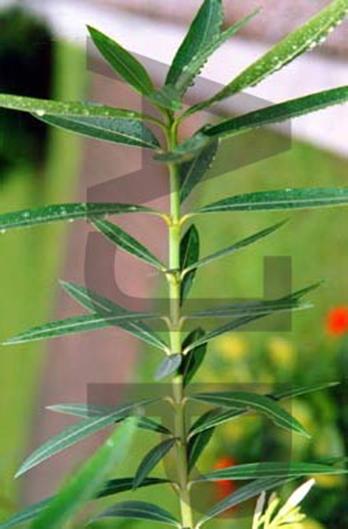
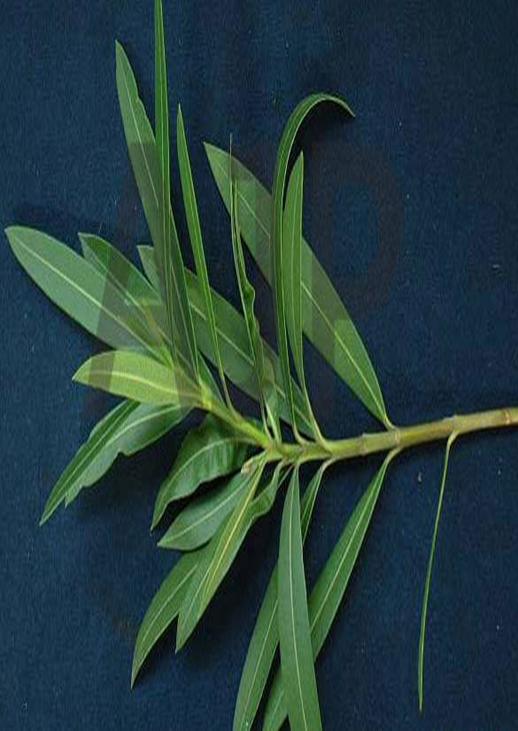
A large glabrous erect shrub with milky juice, about 1-3 m high. Leaves— thrice in a whorl, linear-lanceolate, dark green and shining above, thickly coriaceous.
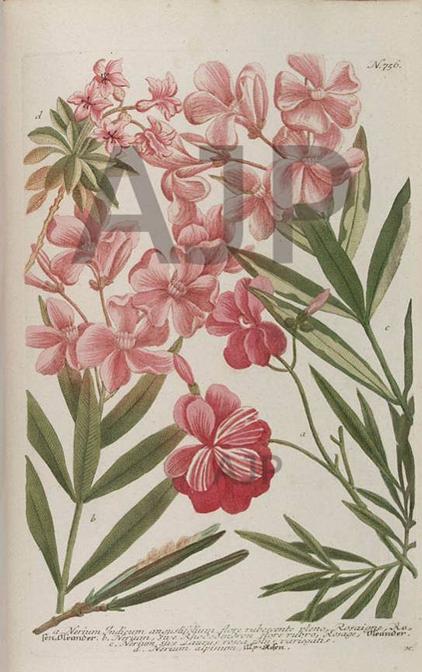
Flowers— red, rose-coloured, white or yellow; fragrant.
Fruit— Cylindric, straight, hard follicles, 10-15 cm long, rigid. Flowers and fruits usually during April-June.
Distribution & Habitat
Cultivated as or namental shrub in gardens throughout India.
Chemical composition:
pregnanolone glycosides, neriodorin ,glucoside, rosaginine, an essential: oil, a crystalline principle like digilalin. nereine, tannic acid and wax. Leaves contain an alkaloid oleandrine, glucoside, pseudoqurarine, nereine and neriantine.
Karabin, neriodorein, neriodorin, -sitostero1, neriodin, neriodorin, nerium D, nerioum E (anhydrooleandrin), digitaloside, nerioside, obandrin, digitoxigenin, oleañdroside, rutin, plumericin etc.
Properties—
Rasa Katu-Tikta
Guna Laghu, Rüksa
Virya Usna
Vipãka Katu
Karma Kapha-Vatahara, Kusthaghna, Vranahara, Cakusya
Anthelmintic, stomachic, diuretic, Cardioactive, diuretic, anti-inflammatory, antifungal, insecticidal, toxic
Part Used— Root/root bark
Dosage— Powder 30-125 mg
Indications— Indralupta, Pãlitya, Dusta vrana, Upadama, Kustha, Krmi, Kandü, Netra roga
asthma, arthragia, ulcers, ringworm, scabies, haemorrhoids, pruritus, skin disease
External use : It cures skin disorders, cleanses and heals wounds and reduces swelling. The application of root paste is helpful in skin disorders, cancer, ulcers and ringworm infection. Leaf juice is put in the eyes in eye disorders. (Care must he taken as it is a poisonous plant).
Internal use :
Digestive system Stimulant or appetite and useful in appetite, digestive disorders and constipation.
Circulatory system In a low dose it provides energy to the heart. But in higher dose, it is lethal to the heart. Nerium is a blood purifier. It is useful in oedema. weakness and dyspnoea induced due to cardiac debility.
Urinary system It increases the blood flow in the kidneys, thus increasing the urine quantity and flow, It is used in dysuria and stones.
Skin : Diaphoretic and useful in clearing skin infection. It can be used in very chronic skin diseases.
Temperature : Febrifuges. mainly episodic fever. The action of 1 ratti lie. 120 mg.) of the bark of yellow nerium is same as 15 ratti of the bark of Cinchona. In malaria, after the temperature comes to normal.
Satmikaran : It is a powerful poison, this should be kept in mind.
Higher dose Causes toxicity, feeble pulse, cardiac arrest, respiratory arrest and then leads to death.
Antidote After stomach wash, cow’s ghee should be given.
Parts used : Roots, bark of the root.
Srotogamitva
Dosha . Kaphaghna, pittavardhak,
Dhatu : Raktagami, rasa (febrifuge).
Mala Purisha (worms).
It is better to avoid internal use of this plant.