Botanical Name: Nymphaea rubra Roxb. ex Salisb.
Family: Nymphaeaceae
Introduction:
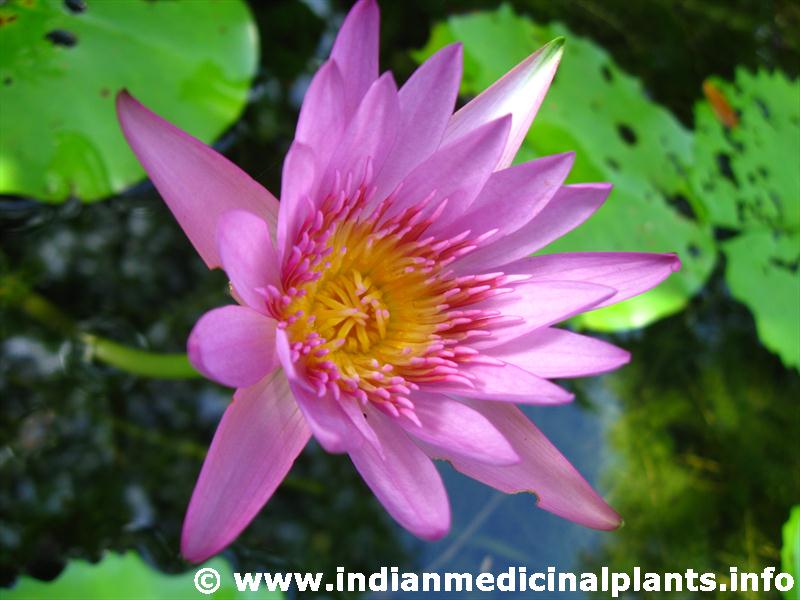
Nymphaea – nymphs = half divine in mythology. These water lillies are in seven colours – white, yellow, pink, rose. purple, red and blue: stellata = star like or radiating like the points of a star glittering.
The genus Lotus belongs to the subfamily Papilionoideae, family Fabaceae (formerly Leguminosae). The jujube suggested to be the legendary lotus tree is classified as Ziziphus lotus of the family Rhamnaceae, the nettle tree as Celtis australis of the family Ulmaceae, and the desert shrub as Nitraria tridentata of the family Zygophyllaceae. The unrelated genus of the water lily family, Nymphaeaceae, is Nelumbo. The sacred lotus of Buddhism is classified as Nelumbo nucifera and the American lotus as Nelumbo lutea. The representative water lily genus is Nymphaea of the family Nymphaeaceae. The Egyptian lotus is classified as Nymphaea caerulea and the Egyptian water lily as Nymphaea lotus.
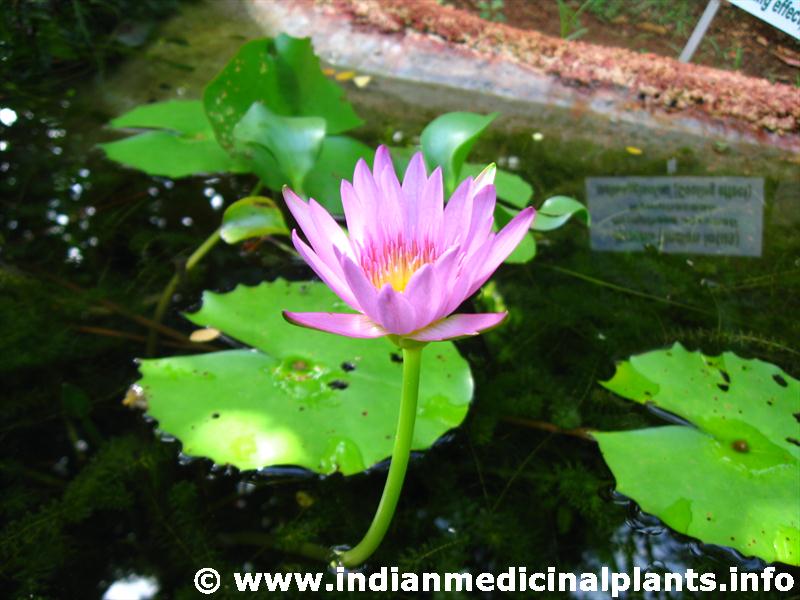
Names in different Indian languages
| English | Indian Red Water-lily |
|---|---|
| Hindi | Kanval, kokka |
| Kannada | Bilenaydilie, biletavare |
| Malayalam | Ampal |
| Sanskrit | Kumuda, utpala (red-flowered ) |
| Tamil | Alli-tamarai, ambal |
| Telugu | Allikada, tellakaluva |
| Unani | |
| Folk |
Synonyms
Nymphaea nouchali Burm. f.
Nymphaea lotus Hook. f.Thoms non L.
Classification according to Charaka, Susrutha & Vagbhata
| Charaka | |
|---|---|
| Susrutha | |
| Vagbhata |
Varieties & adulterants – (CV – controversy, AD – adulterants)
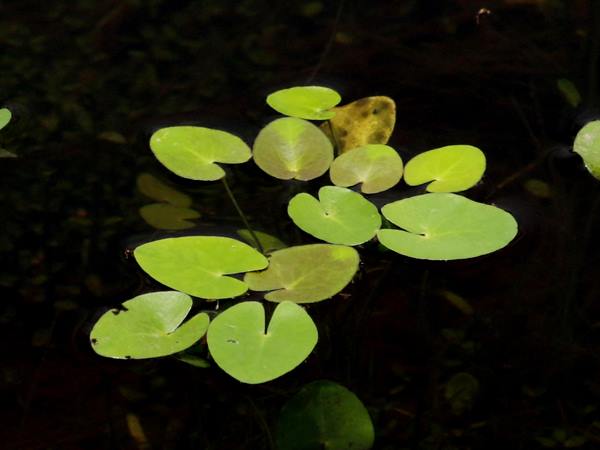
Nymphoides parvifolia
Morphology
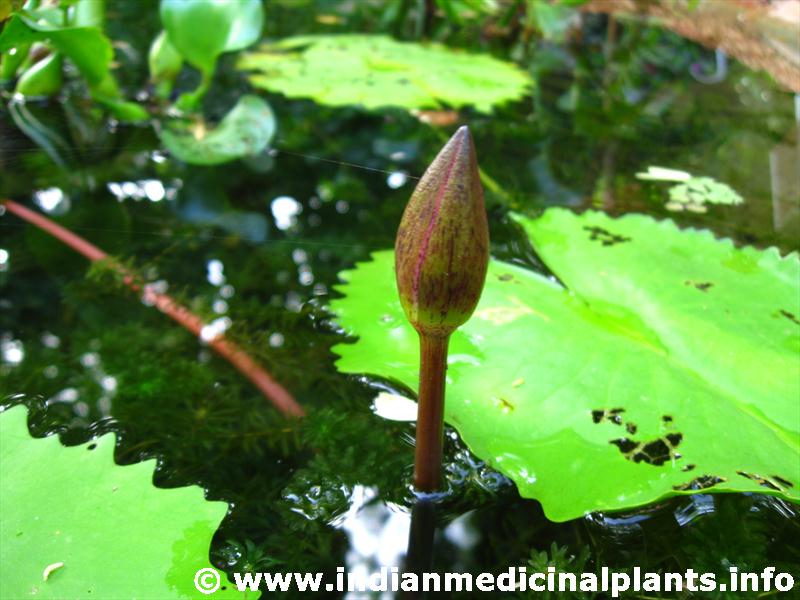
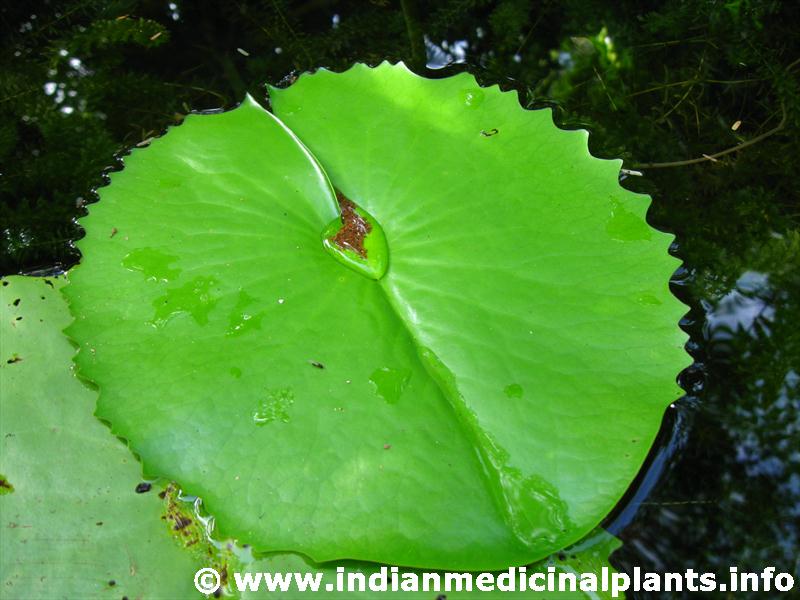
it grows in water. The specialty of this plant is that its flowers bloom on moonrise and close up in the morning. A tubular stalk is present upto the water level. Hence leaves and flowers both float on water.
Seeds – small, round. Unripe seeds are red and ripe seeds are black. Though it has many varieties like white, red, blue and etc.. white variety is used for medicinal purposes.
Distribution & Habitat
All over India
Chemical constituents:
quercetin, kaempferol, apigenin, Cardiac glucoside, nymphalin,
Properties:
RASA-madhur, tikta, kashaya;
GUNA-phichilam, snigdam, guru
VIRYA-sheeta
VIPAKA-madhur
Karma – grahi, premehaghna, vishaghna, endriya prasadhanam
astringent, cardiac tonic, cooling,
seed- constipating
Srotogamitva:
Dosha : Pittashamak.
Dhatu : Rakta (bleeding disorders, burning sensation), shukra , artava.
Mala : Diuretic, Organ : Uterus (chief action is to prevent abortion), heart (for tolerating body heat in fever).
Indication:
Trishna, prameha, raktha pitta, krimi
palpitation of heart, dysentery ,dyspepsia, skin disease
Part used:
Seed, rhizome, flower
Dosage:
2-4 gm
Internal uses:
Useful in fever, bleeding disorders, excessive thirst and burning sensation. This plant boiled in a milk or its paste mixed with milk is used to prevent abortion, It is used in fever so that the vital organs like heart can tolerate the body heat.
Therapeutic Uses:
- seeds in milk useful to prevent abortion
Descriptions on Ayurveda books / Nighandu:
1
2
3
4
5
6
7