Botanical Name: Nyctanthes arbor-tristis Linn
Family: Oleaceae; Nyctanthaceae
Introduction:
Latin name: Nydanthus (Nyct = night; anthus = flowering (night flowering); arbortristis = (Arbor )
tristis = weeping, gloomy, flowers dropping like tears).
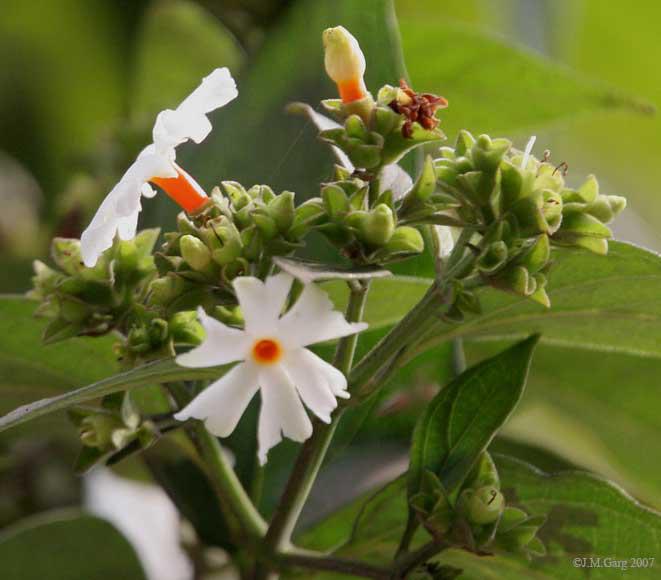
Red stalks of flowers are cut, dried in the sun end stored to be usedfor dying clothes and as a colouring agent for sweets and other eatables. Poets in India have compared the tips of beautiful women to the flowers of this tree
Names in different Indian languages
| English | Tree of Sorrow, Night Jasmine, Coral Jasmine |
|---|---|
| Hindi | Harsimgar, parja |
| Kannada | Parijata |
| Malayalam | Pavilamalli, parijatham |
| Sanskrit | Paarijaata |
| Tamil | Pavazha mattigai |
| Telugu | pavilamalligai |
| Unani | Harasingaar, swetasarasa |
| Folk |
Synonyms
Paarijaata, Shephaali, Shephaalikaa, Mandaara
Classification according to Charaka, Susrutha & Vagbhata
| Charaka | |
|---|---|
| Susrutha | |
| Vagbhata |
Varieties & adulterants – (CV – controversy, AD – adulterants)
Morphology
A tree of 3 – 10 mtrs height.
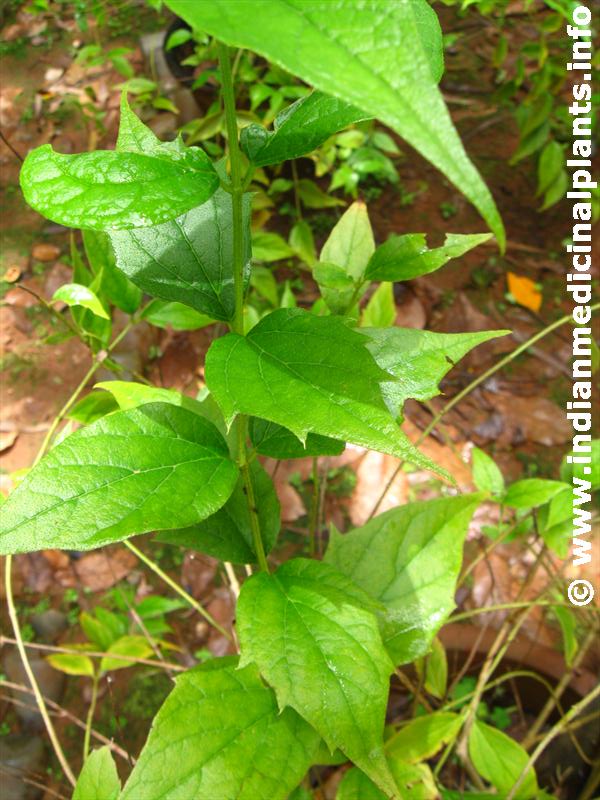
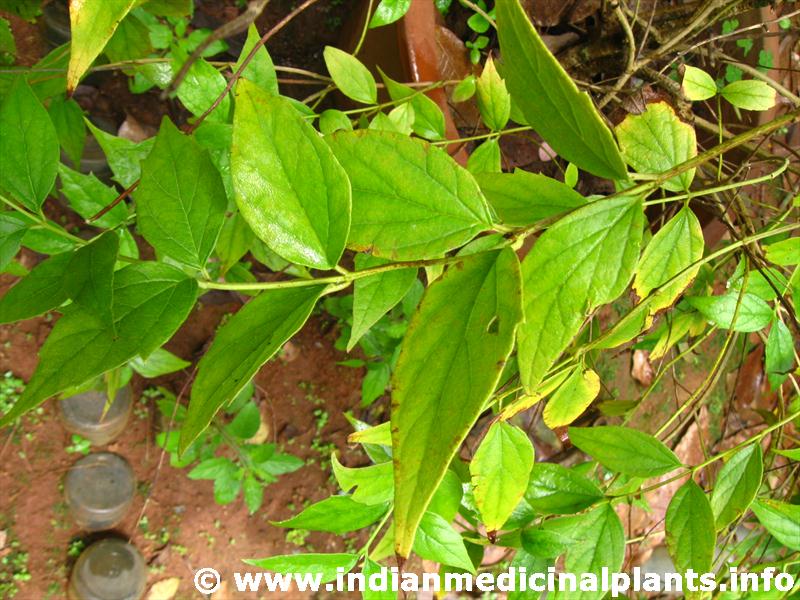
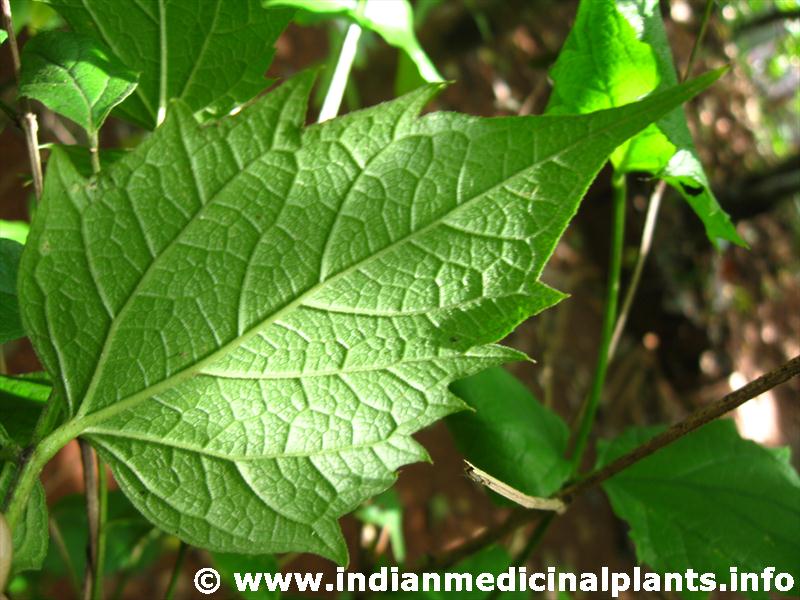
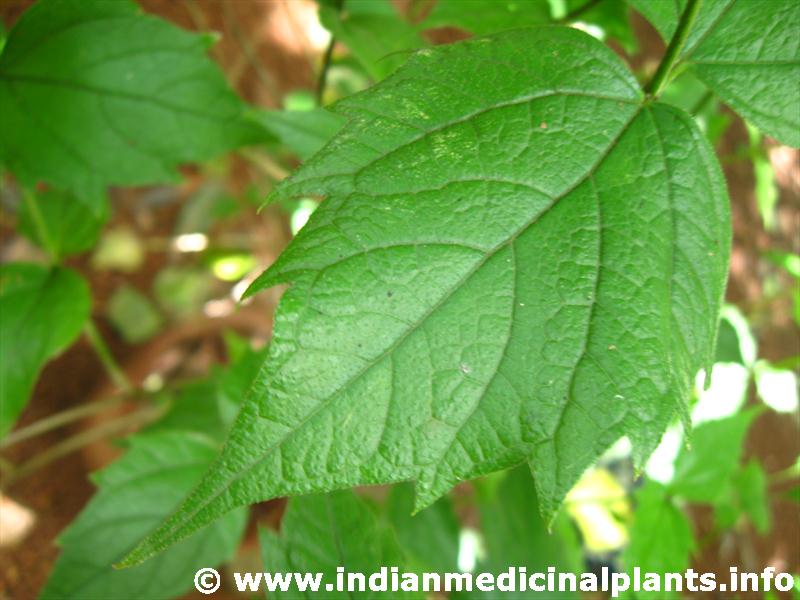
Leaves – simple, opposite, facing forwards, 10 to 12.5 cm long. 5 to 6.25 cm broad, rough. Upper surface is green and the lower surface is white. Petals are yellowish red and very attractive in appearance. Therefore it is compared to the lips of a young lady.
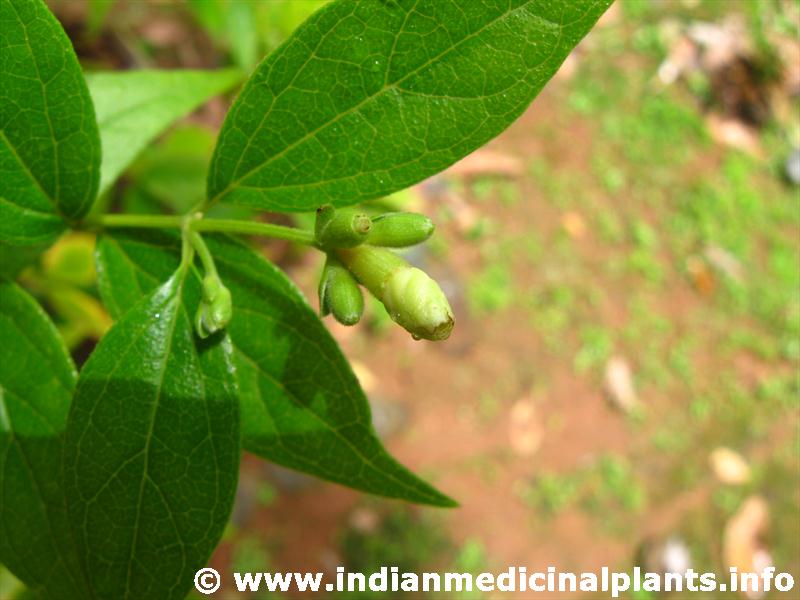
Flowers – white, fragrant and delicate, flowers bloom in the night and fall off in the morning on the ground below the tree. Ovary is flat, bilobular with two seeds. (Children play with these seeds and call them as coins).
Distribution & Habitat
All over India
Chemical constituents:
Iridoid glycosides, mannitol, beta-amyrin, beta-sitosterol, hentriacontane, benzoic acid, astragalin, nicotiflorin, oleanolic acid, nyctanthic acid, friedelin and lupeol
Properties:
RASA- tikta
GUNA– laghu. ruksha
VIRYA-ushna
VIPAKA-katu
Karma – jwaraghna, kasa swasa hara, deepana, pachana, sophahara, keshya, netreya
bitter tonic, cholagogue, febrifuge, anti-inflammatory, antispasmodic, hypotensive, respiratory stimulant, laxative, diuretic
Srotogamitva:
Dosha: Kaphaghna, vataghna, pittashodhak.
Dhatu: Rakta (liver – leaf juice).
Mala: Hair (seeds), mutra (dysuria – barkpôwder), sweda (decoction of leaves).
Organ: Respiratory tract ( cough – decoction of leaves).
Indication: kasa, visha,
fevers, gout, sciatica, pruritus, cough, asthma
Part used:
Leaves, flower, seed, bark
Dosage:
2-4 g
Internal uses:
Seeds are used as antihelminthics and in alopecia. Rough leaves are used for scrapping the margins of wounds. Leaf juice is used in loss of appetite, piles, liver disorders, biliary disorders and intestinal worms. Powder prepared from leaves or bark is given in cough and asthma. Also useful in dysuria, chronic fever and snake poisoning.
Therapeutic Uses:
1. Decoction of leaves is very useful in fever with rigors
Descriptions on Ayurveda books / Nighandu:
1
2
3
4
5