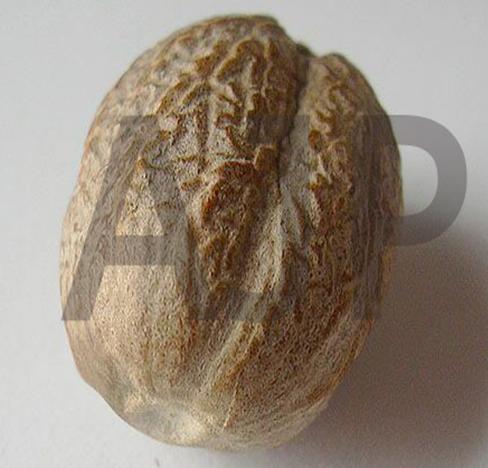
Botanical Name: Myristica fragrans Houtt.
Family: Myristicaceae
Introduction:
Jatiphala is used along with Chandana for external application . Nutmeg plants make up the family Myristicaceae. The most common nutmeg tree is classified as Myristica fragans.
Names in different Indian languages
| English | Nutmeg, Mace |
|---|---|
| Hindi | Jay ka pet, jayphal |
| Kannada | Jalikay |
| Malayalam | Jati, jatikamaram |
| Sanskrit | Jati, Jaatiphala |
| Tamil | Jaathikkai, Saadikai (nutmeg); Saadippatthiri, |
| Telugu | jajikaya |
| Unani | Jauzbuwaa (seed), Bisbaasaa (mace) |
| Folk |
Synonyms
Jaatishasya, Maalatiphala (seed kernel). Jaatipatri, Jaatipatra, Jaatipatraka, Jaatikosha (mace).
Classification according to Charaka, Susrutha & Vagbhata
| Charaka | |
|---|---|
| Susrutha | |
| Vagbhata |
Varieties & adulterants – (CV – controversy, AD – adulterants)
1. M. malabarica -[AD]
2. M. dactyloides
3. M. laurifolia
4. M. beddomi –[AD]
Morphology
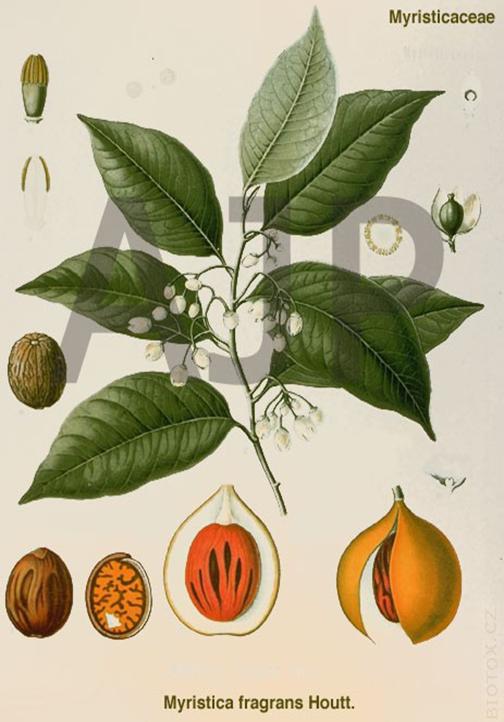
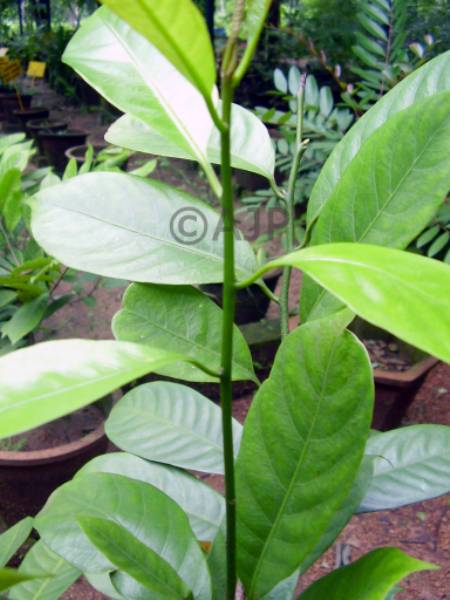
Evergreen aromatic tree, usually dioecious, 9-12 m high.
Bark— greyish-black.
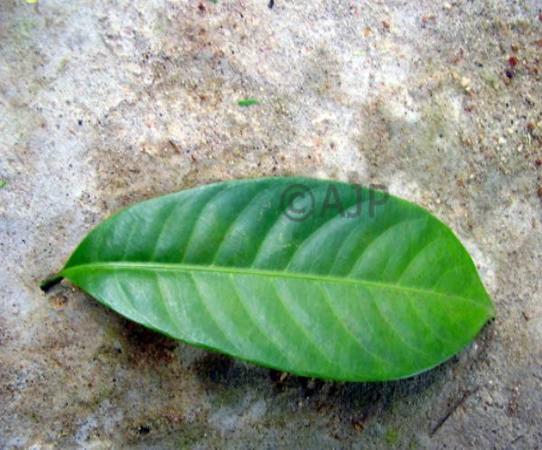
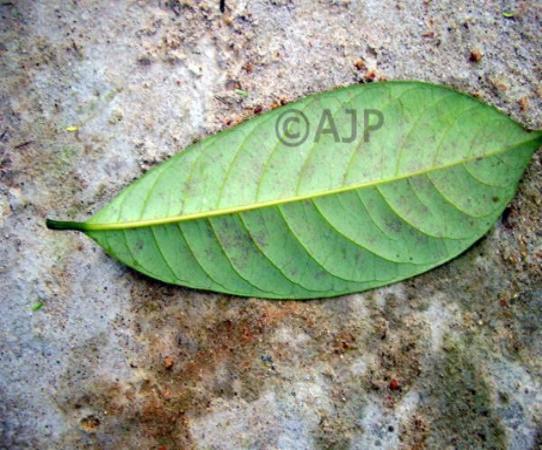
Leaves— Coriaceous, elliptic or oblong-lanceolate, deep green above and greyish beneath, redish-grey when ripe.
Flowers— creamy-yellow, fragrant, borne in umbellate cyrnes.
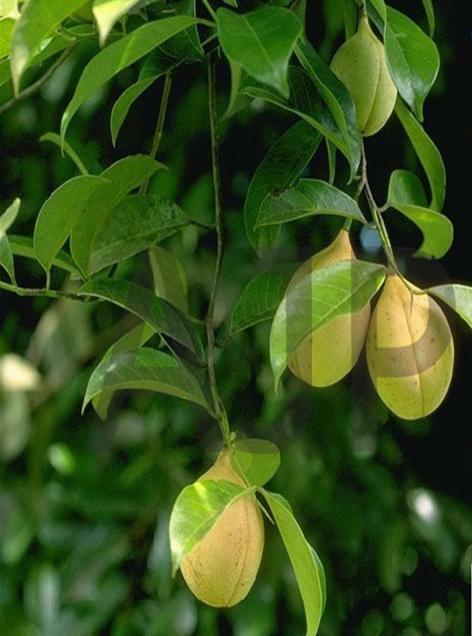
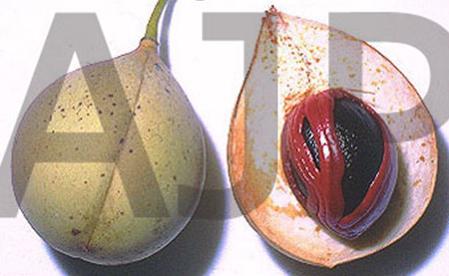
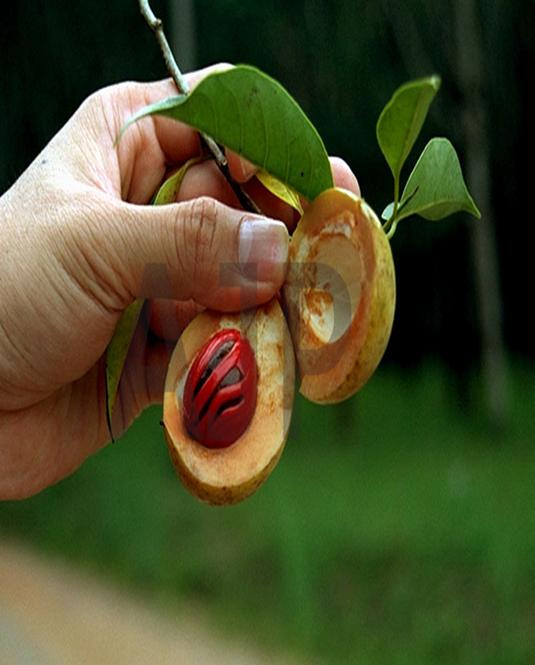
Fruits— globose or broadly pyriform, 6-9 cm long, pear shaped, glabrous, often drooping, yellow; pericarp fleshy, 1.25 cm thick, splitting into two halves when mature.
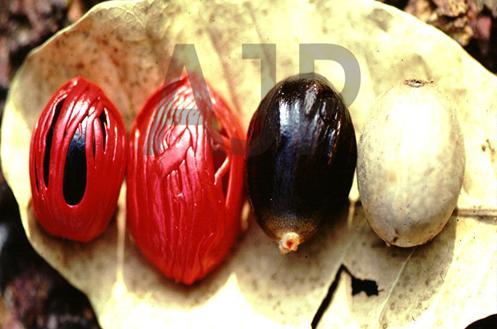
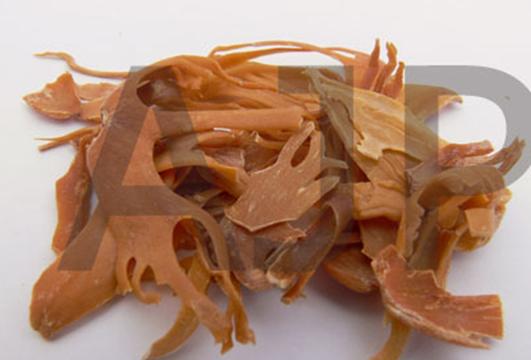
Seed— arillate, albuminous, broadly ovoid, with a shell-like purplish-brown testa; aril fleshy, laciniate, red.
Habitat & Distribution
Native of Moluccas. Grown in Kerala, Karnataka, Nilgiris and West Bengal.
Chemical Constituents
licarin-B, dehydro diisoeugenol, beta-pinene, terpinene, safrole, methyleugenol, myristicin,
elemicin, trimyristin, dihydro-disoeugenol, myristic acid, epicatechin, cyanadin, nectandrin B, verrucosin; lignans and neolignans etc.
Properties
Rasa Tikta, Katu
Virya Usna
Guna Laghu, Tiksna
Vipaka Katu
Karma – Kapha-vatahara, Dipana, Rocana, Vrsya, Grãhi, Svarya
carminative,spasmolytic, antiemetic, orexigenic, anti-inflammatory, carminative, Narcotic in high doses
Indications— Krmi, Kãsa, Chardi, sväsa, Mukha Vairasya, Pinasa, Hridruja, Trsnã, Visaroga, Yavana pitika
diarrhoea, nausea, vomiting,rheumatism, chronic bowel complaints , asthma
Part used— Seed, seed coat (Jätipatri)oil
Dosage— Powder 1-2 g, oil 2- 4 drops.
External uses: Analgesic, stimulant and deodorant. Its paste is used in headache. arthralgia. Ointment is used as deodorant and an analgesic in skin diseases. Its oil is used for massage in cases of cold and skin laxity. In impotency, nutmeg oil is applied on the penis and then betel eaves are tied over it. Its powder is applied oil foul smelling wounds. In case of common cold and fever of children, nutmeg oil is applied on the Forehead. Nutmeg and dry ginger power in water alleviate headache due to common cold. In diarrhoea, powder is applied on the umbilicus.
Internal Use
Central nervous system :It analgesic and vatashamak. Excessive dose is intoxicant. The actions of camphor and nutmeg on brain are similar. It is useful in insomnia. It also alleviates vata disorders like pain, convulsions etc.
Digestive system : Nutmeg reduces bad breath temporarily. It improves the taste, It is a stimulant. an appetizer, digestive, liver stimulant, carminative, astringent and anthelmintic. Hence it is used along with other medicines in anorexia. indigestion, liver disorders, diarrhoea, colitis and helminthiasis. It reduces the foul smell and blackness of stools. Nutmeg is given in excessive thirst and emesis. In cholera, water boiled with nutmeg is used (after cooling).
Circulatory system : Low dose acts as a circulatory stimulant, Respiratory system : Being an expectorant and kaphaghna, it helps in chronic rhinitis. cough, dyspnoea, hiccoughs.
Reproductive system : Being an aphrodisiac and stimulant of menstruation, it is used in impotency and premature ejaculation. It is also used in dysmenorrhoea.
Temperature Nutmeg is used when fever and diarrhoea occur simultaneously.
Satmikaran : it is used as a tonic in post diarrhoeal weakness and post- sprue debility.
Part used : Nutmeg, mace.
Important Yogas or Formations
Jatiphaladi churna, Jatiphaladiguti.
Srotogamitva:
Dosha : Kaphavataghna.
Dhatu: Ashti, majja, shukra
Mala : Purisha (astringent), anthelmintic,
Organ : Heart.
Important Yogas or Formations
Jatiphaladi cürna, Jatiphaladi vati, Lavangacatuhsama
Important research work going on
(1) antibacterial activity
(2) action on kidney tissues
(3) antifungal and antibacterial activities
(4) antidiarrhoeal effect
(5) analgesic
(6) CNS depressant activity
Therapeutic Uses—
(1) Kushta— External application with Jãtiphala, Chandana and Marica will be useful.
(2) Atisãra— Jatiphala and Sunthi Kalka is given orally (S.
B. M).
Descriptions on Ayurveda books / Nighandu:
About fruit
1
2
3
4
5
6
7
8
9
About jatipatri / mace
1
2
3
4
5
6
7
8