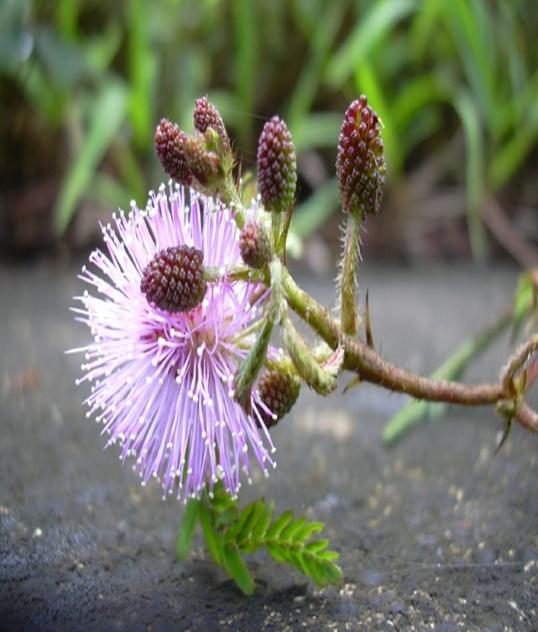
Botanical Name: Mimosa pudica Linn.
Family: Mimosaceae
Introduction:
Latin name : Mimosa – mimos = mimic, sensitivity of the leaves.
Names in different Indian languages
| English | Sensitive-plant, Humble- Plant, tough me not plant |
|---|---|
| Hindi | Lajjavanti |
| Kannada | Nacikegida |
| Malayalam | Tottavati, thindarmanni |
| Sanskrit | Lajjaalu, samanga |
| Tamil | Thottalsurungi |
| Telugu | Manugumaramu, muttavaplagamucettu |
| Unani | Chhuimui, Sharmili, Laajwanti. |
| Folk |
Synonyms
Lajjaalu, Laajavanti, Namaskaari, Samangaa, Sankochini, Shamipatraa, Khadirkaa, Raktapaadi, rakta mooli,
Classification according to Charaka, Susrutha & Vagbhata
| Charaka | |
|---|---|
| Susrutha | |
| Vagbhata |
Varieties & adulterants – (CV – controversy, AD – adulterants)
Morphology
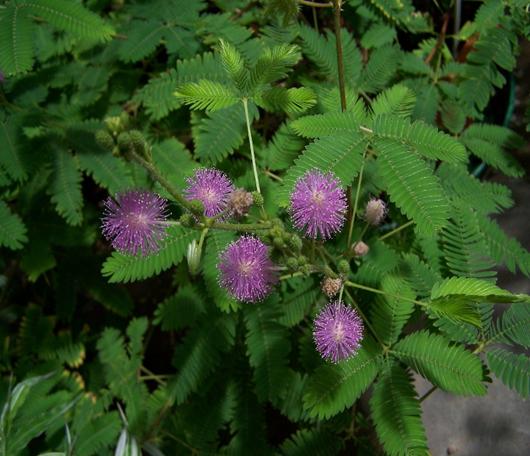
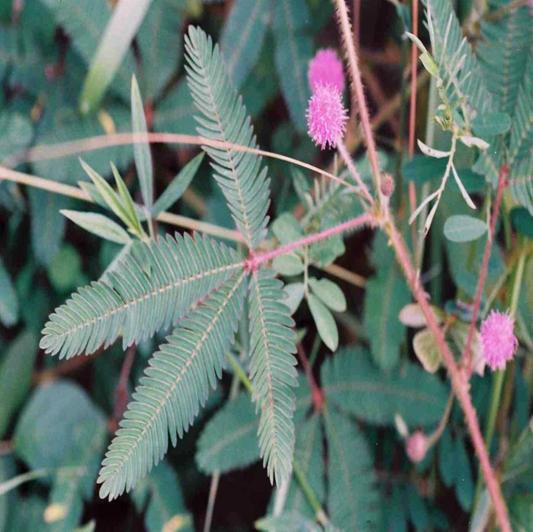
This thorny shrub grows 30 to 100 cms. in height. The stalk of the leaf is long and 4 leaves in the form of paw arise from it. Leaves resemble that of khadir leaves and close up on touching, hence the name lajjalu. namaskari.
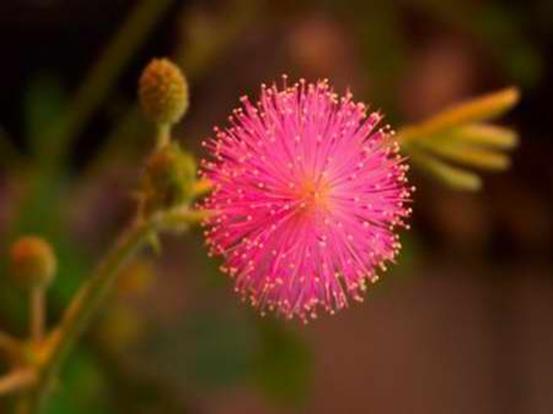
Flowers – delicate and pink arise from the tip of flower stalk. They contain four big androceiums.
Legumes – 1.5 to 2 cms long and bear thorns. Each legume contains 3 to 4 seeds The plant flowers in winter followed by fruiting. It has one more small variety which grows 10.12 cms. high
Distribution & Habitat
It is said that this plant was originally found in Brazil and now it is seen all over India.
Chemical constituents:
mimosine , turgorin, gallic acid, C-glycosylflavones, O-rhamnosylorientin
Properties:
Guna : laghu, ruksha;
Rasa : kashaya, tikta:
Virya : sheeta:
Vipaka: madhur
Karma –
Atisara hara, yoni dosha hara, sopha hara
astringent, alterative, antiseptic, , blood purifier
Srotogamitva:
Dosha : Kaphaghna. pittaghna.
Dhatu : Rakta (hemostatic – haemoptysis. haemorrhoids and menorrhagia); shukra (seeds – diseases of semen), asthi (uniting property).
Mala : Mutra diabetes), purisha (diarrhoea, dysentery and colitis). Organs Uterus (menofrhagia).
Indication:
Mandali visham, sopham, rakta pittam, ganda mala, kusta
diarrhoea, dysentery, haemophilic conditions, leucorrhoea, piles, fistula, hydrocele, glandular swellings
Part used:
Whole plant
Dosage:
Leaf juice 10-15 ml
Powder 2-4 g
Decoction 50-100 ml
uses:
External uses : It has uniting, wound healing and hemostatic properties, hence is used in wounds, ulcers and fistulae.
Internal uses : It is a good astringent. It acts as a vasoconstrictor. thus providing relief in haemoptysis, menorrhagia and bleeding piles. Lajjalu is also a blood purifier and anti-inflammatory. Because of its astringent property, it is used in diarrhoea and dysentery Seeds are particularly useful in prameha and diseases of the semen. It is also useful in fractures and poisons.