Botanical Name: Musa paradisiaca Linn.
Family: Musaceae
Introduction:
latin name: Musa = muza – from the Egyptian name: paradistaca of paradise.
Scientific classification: Bananas make up the genus Musa of the family Musaceae. The plantain, or cooking banana, is classified as Musa paradisiaca. The Manila hemp is classified as Musa textilis.
This plant is very much popular in kerala, suppose if you go to market and ask ‘pazham’ ( which means only fruit), whatever be the plenty different fruits available, the seller will give you only ‘bannana’.
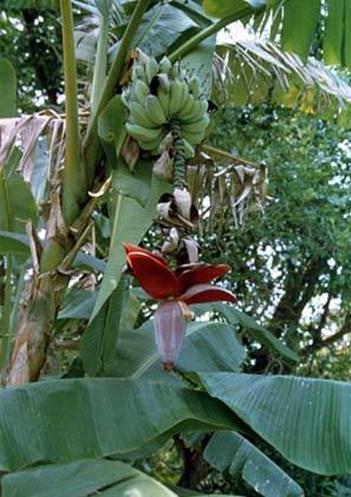
Banana, common name for any of a genus of tropical, treelike herbs and also for their fruit. Species of the genus are native to Southeast Asia but are now grown extensively in all tropical countries for their fruit, fiber, or foliage. The banana is a large, herbaceous plant with a perennial root, or rhizome, from which the plant is perpetuated by sprouts or suckers. In the tropics the stems are annual—that is, they die after perfecting the fruit, and new stems are developed from buds in the rootstock. These stems, or buds, are the common means of propagating and making new plantations, and the growth is so rapid that the fruit is usually ripe within ten months after the offsets are planted. When fully grown the stem attains a height of 3 to 12 m (10 to 40 ft) and is surmounted by a crown of large oval leaves up to 3 m (10 ft) long, with a strong fleshy footstalk and midrib. The flowers spring in great spikes from the center of the crown of leaves and are arranged in whorl-like clusters along the spike; the female flowers occupy the base of the spike, and the male the apex. The fruits vary in length from about 10 to 30 cm (about 4 to 12 in). The average weight of a bunch is about 11 kg (about 25 lb), but individual bunches often exceed 18 kg (40 lb). A stalk bears only once, dies down, and is replaced by sprouts, two or three of which are allowed to bear fruit.
The fruit of the plantain, or cooking banana, is larger, coarser, and less sweet than the kinds that are generally eaten raw. The edible part of the banana contains, on the average, 75 percent water, 21 percent carbohydrate, and about 1 percent each of fat, protein, fiber, and ash. Other parts of the plant abound in fiber, which can be used in the manufacture of paper and cordage. One species is the source of Manila hemp.
Half of the world's banana crops are grown in Asia, and much of the produce is used locally. The leading banana-export regions are Central America and northern South America.
Names in different Indian languages
| English | Banana, Plantain, kadali |
|---|---|
| Hindi | Kela |
| Kannada | Balehannu |
| Malayalam | Kadalivala, vazha, kshetrakadali |
| Sanskrit | Kadali |
| Tamil | Kadali vazhai |
| Telugu | Ariti, kadalamu |
| Unani | Kelaa, Mouz |
| Folk |
Synonyms
Kadali, Rambhaa, Sakrtphala, Vaaranaa, Mochaa, Ambusaara, Anshumatiphal
Musa Sapientum Linn
Classification according to Charaka, Susrutha & Vagbhata
| Charaka | |
|---|---|
| Susrutha | |
| Vagbhata |
Varieties & adulterants – (CV – controversy, AD – adulterants)
Morphology
It is an annual herb, grows up to 3-7 m height
Leaves – oblong, large size
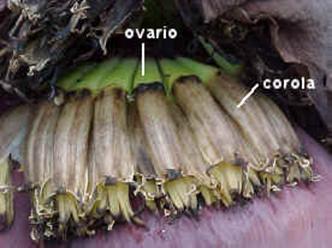
Flowers – unisesual,
Fruit – berry, parhenocarpic
Distribution & Habitat
Throughout India , cultivated
Chemical constituents:
Sugar,minerals, vitamins, Dietary fibre, anti-ulcerogenic acylsterylglycoside, sitoindoside IV, uronic acid
Properties:
Guna: snigdha:
Rasa: madhur, kashaya;
Veerya : sheeta;
Vipaka: madhur
Karma –
Vrishyam, balyam,, mehaghnam (apakva), raktapittaharam, ruchyam, grahi
carminative, digestive,astingent, bitter, aphrodisiac, decreases lipid cholesterol level, blood purifier, antipyretic, antimicrobial, antifungal
Srotogamitva:
Dosha: Fruit .Vatapittaghna, kaphavardhak.
Dhatu: Majja, rakta (pitta -flowers and ripe fruits are given), shukia (reduces debility), manse roeda
(brimban). – . –
Mala: Purisha (in cholera, juice of stalk rn usçd), dysuria (stalk juice), manovahasrotas (hysteria and epilepsy – stalk ) – shamak and brain tonic).
Antidote: Juice of stalk is given in morphine and arsenic toxicity.
Indication:
Urustamba, kandu, kusta, netraroga, pradara, udavartha, gulma, karna sula, keshya, raktapitta
dysuria, polyuria , menstrual disorders, asthma,bleeding disorders, leucorrhoea
Part used:
Rhizome, fruit, leaves, stem (inner hard white core), inflorescence
Dosage:
Leaf juice 10-15 ml
Powder 2-4 g
Decoction 50-100 ml
uses:
External uses: Fruit pulp, leaves and flowers am applied on burnt injuries. In dysuria, paste of the rhizome is applied on the lower abdomen. Mixture of turmeric and bananakshar is applied on sidhma kushta. Its kshara acts as a lekhan dratya.
Internal uses: Being shamak and brain tonic, juice of stalk is used in hysteria and epilepsy. Raw as well as ripe banana are used in diarrhoea and dysentery. In excessive think, sharbat of ape busts is given. In cholera, its juice is given to reduce thirst.
Flowers and ripe fruits are used in bleeding disorders. Ripe fruit acts as an expectorant if given in dry cough. Juice is used in dysuria while fruit in urinary disorders. In seminal debility, vaginal discharges and burning sensation, ripe banana is useful. juice of stalk is an antidote to morphine and arsenic toxicity.
Important Yogas or Formations:
Kadali kalparasayana