Botanical Name: Momordica charantia Linn.
Family: Cucurbitaceae
Introduction:
Latin name : Momordica – original Latin name mordeo one bite, appears jagged as if bitten; charantia.
Names in different Indian languages
| English | Bitter Gourd, Blsam Pear, Carilla |
|---|---|
| Hindi | Karela, kareli |
| Kannada | Karate, hagalakayi |
| Malayalam | Kaipa, paval, kaypaka |
| Sanskrit | Kaaravellaka |
| Tamil | Pavakai, paval |
| Telugu | Kakara |
| Unani | Karelaa |
| Folk |
Synonyms
Kaaravellaka, Kaaravella, Kaathilla, Sushaavi
Classification according to Charaka, Susrutha & Vagbhata
| Charaka | |
|---|---|
| Susrutha | |
| Vagbhata |
Varieties & adulterants – (CV – controversy, AD – adulterants)
Varieties : There are two varieties – 1) large – karavellali and 2) small – karavelli.
Morphology
Annual creeper with tendrils.
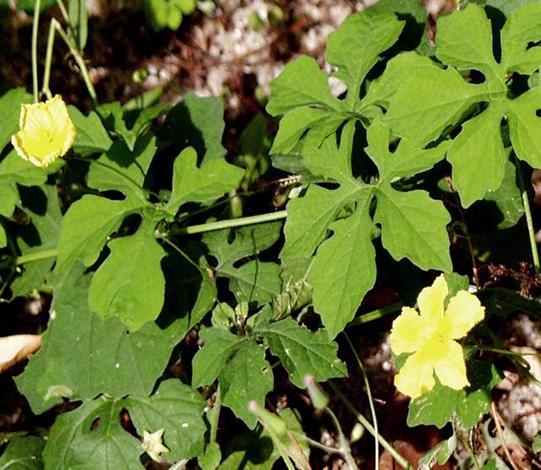
Leaves – simple, entire, cordate–round. with irregular margins.
Flowers – yellow, unisexual
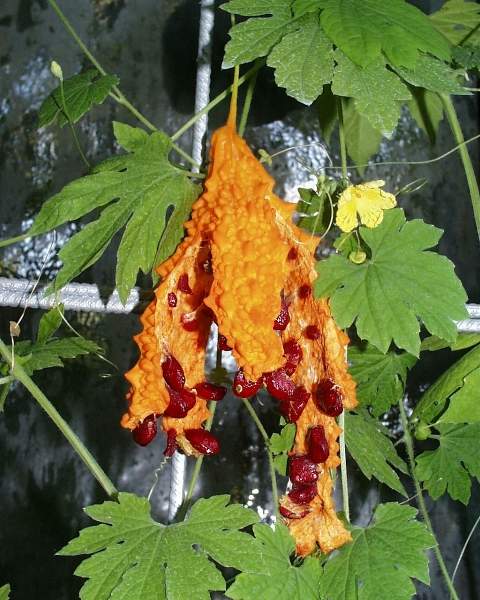
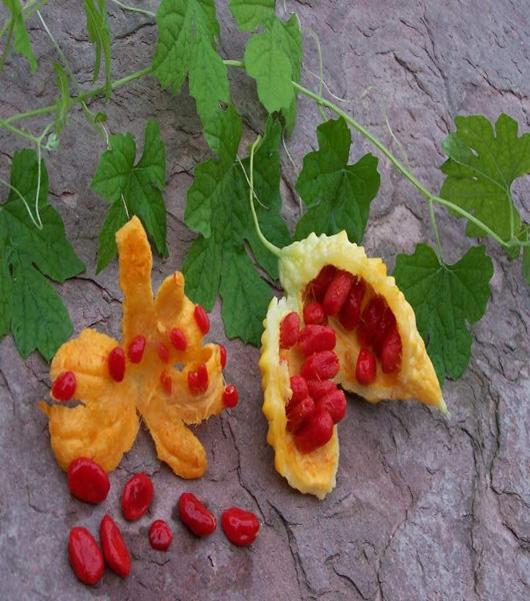
Fruits – 2.5 to 7 cms. long, green with tapering ends and triangular spikes on the surface.
Seeds – 05.-1 cm. in size, flat.
Fruits are used as vegetable.
Distribution & Habitat
Throughout India cultivated
Chemical constituents:
Rich in iron and minerals, Hydroxyl tryptamine, charantin, diosgenin, cholesterol, lanosterol , betasitosterol, cucurbitacin glycosides
Properties:
Guna: laghu, ruksha;
Rasa : tikta;
Veerya : ushna;
Vipaka – katu
Karma –
Dipani, bedaka, pachana, vishaghna, krimi-kustaghna
stomachic, laxative, antibilious, emetic, anthelmintic
Srotogamitva:
Dosha : Tridoshashamak,
Dhatu : Rasa (galadogogue, dysmenorrhoea, amenorrhoea), wound healing, rakta, meda (anaemia), rakta (dermatoses), liver disorders, high blood sugar, bleeding disorders).
Mala : Mutra (calculi, urinary disorders). purisha (helminthiasis), Organ : Intestine.
Indication:
Kamala, pandu, kusta, kandu, jwara, swasa, kasa, vrana, prameha, visha,
fever, skin disease, cough, piles, leucorrhoea,vomiting, dysentery, gout, burning sensation
Part used:
Whole plant
Dosage:
Leaf juice 10-15 ml
Powder 2-4 g
Decoction 50-100 ml
uses:
External uses : It has analgesic, wound cleaning and healing properties. It is useful in burning sensation. dermatoses and piles. It is beneficial to the eyes. Leaf juice is applied on eyes in night blindness.
Internal uses : Being an appetizer, digestive, cholagogue, purgative and anthelmintic, it is used in anorexia, loss of appetite, ama dosha, liver disorder&, piles and helminthiasis. It is a blood purifier, anti-inflammatory, diuretic, emmenagogue and galactogogue. It alleviates kapha hence It is useful in blood disorders, inflammation, asthma, cough, dysmenorrhoea, amenorrhoea, disorders of lactation, urinary disorders, dermatoses. fever, obesity and poisoning. Experience has shown that it is an excellent remedy for high sugar levels in blood and urine.