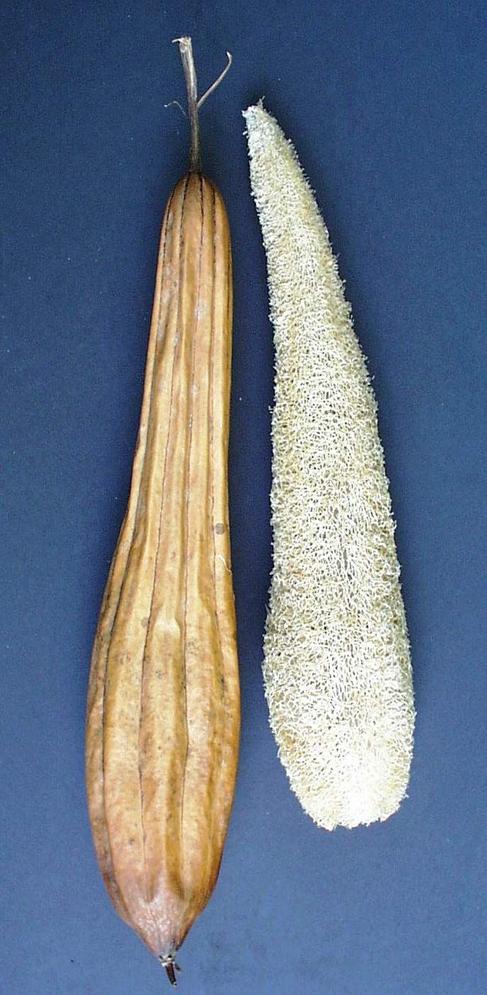
Botanical Name: Luffa cylindrical (Linn.)M. J. Roem.
Family: Cucurbitaceae
Introduction:
Latin name : Luffa = Malayan name; cylindrica = round and oblong like a cylinder.
In my childhood, it was used for bath .
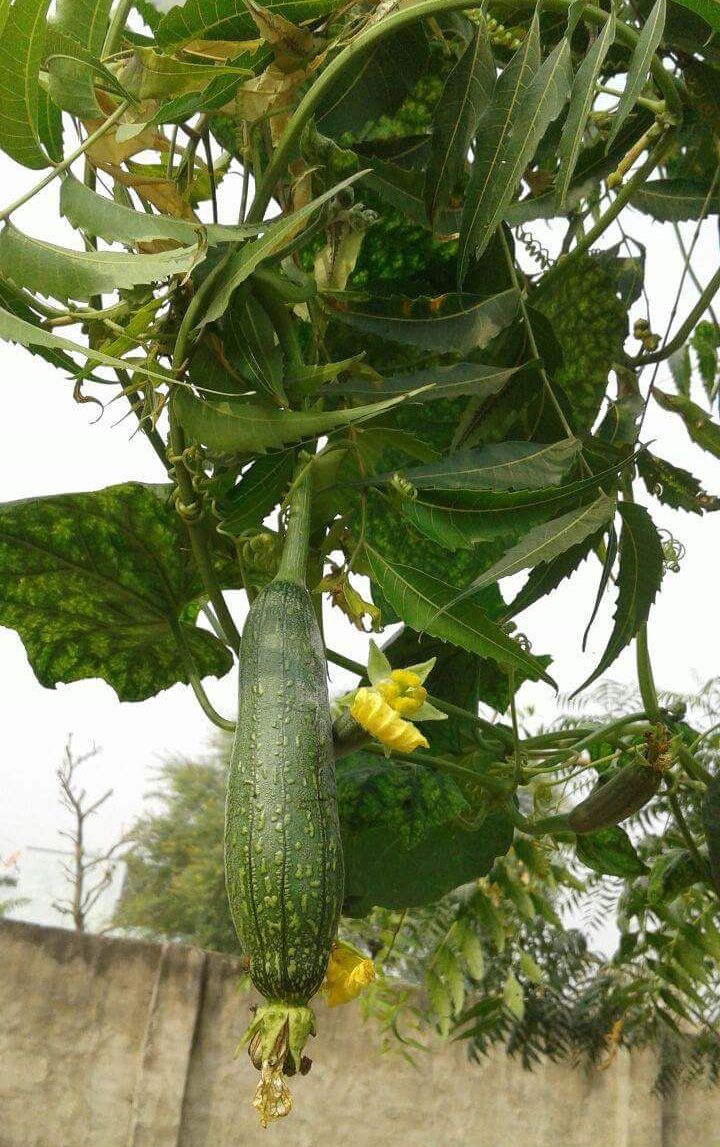
Names in different Indian languages
| English | Smooth Luffa, Spongegourd, sponge Cucumber |
|---|---|
| Hindi | Khiya tori |
| Kannada | Tuppahire |
| Malayalam | Kattupichil, puttalpeeram, perum peram, peechinga |
| Sanskrit | Mahaakoshtaki |
| Tamil | Mozhukupeerankai, Pikku. |
| Telugu | Netibirakaya |
| Unani | |
| Folk |
Synonyms
Dhaamaargava, Mahaakoshtaki, Mahaajaalini, Raajakoshataki.
Luffa aegyptiaca Mill.
Luffa pentandra Roxb.
Classification according to Charaka, Susrutha & Vagbhata
| Charaka | |
|---|---|
| Susrutha | |
| Vagbhata |
Varieties & adulterants – (CV – controversy, AD – adulterants)
Morphology
Monoecious climber
Leaves are pentangular and dentate, reniform, 15 cms. in diameter,
flowers – yellow. unisexual.
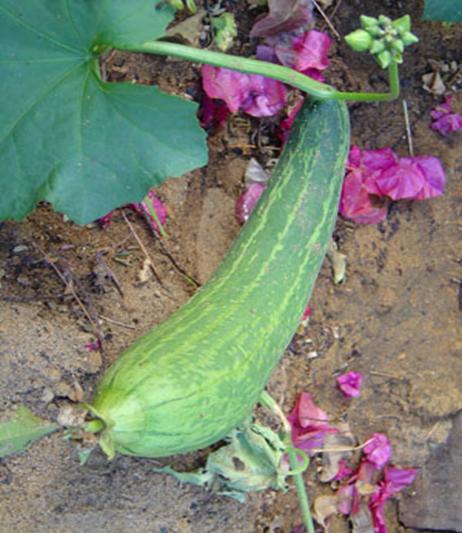
Fruits – oblong, 26 cm. x 50 cms. long with white streaks on them. Seeds – black and winged.
Distribution & Habitat
Throughout India
Chemical constituents:
ginsenosides , lucyosides, pentacyclic triterpene, bryonolic acid.
Properties:
Guna : laghu, ruksha. tikshna; ( snigdha – Dha. Ni )
Rasa : tikta. katu;
Vipaka katu; (madhur – Ra.)
Virya : ushna;
Karma –
Vrisya, krimihari, virechana, ruchyam, deepana
carminative, digestive,astingent, bitter, aphrodisiac, decreases lipid cholesterol level, blood purifier, antipyretic,
Srotogamitva:
Dosha : Kapha (purification), pitta (purification), vataghna.
Dhatu : Rakta (purification), rakta (bleeding disorders).
Mala : Purishashodhan (ascites).
Organ : Large intestine, stomach, It is used as an antidote to poisons
Indication:
Kasa, swasa, visha, vrana, gulma, udara
pharyngitis, rhinitis, mastitis, oedema, swellings ,burns, bronchitis, amenorrhoea , migraine.
Part used:
Fruit, seed, leaves
Dosage:
Leaf juice 10-15 ml
Powder 2-4 g
Decoction 50-100 ml
Uses : The bitter variety is emetic and purgative. Therefore, it is useful in ascites, cough, asthma and hoarseness of voice (by expectoration of mucous). It is useful in blood disorders, oedema and acts as an antidote in poisons. Parts used : Fruits, flowers, leaves
Important Yogas or Formations:
Charaka in the Kalpa sthana, like many other plants, has mentioned 60 formulations of dhamargava.)