Botanical Name: Luffa acutangula (Linn.) Roxb. var. amara (Roxb.) C. B. Clarke.
Family: Cucurbitaceae
Introduction:
Latin name : Luffa = Malayalam name; acutangulata = sharp edged, acute pointed angles, striations of sweet gourd.
Names in different Indian languages
| English | Ribbed or Ridged Gourd |
|---|---|
| Hindi | Tori, kali tori |
| Kannada | Kadupadagila |
| Malayalam | Pichil, pichinga |
| Sanskrit | Katukoshataki, dhamargvah |
| Tamil | Pikangai, pirkkangai |
| Telugu | Birakaya |
| Unani | |
| Folk |
Synonyms
Katukoshataki, Tiktakoshtaki, Sutika, Mridanga phalini, Koshavati, Karkoti, Tiktaghotali,Jyotsna, Katudalinee, Devadan
Classification according to Charaka, Susrutha & Vagbhata
| Charaka | |
|---|---|
| Susrutha | |
| Vagbhata |
Varieties & adulterants – (CV – controversy, AD – adulterants)
Morphology
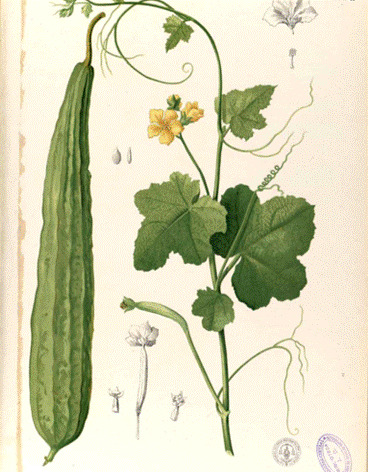
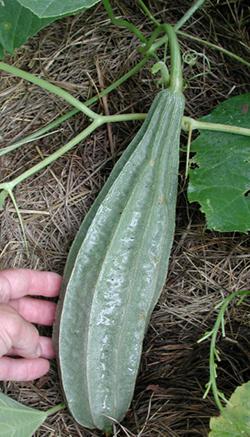
A creeper with fruit 7.5 to 12.5 cms. long. There are 10 striations on its upper surface. Fruit pulp is white and has no specific odour. Seeds are grayish with black spots.
It is a climber with tendrils
Leaves – palmately 5-7 lobed
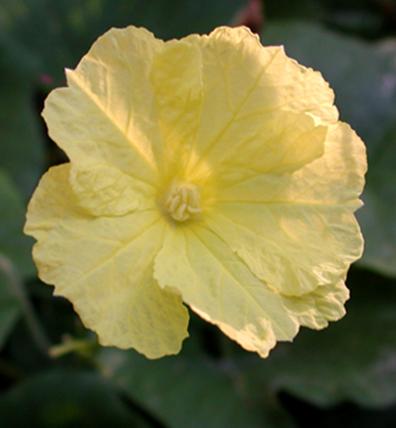
Flower – unisexual, solitary, racemes
Distribution & Habitat
Throughout India
Chemical constituents:
triterpene saponins
Properties:
Guna : laghu. ruksha, tikshna:
Rasa : tikta. katu:
Vipaka katu;
Virya : ushna:
Karma –
Deepana, pachan,
purgative, diuretic, emetic, expectorant
Srotogamitva:
Dosha : Kaphaghna (shodhan), pittaghna (shodhan), vatavardhak.
Dhatu : Rasa (fever), rakta (inflammation. splenomegaly, cough. dermatoses and anaemia). meda (urinary disorders).
Mala : Purisha (purgation).
Organs : Stomach and chest
Indication:
Swasa, kasa, jwara, krimi
oedema, splenic enlargement, cough and asthma.
Part used:
Fruit, leaves
Dosage:
Leaf juice 10-15 ml
Powder 2-4 g
Decoction 50-100 ml
Uses : It is used for shodhan in kapha-pitta disorders )emesis and purgation). It is used in ascites. tumour, blood disorders, inflammation. splenomegaly, cough, asthma and dermatoses where shodhan is required.