Botanical Name: Litsea glutinosa (Lour.) C. B. Robinson
Family: Lauraceae
Introduction:
Latin name: Litsea = Japanese name of the plant; chinesis = from China
Names in different Indian languages
| English | Common Tallow Lowrel |
|---|---|
| Hindi | Maghaase |
| Kannada | |
| Malayalam | Elumpurukki |
| Sanskrit | Medaasaka |
| Tamil | Mushaippeyetti, Uralli. |
| Telugu | |
| Unani | Maidaa-lakdi, |
| Folk |
Synonyms
Karkameda, Medalakadi, Medalakavi, Meda
Litsea sebifera Pers.
Litsea chinensis Lam.
Classification according to Charaka, Susrutha & Vagbhata
| Charaka | |
|---|---|
| Susrutha | |
| Vagbhata |
Varieties & adulterants – (CV – controversy, AD – adulterants)
Morphology
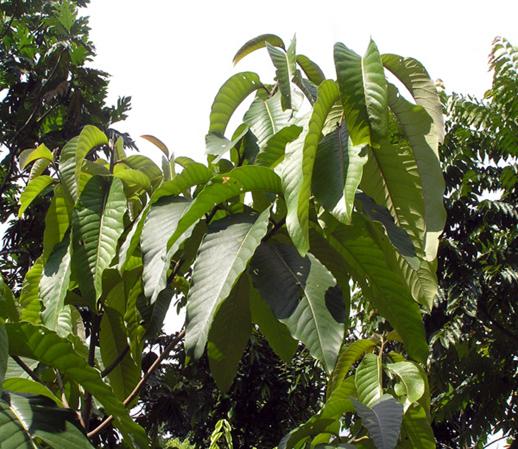
This evergreen tree grows 7 to 8 mt.. high. Bark – 3 cm. thick, externally ash-grey but red inside, water turns slimy on immersing the bark in it.
Leaves – 13 toI6 cm. long and scented, 10 to 12 paired.
Flowers – tiny, compound. spadix inflorescence, whitish yellow in colour. Fruits – are pea-like. The tree flowers in summer and fruits in rainy season.
Distribution & Habitat
North India
Chemical constituents:
boldine, laurotetanine, actinodaphnine
Properties:
RASA-kashaya
GUNA-laghu
VIRYA-ushna
VIPAKA-katu
Karma –
demulcent, emollient, astringent, antidiarrhoeal, anodyne
Srotogamitva:
Dosha: Kaphaghna, vataghna.
Dhatu: Majja (sciatica, backache), rakta (bleeding disorders), shukra (impotency).
Mala: Purisha (astringent).
Indication:
Ulcers, wounds, fever, skin disease, cough
Part used:
Bark, leaves, root
Dosage:
Leaf juice 10-15 ml
Powder 2-4 g
Decoction 50-100 ml
uses:
External uses: Anti-inflammatory property of bark and oil is useful in arthritis, fractures, contusions and Joint stiffness.
Internal uses It is vatashamak, analgesic, anticonvulsant and increases vascular tone. Therefore it is useful in sciatica,- gout, backache and rheumatoid arthritis. It is used in loss of appetite, diarrhoea and ascites as it is katu, tikta, ushna, appetizer and astringent. Also useful in inflammation, oedema. bleeding, chronic cough, impotency. and skin diseases.