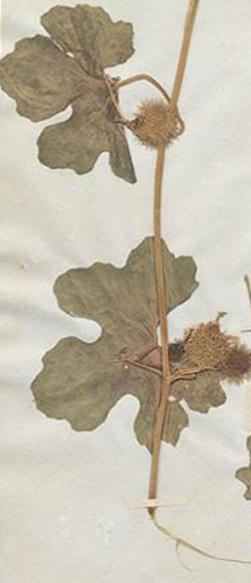
Botanical Name: Luffa echinata Roxb.
Family: Cucurbitaceae
Introduction:
This plant plenty in North India, not common in South India.
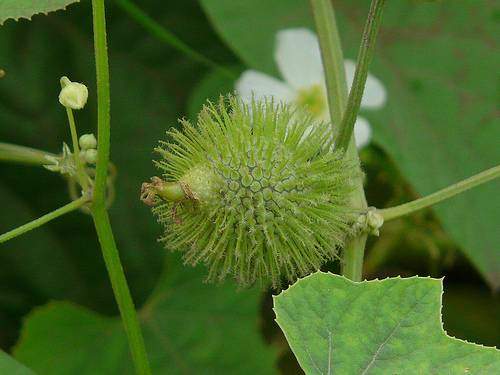
Latin name : Luffa = Malayan name: echinata = sea urchin like.
Names in different Indian languages
| English | Bristly Luffa |
|---|---|
| Hindi | Bandaal |
| Kannada | |
| Malayalam | |
| Sanskrit | Devadaali |
| Tamil | |
| Telugu | |
| Unani | |
| Folk | Bandaal |
Synonyms
Devadaali, Devataadaka, Jimuuta, Garaagari, Kothaphala, Jeemutaka. Kantaphala. Ghora, KarkatiSaramushika. Koshavritta. , Romashpatrika.
Classification according to Charaka, Susrutha & Vagbhata
| Charaka | |
|---|---|
| Susrutha | |
| Vagbhata |
Varieties & adulterants – (CV – controversy, AD – adulterants)
Varieties : 1) White 2) red and 3) yellow.
Morphology
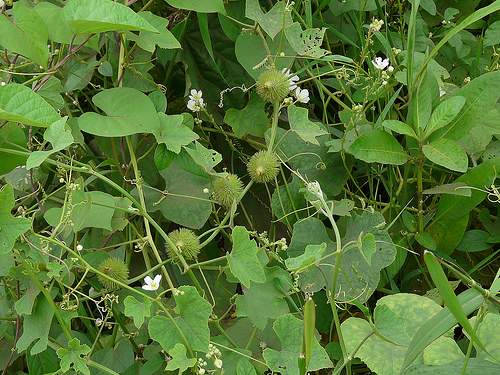
This is a slender creeper with thin and pentangular stalk.
Leaves – serrated, round shaped. 2.5 to 5cm. long.
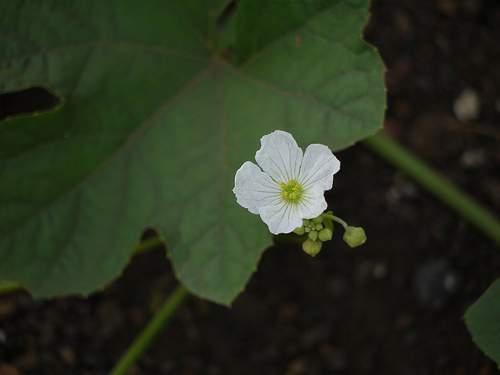
Flowers – small, white.
Fruits – spiny, netted, slightly oblong, yellowish.
Seeds – small. panchang is very bitter to taste. Even repeated washing of the hands after crushing it. does not remove the bitterness.
Distribution & Habitat
North India
Chemical constituents:
Chrysoeriol, glycosides , cucurbitacin B, triterpene alcohols, saponin,oleanolic acid , sapogenin.
Properties:
Guna : laghu. ruksha. tikshna;
Rasa : katu. tikta;
Vipaka : katu;
Virya : ushna;
Karma –
Purgative, carminative, digestive, astingent
Srotogamitva:
Dosha : Tridoshahara, specially kaphahara, pittasarak.
Dhatu : Rakta (jaundice, liver spleen enlargement), (epilepsy), rasa (dysmenorrhoea, fever).
Mala : Mutra (dysuria), purisha.
Organ : Head, uterus, obstructed labour, stomach (emetic)
Indication:
nephritis , bronchitis
Part used:
Fruit, leaves, root
Dosage:
Leaf juice 10-15 ml
Powder 2-4 g
Decoction 50-100 ml
uses:
External uses : Juice is applied on wounds. A rectal suppository made from its fruits is used in piles. Juice in the form of nasya (nasal drops) is used in jaundice, epilepsy and sinusitis. Intense menorrhoea is observed after nasal administration of the juice.
Internal uses: Large dose is emetic whereas a small dose is appetizer, liver stimulant and cholagogue. Therefore it is useful in loss of appetite, hepatosplenomegaly, jaundice and piles. It is also useful in blood disorders, oedema, cough, asthma, hiccups, dysuria, dysmenorrhoea, obstructed labour and skin diseases.