Botanical Name: Ipomoea pes-caprae (Linn.) Sweet.
Family: Convolvulaceae
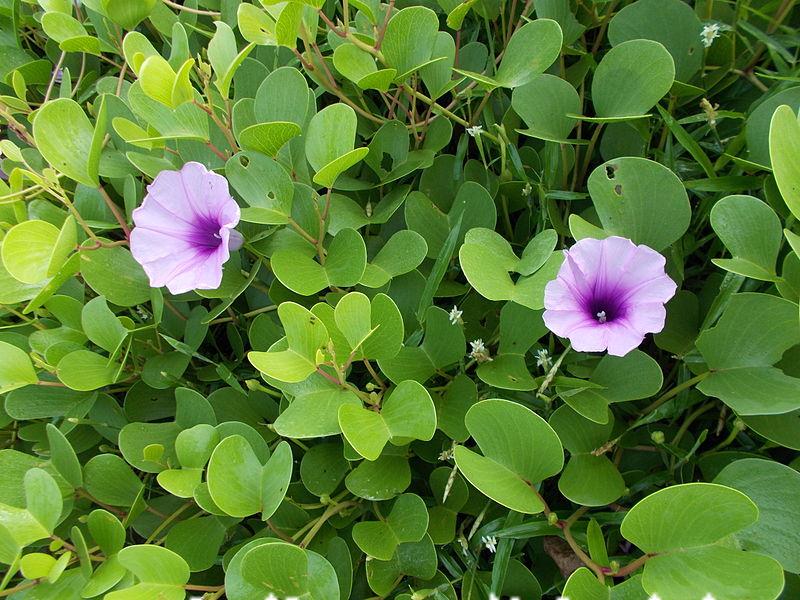
Goat's Foot is a primary sand stabilizer, being one of the first plants to colonise the dune. It grows on almost all parts of the dune but is usually found on the seaward slopes, sending long runners down towards the toe of the dune. The sprawling runners spread out from the woody rootstock, but the large two-lobed leaves are sparse and a dense cover on the sand is rarely achieved except in protected situations. This plant grows in association with sand spinifex grass and is a useful sand binder, thriving under conditions of sand blast and salt spray
Names in different Indian languages
| English | Goat’s Foot Creeper |
|---|---|
| Hindi | Dopatilata |
| Kannada | Bangadivalli |
| Malayalam | Atampu |
| Sanskrit | maryaada- valli |
| Tamil | Adambu, Attukkal, Musattalai |
| Telugu | Balabantatige |
| Unani | |
| Folk |
Synonyms
I. biloba Forsk
Chhagalaantri, Maryaada- valli.
Action & uses:
Astringent, stomachic, laxative, antidiarrhoeal, antiemetic, analgesic
Chemical constituents: