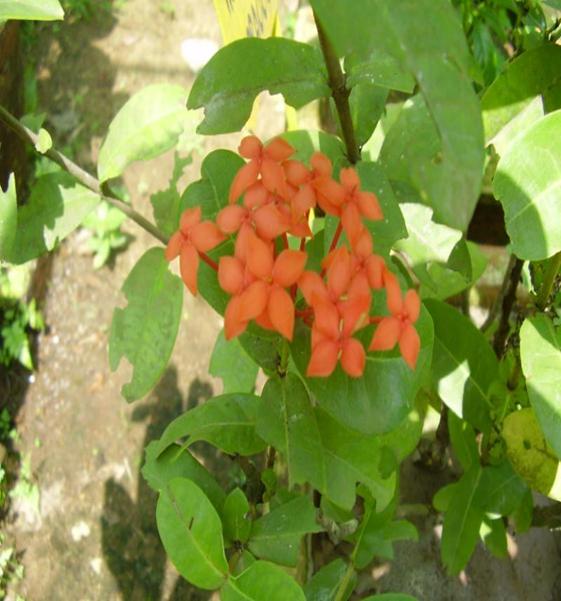
Botanical Name: Ixora coccinea Linn.
Family: Rubiaceae
Introduction:
This plant used as medicinal purpose and ornamental.
Names in different Indian languages
| English | Jungleflame Ixora, sacred ixora, flame of woods |
|---|---|
| Hindi | Rangam, rugmini |
| Kannada | Kiskara, keppulagida |
| Malayalam | Techi, cetti, tetti |
| Sanskrit | Bandhuka, Paaranti |
| Tamil | Vetchi,Thechii. |
| Telugu | manmadibanum |
| Unani | |
| Folk | Rukmini, Rangan |
Synonyms
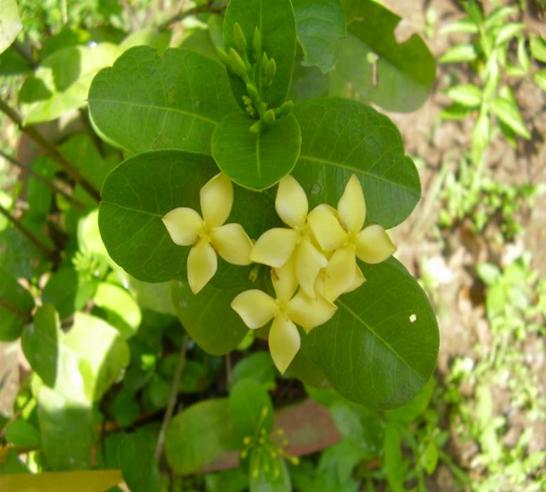
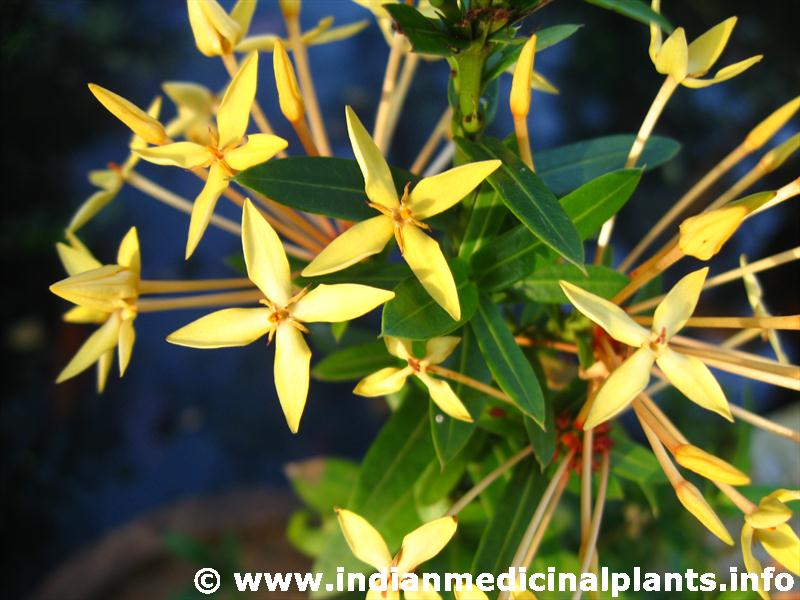
Varieties & adulterants – (CV – controversy, AD – adulterants)
Morphology
It is shrub, grows upto 1-2 m height
Leaves – simple, opposite, lanceolate
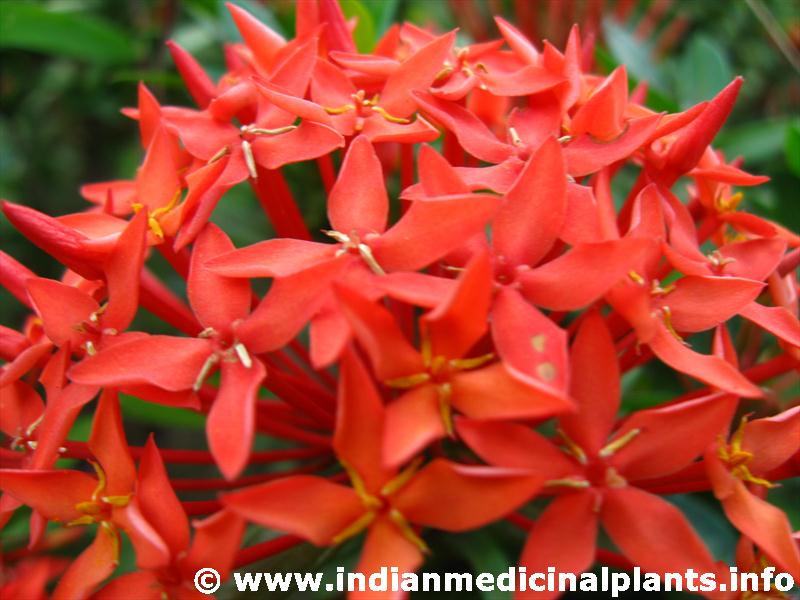
Flowers – dense, corymbiform cymes, like ashoka flowers
Fruits – globose, fleshy
Distribution & Habitat
cultivated
Chemical constituents:
Lupeol, leucocyanidin glycoside
Karma –
Carminative, astringent, antiseptic, blood-purifier, sedative, antileucorrhoeic, antidiarrhoeal, anti-catarrhal
The plant substrate can remove heavy metals, such as lead, cadmium and mercury from polluted water
Indication:
Diarrhea, dysentery, cephalgia, skin disease, ulcer, sores
Part used:
Root, leaves, flowers
Dosage:
10-15 ml
Therapeutic Uses:
- Flower boiled in oil useful in head ache
- Leaf paste useful in skin disease, especially in children.