Botanical Name: Zingiber officinale Rosc.
Family: Zingiberaceae
Introduction:
Mainly dried ginger using in Ayurveda formulation.. So it used as the prashepa dravyas for many drugs.
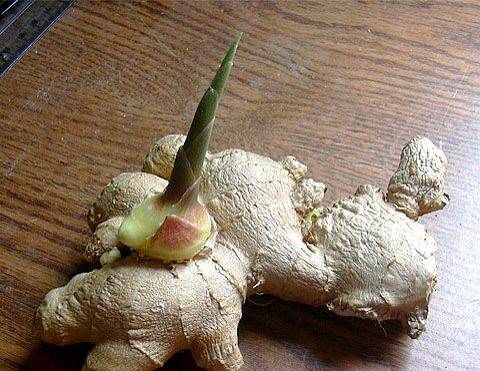
Names in different Indian languages
Fresh Rhizome
| English | Ginger |
|---|---|
| Hindi | Adarak |
| Kannada | Hasisunti, ardraka |
| Malayalam | –Inci, erukkilannu |
| Sanskrit | Ardrakam |
| Tamil | Inji, Allam, Lokottai |
| Telugu | Allamu, ardrakamu |
| Unani | Zanjabeele– Ratab, Al-Zanjabeel |
| Folk |
Dry Rhizome
| English | Dry Ginger |
|---|---|
| Hindi | Soth |
| Kannada | sunti |
| Malayalam | chukku |
| Sanskrit | Sunthi, visvabhesajam |
| Tamil | chukku, Sunthi |
| Telugu | sunti |
| Unani | zanjabeel, Zanjabeel-eyaabis. |
| Folk |
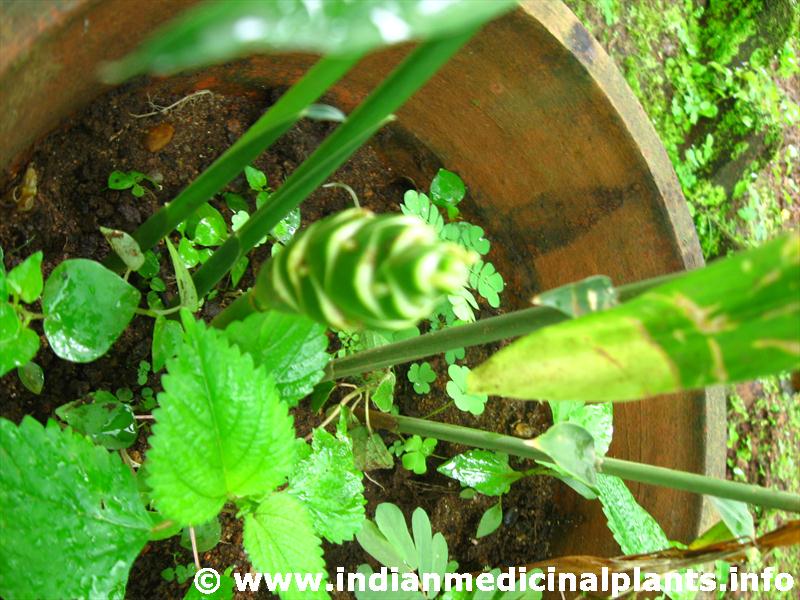
Synonyms
Fresh rhizome—
Aardraka, Aadrikaa, Shrngibera, shrngavera, Katubhadra.
Dried rhizome—
Shunthi, Naagara,Naagaraa, Naagaraka, Aushadha, Mahaushadha, Vishvaa, Vishvabheshaja, Vishvaaushadha
Amomum zingiber L.
Classification according to Charaka, Susrutha & Vagbhata
| Charaka | Triptighna, Arsoghna, Dipaniya, sulaprasamana, Trisnã nigrahana |
|---|---|
| Susrutha | Pippalyãdi, Trikatu |
| Vagbhata | Pippalyãdi, Trikatu |
Varieties & adulterants – (CV – controversy, AD – adulterants)
1. dry ginger – nagara,visvabhesaja
2. fresh ginger – Ardraka,srngabera.
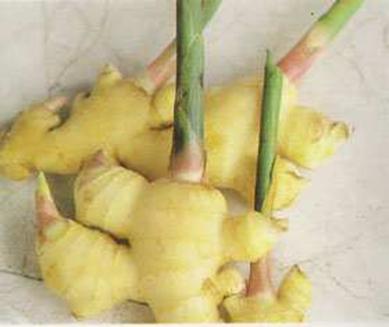
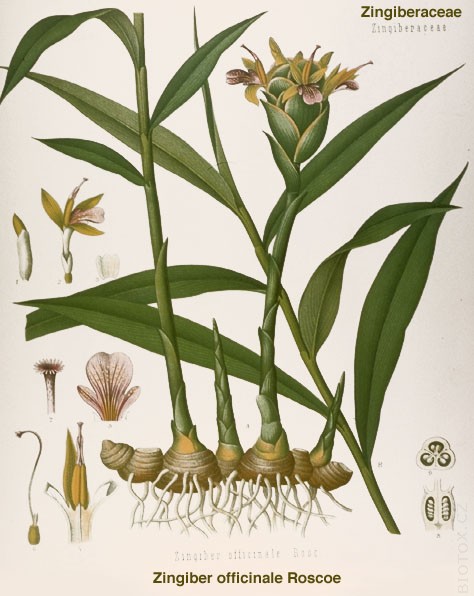
Morphology
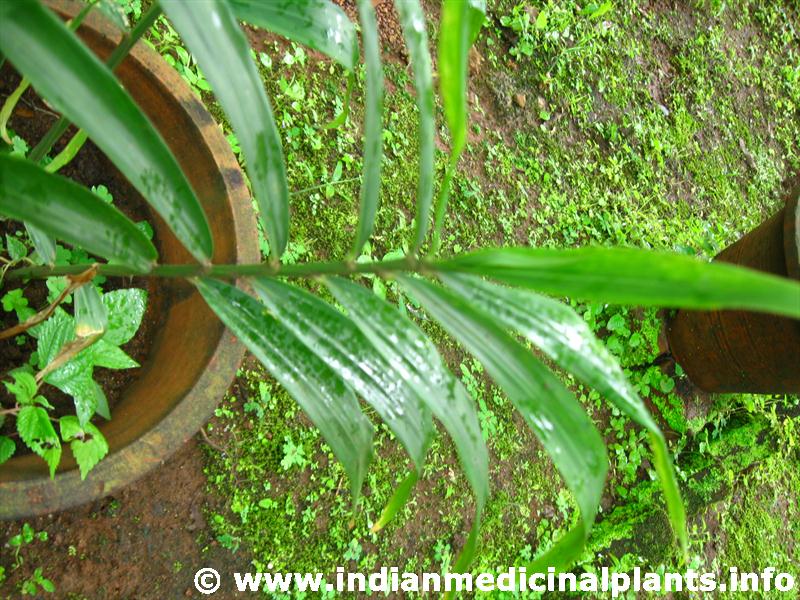
An erect perennial herb with aromatic rhizome.
Stem— erect, leafy, 15-150 cm tall.
Leaves— subsessile, linear-lanceolate or lanceolate, acuminate, glabrous, 10-30 cm long.
Flowers— shoot upto 15 cm long, clothed with sheaths; bracts -2-5 cm x 2 cm, light green; corolla tube light yellow, lip orbicular, dull purple with creamy blotches.
Flowering and fruiting during July-September
Distribution & Habitat
Cultivated.
Chemical constituents:
geranial and neral; and sesquiterpenes, beta-sesquiphellandrene, betabisabolene,
ar-curcumene and alphazingiberene, gingerols, shogaols, curcumene, beta-boürbornene, d-borneal, citral, d-camphene, citronellol, geraniol, gingerol, a- & beta- Zingiberenes, zingiberol, zingerone, gingerols, paradol, gingerenone A, ginger glycolipids A, B, & C; gingerdiol; gingerone B & C
Properties:
Rasa Katu
Guna Guru Ruksa, Tiksna
Virya Usna
Vipãka Madhura
Karma Vãta-kaphahara, Dipana, Bhedana,pachana, vrisya, balya, rochana, sophahara, jwaraghna
antiemetic, antiflatulent, hypocholesterolaemic, anti-inflammatory, antispasmodic, expectorant, laxative,circulatory stimulant, diaphoretic, anti-inflammatory, antipyretic, analgesic, hypotensive and hepatoprotective
Gingerol and shogaol have been shown to suppress gastric contractions. Both fresh and dried rhizomes suppress gastric secretion and reduce vomiting
Srotogamitva:
Dosha : vatha kapha hara
Dhatu :rasa,rakta
Mala :purisha
Organ : intestine
Indication:
sula, Amavãta, Adhmãna, Atisãra, slipada, Kãsa, svãsa, Hrdroga, sopha, Arsas, Hikkã, Vibandha, Raktapitta, Pãndu, Vrana, Jvara. Kustha, Agnimãndya
irritable bowel , diarrhoea, fever,cough, asthma,flatulence,colic, colds ,influenza,migraine, nausea, vomiting
Part used:
Rhizome (raw and dry)
Dosage:
Powder 2-4 g
Decoction 50-100 ml
Important Yogas or Formations:
Ardraka rasayana, Ardraka Khaãvalehya, Nagaradi Kasaya,
Ardraka ghrta, Ardraka Khanda, Soubhaya Suñti, Samasarkarã churna
Therapeutic Uses:
(1)Pratisyaya— Ardraka is given with milk (S.S.Ut. 24).
(2) Kaphaja Arsas— Ardraka and Kulastha are used (S.S.Ci.6)
(3) Murcha— Ardraka svarasa is used as Nasya (B.P.).
Descriptions on Ayurveda books / Nighandu:
Fresh Rhizome
1
2
3
4
5
6
7
8
9
10
11
12
Dry Rhizome
1
2
3
4
5
6
7
8
9
10
11
12