Botanical Name: Vitex trifolia Linn.
Family: Verbenaceae
Introduction:
This leaves of this plant used for rubbing diseased part in leprosy. It is very useful in joint pain used as ‘ELA- KIZHI’.
Names in different Indian languages
| English | Three leaved chaste tree |
|---|---|
| Hindi | Saphed samhalu, pani-ki-samhalu |
| Kannada | Nekkinocci, sakki |
| Malayalam | Nocci, vennocii |
| Sanskrit | Sinduvarah, sephalika |
| Tamil | Nirnocci, sirunocci |
| Telugu | Nocci, ciruvalli |
| Unani | Sambhaalu, Fanjankisht |
| Folk |
Synonyms
Classification according to Charaka, Susrutha & Vagbhata
| Charaka | |
|---|---|
| Susrutha | |
| Vagbhata |
Varieties & adulterants – (CV – controversy, AD – adulterants)
1. V. trifolia
2. V.agnus – castus
3. V. peduncularis
Classical classification
1. Susruta— 2 types svetapuspa & Nila puspa.
2. Dalhana— 2 types Nirgundi & Sinduvara.
3. Dhanvantari Nighantu— 2 types sveta & Nila.
4. Bhãvamira— 2 types svetapupa (Sinduvara) & Nilapuspi
(Nirgundi)
5. Kaiyadeva— 3 types Nirguidi, Sinduvãra & Sephãlika
6. Sodhala— 2 types Sindüvãra (white) & Sephãlikã (blue)
7. Rãja Narahari— 3 types Sinduvãra, Nilanirgundi & Sephalikã.
8. Nighantu Ratnãkara— 2 types Kartari Nirguidi & Aranya Nirgundi.
Vitex negundo var. purpurascens
Morphology
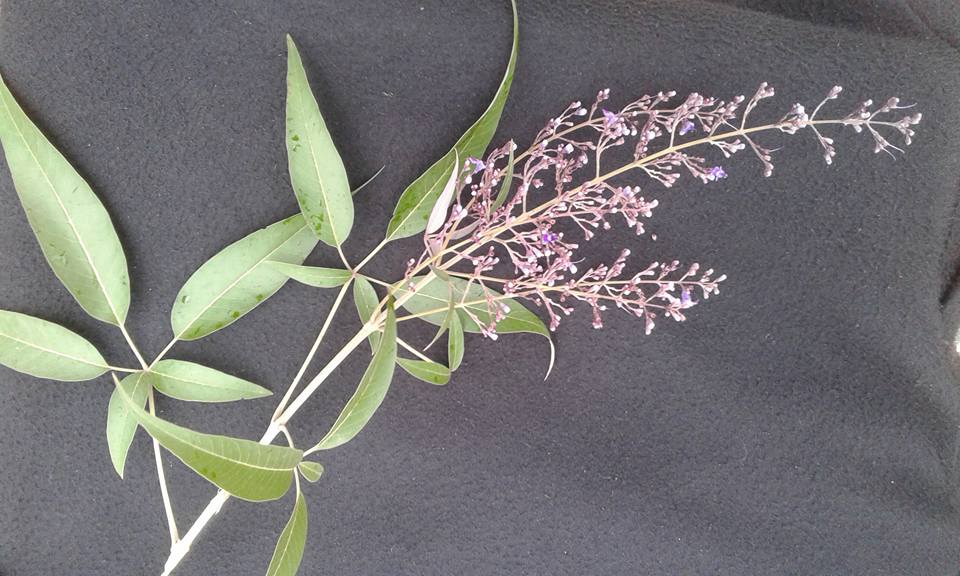
A shrub or small tree.
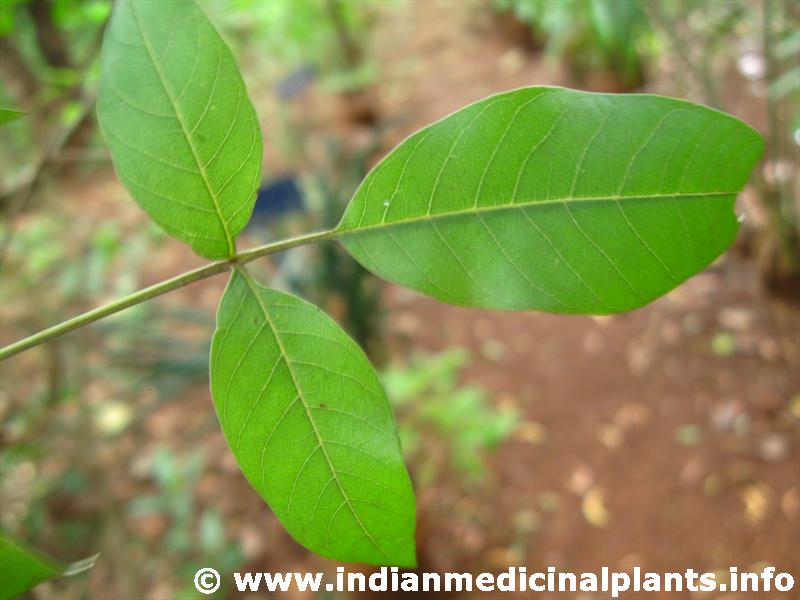
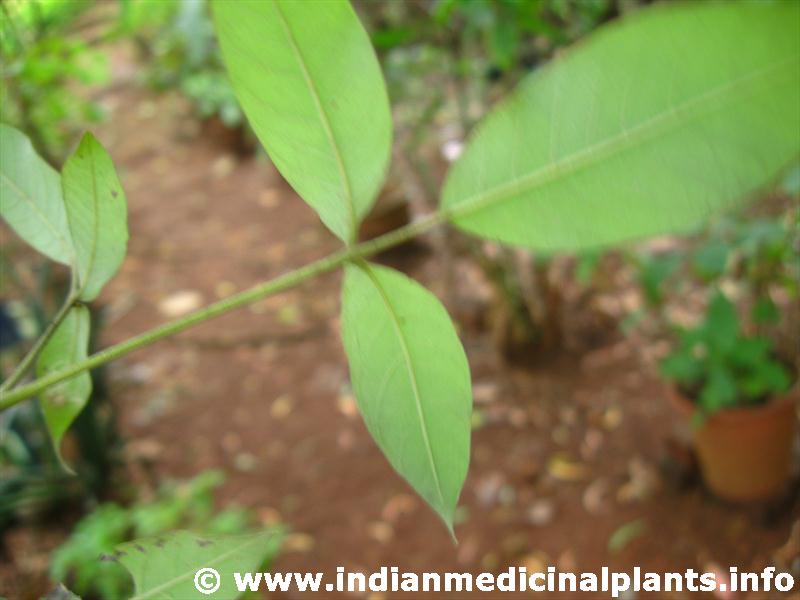
Leaves— simple, trifoliolate; leaflets sessile, obovate or obovate-oblong, entire, glabrous above and white-mealy beneath.
Flowers— light, blue, in panicles, small; corolla tomentosa.
Fruits— globose or obovoid drupes.
Seeds— obovate or oblong
Distribution & Habitat
All over India
Chemical constituents:
casticin , glucosides, luteolin-7-glucoside, vitricine, beta sitosterol, camphene, beta pinenes, angoside, aucubin
Properties:
Rasa Katu, Tikta
Guna Laghu, Ruksa
Virya Usna
Vipaka Katu
Karma – Vata-Kaphahara, Caksusya, Kesya, Krmi, Vranaropana.
Digestive, stomachic, anti-inflammatory, diuretic, expectorant, carminative
Srotogamitva:
Dosha Vatashleshmaghna.
Dhatu : Rakta (skin disorders, pruritus, splenomegaly), meda (leucorrhoea), asthi (infected wounds. Apache, toothache).
Mala : Hair (hair tonic), purisha (parasites).
Organs : Eye, respiratory system, uterus, pelvis.
Indication:
sula, sotha, Amavãta, Krmi, Kustha, Aruci, Vrana, Grdhrasi, Snãyuka, Visarpa, Netra roga, Sãtikã roga, Visa roga, Gandamala
fever, spermatorrhoea, hair loss, O.A. , pain, tuberculosis, leucoderma, cephalgia, memory lose, neural disoeder, skin diseases.
Part used:
Leaves, root, seeds, bark
Tree with serrated leaf type is preferable.
Dosage:
Leaf juice 10-15 ml
Powder 2-4 g
Decoction 50-100 ml
External uses Best analgesic. anti-inflammatory, antibacterial, cleaning and healing wounds. hair tonic. Heated nirgundi leaves are tied over the affected part (or poultice) in headache. scrotal swelling. Sinusitis, arthritic pain and rheumatic arthritis. Decoction prepared from leaves is used for tub bath in endometritis, colitis in these conditions it reduces the obstruction of blood and amakapha, increases perspiration. reduces oedema and also relieves pain. Gargles with decoction of leaves is useful in phatyngitis, stomatitis, difficulty in deglutition and inflammation. Smoke of leaves is useful in headache, sinusitis and common cold. Nirgundi oil is best in wounds for cleaning, anti-infective and to remove foul smell. Oil is also useful in baldness. Nirgundi is also called a upanaha vriksha.
Internal uses
Nervous system It is an analgesic, brain tonic and alleviates vata, therefore useful in headache. sciatica, rheumatic arthritis. synovitis, improves memory
Digestive system Since it has tikta, katu and ushna properties it improves appetite and digestion. It is useful in loss of appetite, anorexia. amadosha, hepatitis and is anthelmintic.
Circulatory system : White flowered nirgundi is used in oedema induced by kaphavata. As it acts on the raktadhatu and alleviates vata and kapha. it is used in inflammatory conditions of liver and spleen. Mixture of leaf juice and cow’s urine is an effective remedy for ascites, Nirgundi is useful in all inflammatory conditions,
Respiratory system : By removing kapha from respiratory passage, it improves ventilation therefore used in kapha kasa, asthma, pneumonia and pleurisy.
Urinary system : Diuretic, hence useful in dysuria and anuria. In gonorrhoeal infection it helps in passing urine smoothly.
Reproductive system : It improves menstrual flow therefore used in dysmenorrhoea and obstetric conditions.
Skin : Valuable medicine in skin diseases; urticaria and eruptions.
Temperature : It helps in digestion of ama, thus reducing fever. It is used as an anupan or a main drug in typhoid and malaria fever.
Medovahasrotas : Decoction is used as a nasya in cervical lymythadenopathy and topical application at leaves also helps.
Eyes – Leaf juice is installed in conjunctivitis, Surma is prepared from seeds.
Ears – Nirgudi oil is useful (leaves + oil) in reducing pain, oozing, inflammation and fungal infection of ear.
Satmikaran : Every part of the body is stimulated, therefore it acts as a rasayan in body. The combination of sheelajit + nirgudi is best rasayan.
Antidote – Latex of Acacia arabica.
Due to strong (pungent) odour, it is used as a mosquito and bed bug repellent. Also prevents insect growth in stored food grains (insecticidal). A parasitic plant grows on nirgundi in rainy season which is useful in mahakushtha. Also effective in guneaworm infestation.
Important Yogas or Formations:
Nirgudikalpa, Nirguditail, Nirgudighrit. In large doses it vitiates pitta and therefore causes pitta disorders. Nirgundi taila, Nirgundi Kalpa.
Therapeutic Uses:
(1) Vãtavyãdhi— Nirgundi root powder shall be given with oil as Anupãna (R.R.S.).
(2) Kãsa—vãsa Decoction prepared with Nirgundi, Gudüci, Haritaki and Marica (equal parts) is given with salt .
(3) Gandamãla— Nirgundi root is pounded with water and given as Nasya (V.M.).
Descriptions on Ayurveda books / Nighandu:
1.
2
3
4
5
6
7
8
9
10