Botanical Name: Vernonia cinerea (Linn)Less.
Family: Compositae; Asteraceae.
Introduction:
This plant used for ‘Anjanam’
Latin name: Vernonia = of the spring: cineria = cinder coloured
Names in different Indian languages
| English | Ash coloured Fleabane, Purple Fleabane. |
|---|---|
| Hindi | Sahadevyi, sadodi |
| Kannada | Sahadevyi, sadodi |
| Malayalam | puvamkurunnila |
| Sanskrit | Sahadevi |
| Tamil | Naichotte Poonde, puvamkuruntil, naycitti |
| Telugu | Gharitikamini, garitikamma. |
| Unani | |
| Folk |
Synonyms
Uttamkanyaka, jwara hara, Dandotpalaa,
Classification according to Charaka, Susrutha & Vagbhata
| Charaka | |
|---|---|
| Susrutha | |
| Vagbhata |
Varieties & adulterants – (CV – controversy, AD – adulterants)
Morphology
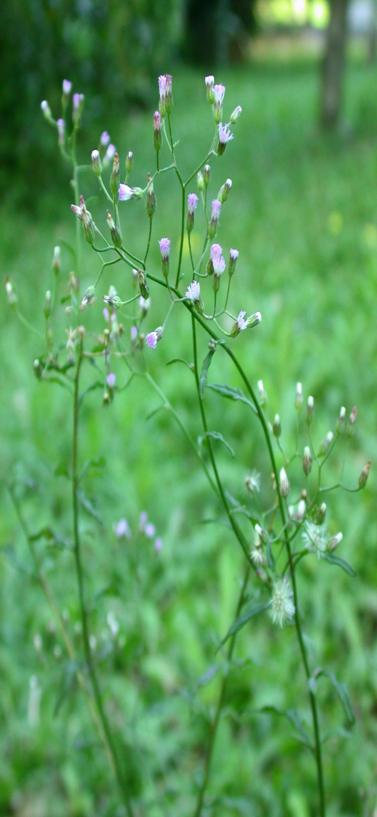
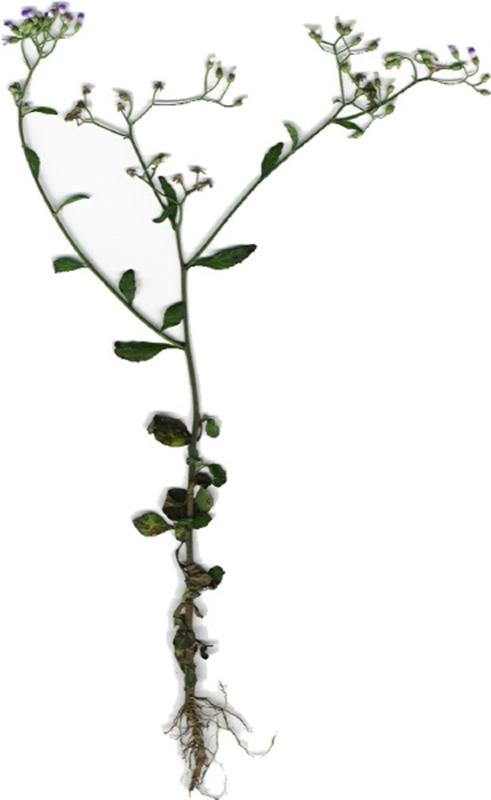
This herb grows 15 –30 cms. in high. Stalk is thin, with sharp borders and bristly hairs.
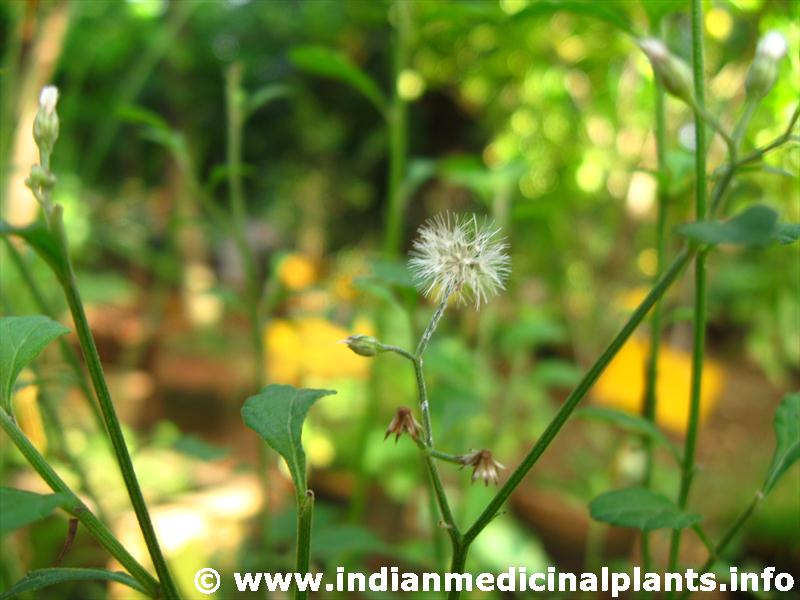
Leaves –simple, different sizes with bristly hair on them and absence of stalk. Flowers blue. purple, appear in rainy season.
Fruits – in winter.
Varieties: Two – I) white flowers and 2) blue flowers.
Distribution & Habitat
All over India.
Chemical constituents:
luteolin-7-monobeta- D-glucopyranoside, betaamyrin, acetate, lupeol acetate, betaamyrin , lupeol
Properties:
Guna: laghu, ruksha, katu;
Guna:laghu
Virya: ushna;
Vipaka : Katu
Prabhav: jwaraghna (antipyretic).
Karma –jwarahara, netrya
diaphoretic, blood purifier, anti fungal, anti bacterial, diuretic , anthelmintic, antiflatulent, antispasmodic;
Srotogamitva:
Dosha: Vataghna.
Dhatu: Saptadhatu, majja, rakta, mansa.
Mala: Sweda, mutra (diuretic, lithotripsic).
Organ: eye
Prabhav: Quaternary fever (antipyretic).
Indication:
leucorrhoea, dysuria, spasm of bladder, dysuria, leucoderma, psoriasis, cough, skin disease
Part used:
Whole plant
Dosage:
Leaf juice 10-15 ml
Powder 2-4 g
Decoction 50-100 ml
Externally, it is used in quaternary fever by tying its root with scalp hair and rubbing its juice on the skin. Paste of the leaves is applied on conjunctivitis and guinea worm. Its laxative, anthelmintic, blood purifying and diaphoretic properties make it useful in piles, intestinal worms, blood disorders, skin diseases, fever and renal calculi. Insects do not stay around this plant.
Therapeutic Uses:
- Decoction useful in fever.