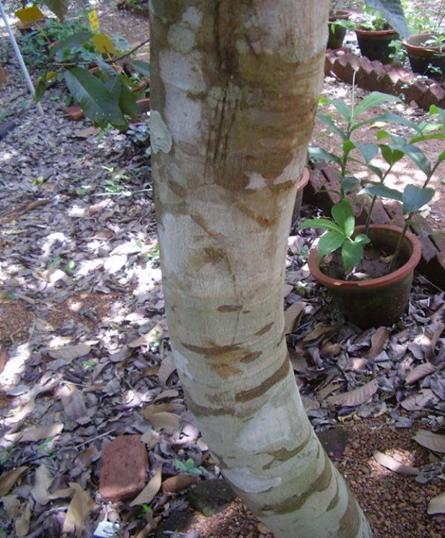
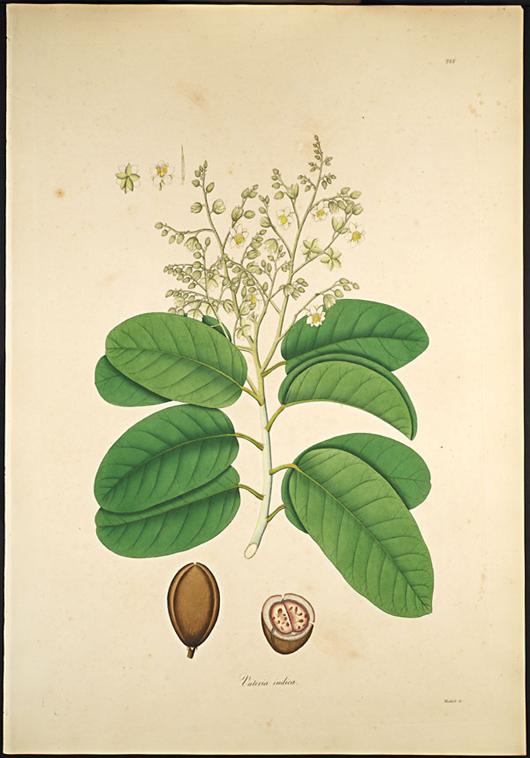
Botanical Name: Vateria indica Linn.
Family: Dipterocarpaceae
Introduction:
This tree from shal kula is evergreen. The tree which give’s rasa is called as sarja but some authors consider it as a variety of shal vruksha. Its gum is also called chandras which is mixed ‘with spirit and laksha and is used for polishing wooden furniture.
Vateria = Abraham Vater, German Botanist; indica = of India
Names in different Indian languages
| English | White Damar, Indian Copal-Tree, Malabar Tallow tree, Piney Varnish-Tree |
|---|---|
| Hindi | Saphed dammar, kahruba |
| Kannada | Rala, hugadamara, bilagaggala |
| Malayalam | Vellappayin, velutha kunturukkam |
| Sanskrit | Sarja |
| Tamil | Kungiliyam, Vellai Kundarakam, painmaram, dhup maram |
| Telugu | Telladamara, dupamaru |
| Unani | Raal |
| Folk |
Synonyms
Sarjaka, Karsya, Sasyasumbara, Devdhuupa, Marich-patraka. Chhaagakarna. Ajakarna , Shaala
Vateria malabarica Bl.
Gum: Devdhoop,Yakshadhoop, Sarjaras, Rat ( useful in ulcers and burns).
Classification according to Charaka, Susrutha & Vagbhata
| Charaka | |
|---|---|
| Susrutha | |
| Vagbhata |
Varieties & adulterants – (CV – controversy, AD – adulterants)
Morphology
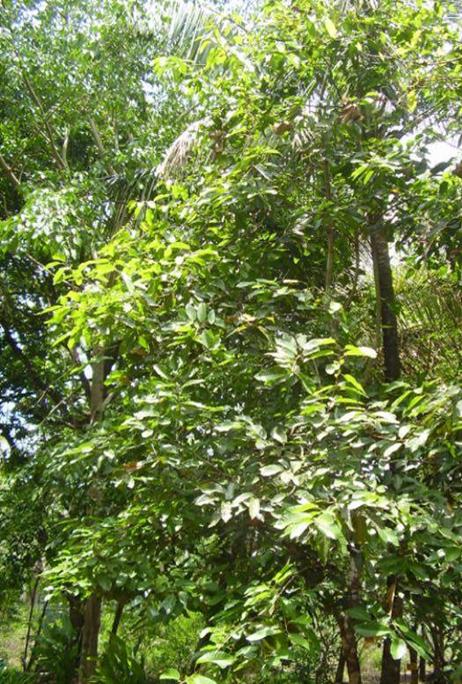
It is an evergreen tree, grows 10-15 m height
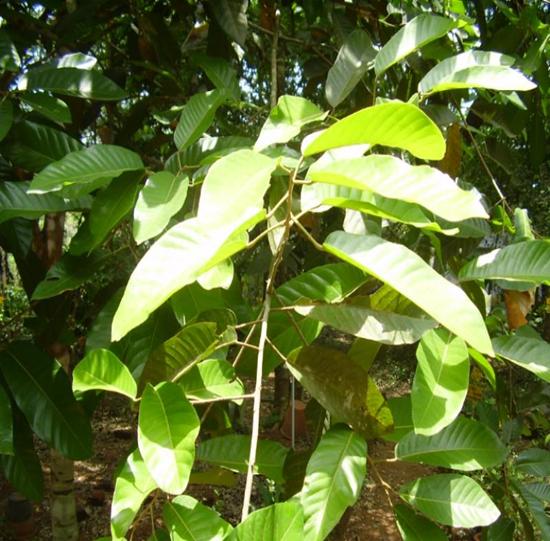
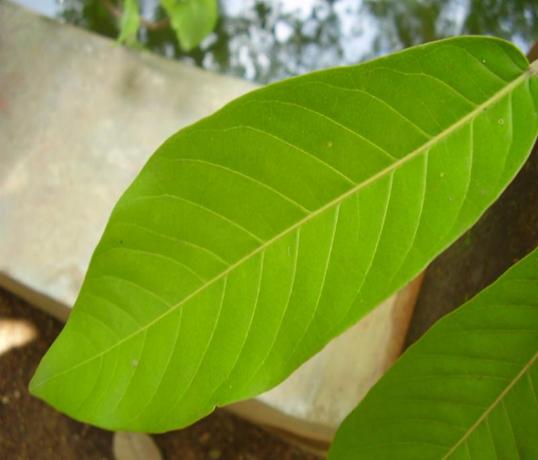
Leaves- simple, alternate, elliptic,-oblong,
Flower – white, drooping panicles
Fruit – capsule
Distribution & Habitat
Western Ghats
Chemical constituents:
dlepi- catechin, fisetinidol, fzelechin, sesquiterpenes, bergenin.
Properties:
RASA-tikta, kashaya
GUNA-laghu
VIRYA-ushna
VIPAKA-katu
Karma –varnya, kustahara,
astringent, antibacterial, antidiarrhoeal, emmenagogue, antidysenteric., antirheumatic
Srotogamitva:
Dosha: Pittaghna, vataghna, kaphaghna.
Dhatu: Rakta (dermatoses, bleeding disorders).
Mala: Stool (constipative, antidiarrhoeal).
Organs: Intestine.
Indication:
Kandu, visha, pandu, meha
Gout,cough, bronchitis, piles, skin eruptions, ringworm, tubercular glands, ulcers, wounds, boils; urinary discharges, amenorrhoea; gonorrhoea and syphilis
Part used:
Resin, bark, leaf
Dosage:
Leaf juice 10-15 ml
Powder 2-4 g
Decoction 50-100 ml
Therapeutic Uses:
- Leaf juice applied over boil and burns
Descriptions on Ayurveda books / Nighandu:
1
2
3
4
5
6