Botanical Name: Terminalia arjuna (Roxb.)W. & A.
Family: Combretaceae
Introduction:
Arjuna is an hridya or cardio tonic drug. Two kinds of Arjuna are described in vedic Lohita Tüla and Babhru Tüla. Hindu mythology documented that these two plants have their origin while lord Indra killed a gaint Vrtra. The blood (Rakta) and Lasikã of Vrtra have attained the form of Lohita küla and Babhru küla respectively.
More than, Charaka and susrutha, vagbatha popularize the usage of arjuna as a cardiac tonic.
It is effective on heart, blood vessels and rakta dhatu. It provides nourishment to the heart. It increases relaxation period of the heart and acts as a cardiac tonic. It increases the force of contraction of heart and regulates its rhythm. It is a cardiac stimulant. Arjunãrista, Arjuna ghrta, Pãrthãdyarista.
Names in different Indian languages
| English | Arjun |
|---|---|
| Hindi | Arjun, kahu, kahua |
| Kannada | Maddi, vaidairya |
| Malayalam | Nirmaruthu, venmaruthu, attumaruthu, maruthu, pulamatti |
| Sanskrit | Arjunah, kakubhah |
| Tamil | Marudam, attumaruttu, nirmaruttu, vellaimaruttu |
| Telugu | errramaddi |
| Unani | arjuna |
| Folk |
Synonyms
Dhananjaya, Kaakubha, Kakubha, Aartagala, Indravriksha, Paartha, Virataru, Viravriksha
Classification according to Charaka, Susrutha & Vagbhata
| Charaka | Udardapraamana, Kasãya skandha |
|---|---|
| Susrutha | Nyagrodhãdi, Salasarãdi |
| Vagbhata | Viratarvãdi, Nyagrodhãdi gana, Asanadi gana |
Varieties & adulterants – (CV – controversy, AD – adulterants)
1. T. arjuna – White
2. T. alata – black
3. T. tomentosa
4. Soma [AD] – in ritual purpose
5. T.catappa [CV]
Morphology
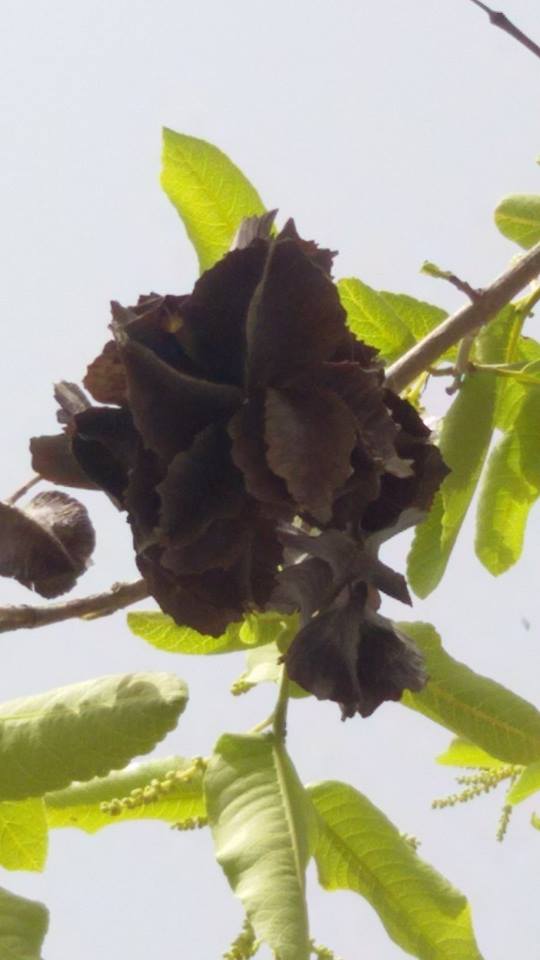
A large tree, 20-25 m high, trunk often buttresed, smooth grey bark.
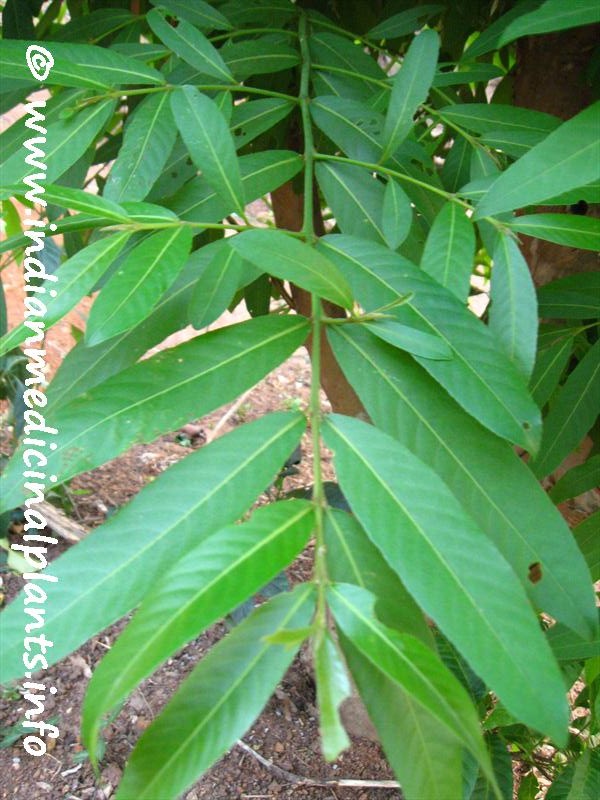
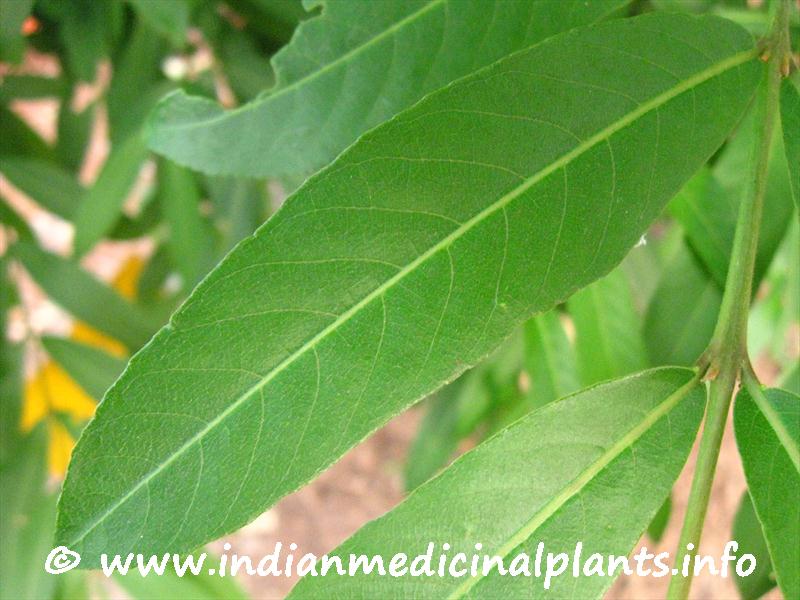
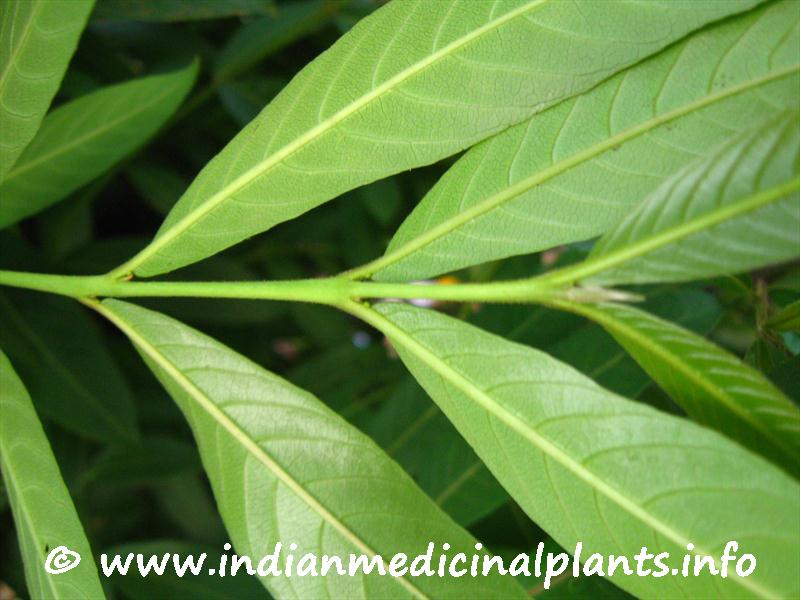
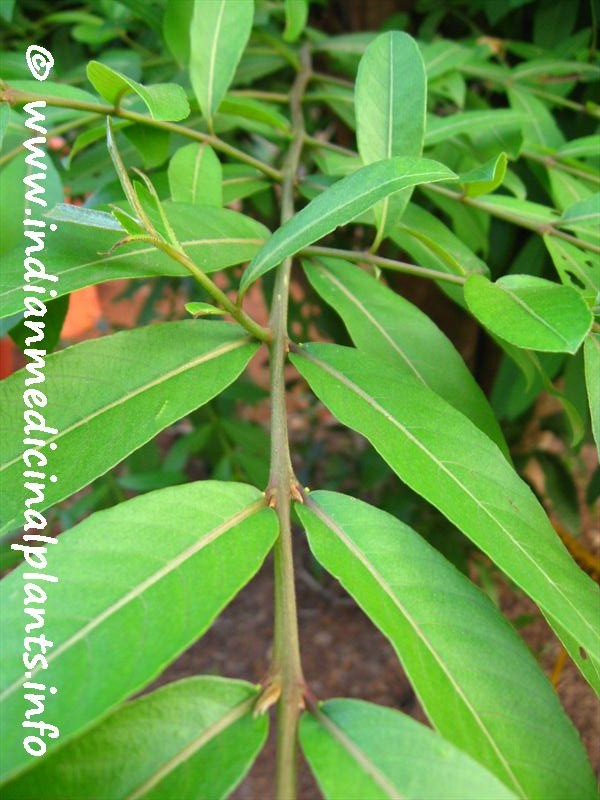
Leaves— simple, subopposite, hard, coriaceous, oblong or elliptic, 10-20 cm long.
Flowers— yellowish-white, borne in shortly panicled-spikes.
Fruits— 2.5-5 cm long, obovoid-oblong, with 5-7 equal, hard, coriaceous, thick narrow wings.
Flowers in March-June and fruits occur in September-November.
Distribution & Habitat
All over India
Chemical constituents:
Arjunolic acid, terminic acid, arjunetin, arjunosides I–IV, antioxidants—flavones,
tannins, oligomeric proanthocyanidins
Properties:
Rasa Kasäya
Guna Rüksa, Laghu
Virya sita
Vipaka Katu
Karma Kapha-pittahara, Udardaprasamana, Hridya,vrananasana
Cardio tonic, expectorant , antidysenteric,
Srotogamitva:
Dosha: Kapha,pitta kshayakarak.
Dhatu Meda (diabetes). Rakta (haemoptysis). asthi promotes union in fractures. shukra spermatorrhoea.
Mala: Mutra (diabetes).
Organs : Heart, kidney and uterus presentation of foetus.
Antidote Property : Its acts as cardiac tonic in vatsanabhi poisoning. (Aconitum poisoning.)
Indication:
Bhagna, Sadya Vrana, Prameha, Medoroga, Hrdroga, Kasya, Trsnã, bhasmaroga, raktha dosha, pandu
skin diseases, herpes, leucoderma, ulcer, leucorrhoea, asthma, tumour, cirrhosis, hypertension
Part used:
Bark
Dosage:
Powder 2-4 g
Decoction 50-100 ml
External uses: It helps in wound healing and joining by astringent property It is haemostatic The bark paste is locally applied on wounds, ulcer and specially used in promoting the union of fractures.
Internal uses:
Digestive system: it has astringent property, reduces motility. Being haemostatic it controls bleeding in dysentery and haemorrhoids.
Circulatory system : It is a cardiac tonic. It gives strength to the cardiac muscles and improves cardiac function and rhythm. It reduces cardiac rate, It increases the peripheral resistance by constricting capillaries which leads to rise in blood pressure. Arjuna enhances blood quality and also acts as haemostatic. By virtue of its capillary constricting activity, it prevents accumulation of fluid and thereby reduces oedema. The decoction of bark in milk is effective in this condition. It helps in cardiomegaly. Healing caucuses in ulcerated, contused wounds and fractures are greatly enhanced by systemic administration of arjuna.
Respiratory system : Its astringent property is useful in purulent and tuberculous cough and in haemoptysis. It reduces heartburn and cough. Powdered arjuna bark soaked in leaf juice of Adhatoda vasika mixed with honey, sugar- candy and cow’s ghee reduces tuberculous cough.
Urinary system : By its astringent property it is effective in diabetes and gonorrhoea, by reducing urinary discharges and relieving burning and pain during micturation.
Reproductive system : It prevents early ejaculation of semen. The decoction of aijuna bark and white sandalwood is effective in spermatorrhoea. Aijuna is also useful in menorrhagia and leucorrhoea.
Skin : It is used in skin diseases. Externally its paste is applied over eyelids in conjunctivitis.
Temperature: It is febrifuge. In chronic fever it not only helps as antipyretic but also acts as general tonic.
Satmikaran : It is astringent and possesses wound healing, hypolipidemic and cardiotonic effects. Arjuna is the drug of choice in cardiac debility.
Processing: Use of its bark as a decoction with milk (ksheerapak) is more effective. Besides, it can be used in the form of juice, decoction in water, powder or as a ghrita. Use of ksheerapak has a dual advantage of. reducing dryness inducing property of Arjuna and also kapha aggravating property of milk. .
Blood vessels : It contracts capillaries. it corrects low blood pressure and tones up the capillaries.
Rakta dhatu : Makes blood components more balanced and increases coagulating property of blood.
Important Yogas or Formations:
Kakubhadi churna, parthadyarishta (Arjuriarishta), Arjunaghrita, Pushyarsuga churna, Ashwagandharishta, Arvirsdasava, Devadarvyarishta.
Therapeutic Uses:
(1) Sukrameha— Decoction of Arjuna and Candana is beneficial (S.S.Ci. II)
(2) Puyameha— Decoction of Dhava and Arjuna is beneficial (H.S. 3/28/7).
(3) Kustha— Khadira, Aragvadha and Arjuna are used for Pana & Abhyanga (C.S.Ci. 7).
(4) Hrdroga— Godhüma and Arjuna bark processed in oil, ghee and jaggery is given orally with milk (G.N.).
Descriptions on Ayurveda books / Nighandu:
1
2
3
4
5
6
7
8
9
10
11
12