Botanical Name: Stereospermum personatum (Hassk.) D. Chatterjee.
Family: Bignoniaceae
Introduction:
This drug mostly used in Dasamulas.
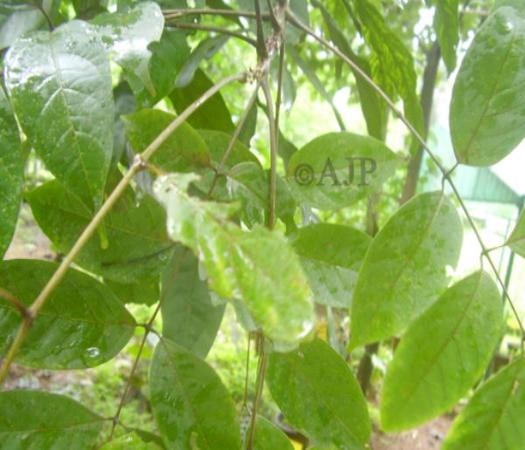
Names in different Indian languages
| Hindi | Padhal, paral |
|---|---|
| Telugu | Kokkesa, pagada, pisulu, kalagora, arajavepa |
| Tamil | Padiri, pumpadiri |
| English | Trumpet flower tree, yellow snake tree. |
| Marathi | Padal |
| Gujarati | Padal |
| Punjabi | Padala |
| Bengali | Parul |
| Kanada | Hude, kalludi, kala adri |
| Malayalam | Pupatiri, patiri |
| Sanskrit | Patala |
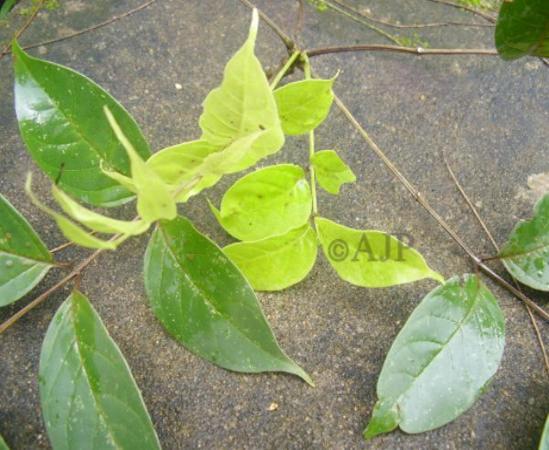
Synonyms
Paatalaa, Paatali, Paatalai, Krishna-vrantaa, Madhu-duuti, Kaama-duuti, Ativallabhaa, Taamrapushpi, Kuberaakshi. Amoghaa, Kumbhipushpi, Ambuvaasini.
Stereospermum Chelonoides (Linn. f.) DC
Stereospermum Colais.
Stereospermum tetragonum A. DC.
Classification according to Charaka, Susrutha & Vagbhata
| Charaka | sothahara |
|---|---|
| Susrutha | Aragvadhãdi, Brhat pancamüla, Adhobhagahara |
| Vagbhata | Aragvadhãdi |
Varieties & adulterants – (CV – controversy, AD – adulterants)
1. S. tetragonum -[AD]
2. S. chelonoides – [AD]
3. S. angustifolium – krsna patala -[AD]
4. Sveta patala
5. S. colais
6. S. sauvealens
S. sauvealens
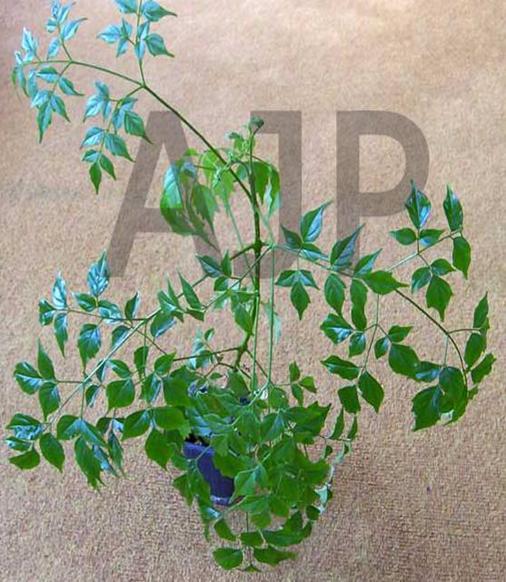
Morphology
It is a deciduous tree about 15-30 m heigh, with a straight trunk and fairly smooth yellowish brown bark.
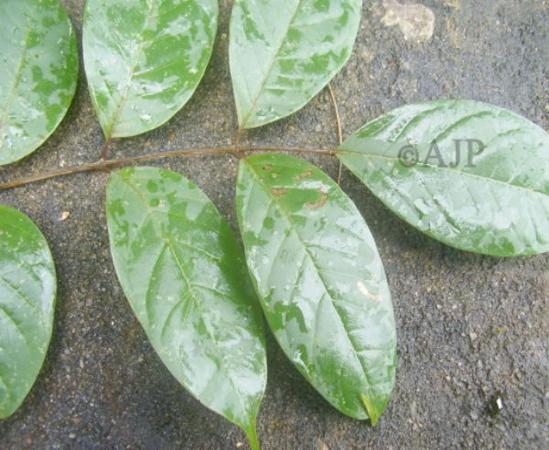
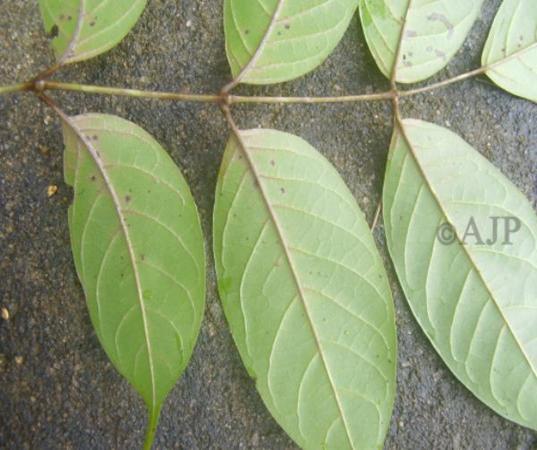
Leaves: imparipinnate, large, clustered, leaflets 3-6 pairs, short stalked, often unequal sided at the base, main nerves 6-8 pairs.
Flowers: yellow, tinged with red, fragrant, drooping terminal cymose panicles
Fruits: capsules, cylindric, slender, curved,
Seeds: winged at each end, wings membranous.
Roots: dull brown cylindrical hard, with transversely extended lenticels.
Distribution & Habitat
Deccan, in deciduous forests; Western Ghats, and also in deciduous forests, in the hills of Mysore, Malabar and Travancore
Chemical composition : The flower contains albumin, sugar, mucilage and wax.
Bark contains crystalline bitter substance.
Properties—
Rasa Tikta, Kasäya
Guna Laghu, Ruksa
Virya Anusna
Vipãka Katu
Karma – Tridosahara, Hrdya, Kanthya, kushtahara, kasaghna
Constipating, diuretic,
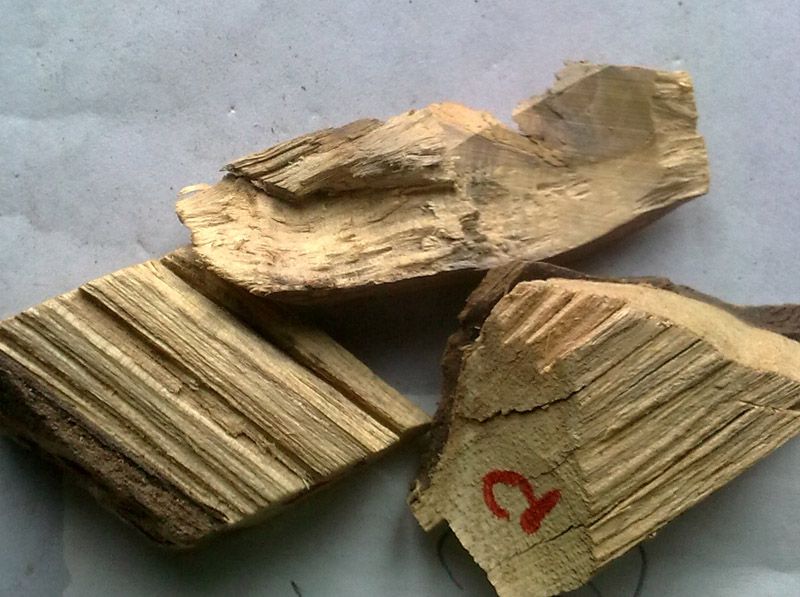
Part Used— Root bark, flower, seed, leaf, kshara
Dosage— Decoction 50-100 ml, Kshara 2-5g.
Indications— Aruci, svãsa, sotha, Rakta vikãra, Chardi, Hikkã, Trsnã, Raktapitta
useful in burning sensation asthma, hiccough, wounds, cardiopathy , vomiting, hiccough, thirst, oedema
External uses : It has analgesic and wound healing properties, leaves ground in a paste are applied over the wound. Paste of the seeds is applied in migraine
Internal uses
Nervous system : Analgesic. It is effective in painful conditions of vata disorders.
Digestive system : It improves-the taste. It is antidyspeptic, astringent and a liver stimulant. Hot infusion of the bark is given in acid-peptic disease to reduce gastric acidity. Also useful in vomiting, diarrheoa and piles.
Circulatory system : Bark and flowers are anti-inflammatory. Powers are used in cardiac disorders,
Respiratory system: Kaphaghna and reduces hiccups. Root should be used in cough and asthma. lower flowers are given to lick with honey in hiccups.
Urinary system : Being a diuretic, patalakshar is used in dysuria and calculi.
Reproductive system: Being aphrodisiac, flowers are used in semen debility.
Temperature Febrifuge and refrigerant. Brahatpanchamool is febrifuge).
Satmikaran : flowers is effective in general weakness.
Srotogamitva
Dosha : Tridoshaghna,
Dhatu : Rakta (acid peptic disorder, inflammation);
Flowers : aphrodisiac.
Mala : Purisha (astringent), piles, vomiting.
Important Yogas or Formations
Bruhatpanchamooladi kadhwa, Dashamoolarishta.
Important research work going on
(1) carcinosarcoma (Cancer Res. 1968, 28,
(2) antitumer agent
(3)activity against
(4) hypoglycemic action
Therapeutic Uses—
(1) Sthoulya— Decoction of Pãtalã and Citraka is given with satapuspa and Hingu in obesity (B.P.).