Botanical Name: Spondias pinnata (Linn. f.) Kurz.
Family: Anacardiaceae
Introduction:
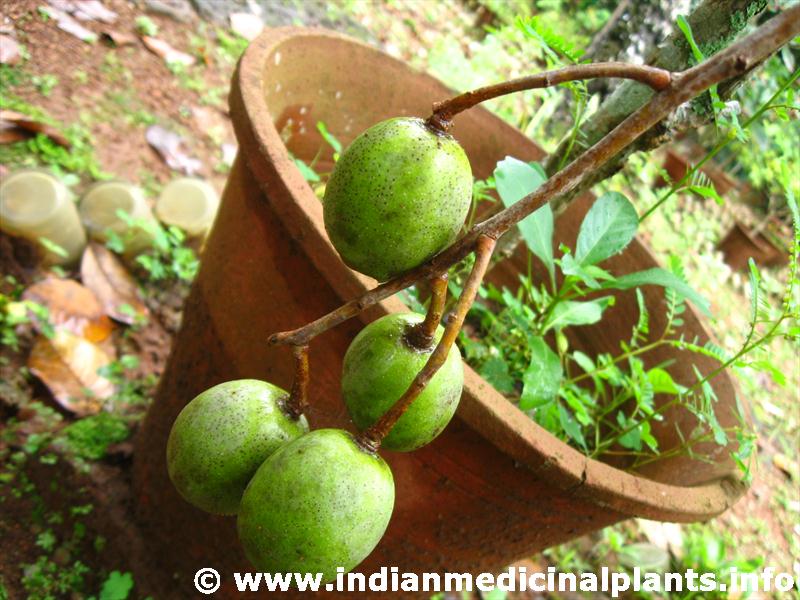
Its fruits are edible.
Names in different Indian languages
| English | Hog-Plum, Wild Mango |
|---|---|
| Hindi | Amra, jungle-am |
| Kannada | Ambatemarra, amatekayi, vrksamla |
| Malayalam | |
| Sanskrit | Aamraataka |
| Tamil | Mambulichi, Kattuma |
| Telugu | Adavimamidi ,kondamamidi |
| Unani | |
| Folk | Jangali Aam |
Synonyms
Aamraata,Aamadaa, Madhuparni, Kundalini, Kapitana, Markataamra.
Spondias mangiferaWilld.
Classification according to Charaka, Susrutha & Vagbhata
| Charaka | |
|---|---|
| Susrutha | |
| Vagbhata |
Varieties & adulterants – (CV – controversy, AD – adulterants)
Vrishamla also considered as Garcinia gummi-gutta
Morphology
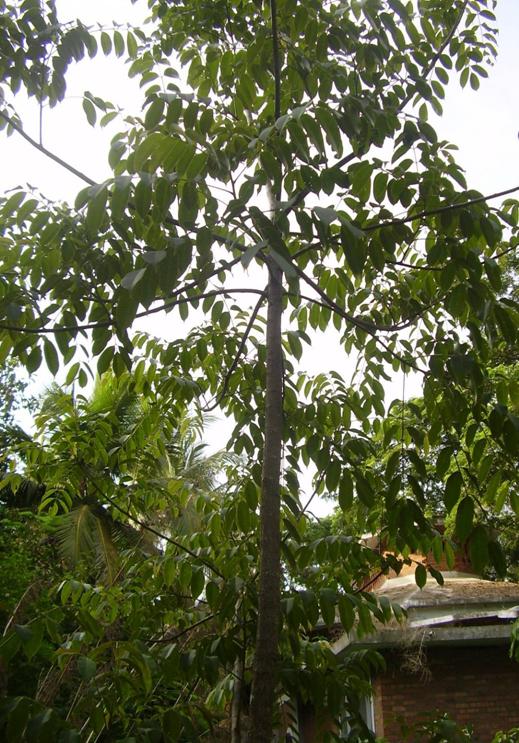
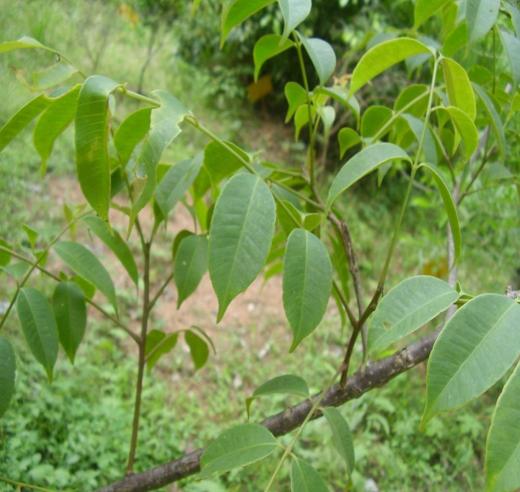
A medium sized tree, grows 10-15 m . height
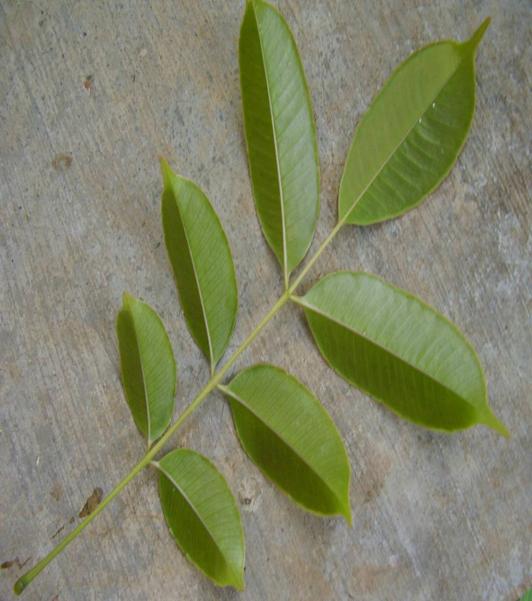
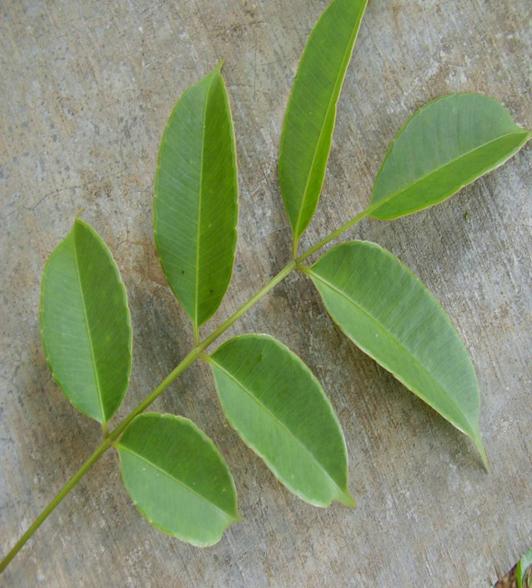
Leaves – compound, bunchlets at ends, leaflets – elliptic, pointed at ends
Flower – yellowish- white
Fruit – drupe
Distribution & Habitat
All over India
Chemical constituents:
containsbeta-amyrin, oleanolic acid ,glycine, cystine, serine, alanine and leucine,polysaccharides, lignoceric acid
Properties:
Rasa – amla, kashaya
Guna: guru, snighda;
Vipaka: amla;
Virya: sita;
Karma –balyam, tarpanam, sleshmalam,rucyam , virechana, deepana, pachana
astringent, antidysenteric, antispeptic, antiscorbutic, cooling, carminative
Srotogamitva:
Dosha : vata kapha pitta hara
Dhatu :rasa, rakta
Mala :purisha
Organ : stomach
Indication:
Amavata, vatha, rakta dosha
Menstrual complaints, gout, muscular pain, diarrhea, dysentery , vomiting
Part used:
Root, bark, fruit , leaves
Dosage:
Leaf juice 10-15 ml
Powder 2-4 g
Decoction 50-100 ml
Therapeutic Uses:
- Bark decoction useful in irregular menustration.
Descriptions on Ayurveda books / Nighandu:
1.
2
3
4
5
6
7
8
9
10
11