Botanical Name: Sphaeranthus indicus Linn. (also auct. non L.)
Family: Compositae; Asteraceae
Introduction:
Latin name: Sphaeranthus = sphira = globelike, anthus = cranial; indicus = Indian or mollis =three lobes.very thick.
Names in different Indian languages
| English | East Indian globe thistle |
|---|---|
| Hindi | Mundi |
| Kannada | Gorakmundi |
| Malayalam | Atakkamaniyan |
| Sanskrit | Mundi, sravani |
| Tamil | Kottakarthai, visnukkarantai |
| Telugu | Bodasaramu |
| Unani | Mundi |
| Folk |
Synonyms
Mundi, Mundika, Munditikaa, Bhuukadamba, Alambusta, Shraavani, Tapodhanaa
Sphaeranthus senegalensis DC.
Sphaeranthus hirtusWilld
Classification according to Charaka, Susrutha & Vagbhata
| Charaka | |
|---|---|
| Susrutha | |
| Vagbhata |
Varieties & adulterants – (CV – controversy, AD – adulterants)
One of the varieties called mahashravani or mahamundi (Sphaeranthus africans) grows as a tree.
Morphology
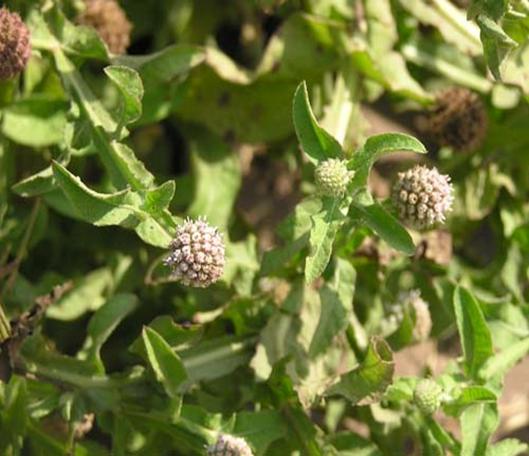
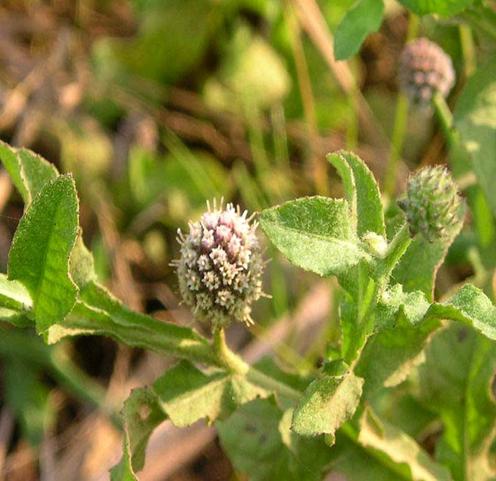
The shrub grows 15-30 cm. high and is scented. Leaves round and composite without stalk and hairy like velve1 cm. long. oblong shaped.
Flower – stalk 12-18cm long, bears round inflorescence of violet colour. Flowering occurs in winter followed by fruiting.
Distribution & Habitat
Throughout India
Chemical constituents:
Containingmethyl chavicol, alpha-ionone, d-cadinene, p-methoxycinnamaldehyde
Properties:
Guna : laghu, ruksha:
Rasa : madhur, tikta;
Vipaka : madhur;
Virya : ushna
Karma –
Medya, ruchya, asmirighna,
blood purifier, alterative,depurative, liver,spleen,brain tonic
Srotogamitva:
Dosha: Tridoshashamak.
Dhatu: Rakta (menorrhagia) (raktagami, vatashamak), shukra (spermatorrhoea).
Mala: Purisha (diarrhoea, dysentery).
Organs: Eyes and uterus,
Indication:
Asmiri, slipada, apsmara,vrana,mutrakrichra.
Cervical lymphadenitis, chronic sinusitis, migraine, epilepsy, lipid disorders, diseases of spleen, anaemia, dysuria.
Part used:
Whole plant , oil, ash
Dosage:
Leaf juice 10-15 ml
Powder 2-4 g
Decoction 50-100 ml
uses:
External use: Anti-inflammatory and analgesic.
Internal use: Being a nervine tonic and analgesic, it is useful in lethargy, epilepsy, other vata disorders. Paste of black pepper and mundi is given in headache and migraine.
It is an appetizer, digestive, laxative, hepatic stimulant and anthelmintic. Conditions like loss of appetite, hapatosplenic enlargement, jaundice. internal piles, and intestinal worms are treated with mundi. It is also used in cardiac debility, gout, erysepelas, oedema. lymphadenitis, chronic bronchitis and asthma. The oil of the roots is used as n aphrodisiac. Mundi is an excellent remedy in vata disorders. It is used in dysuria, pyuria, diabetes, skin disorders and fever.