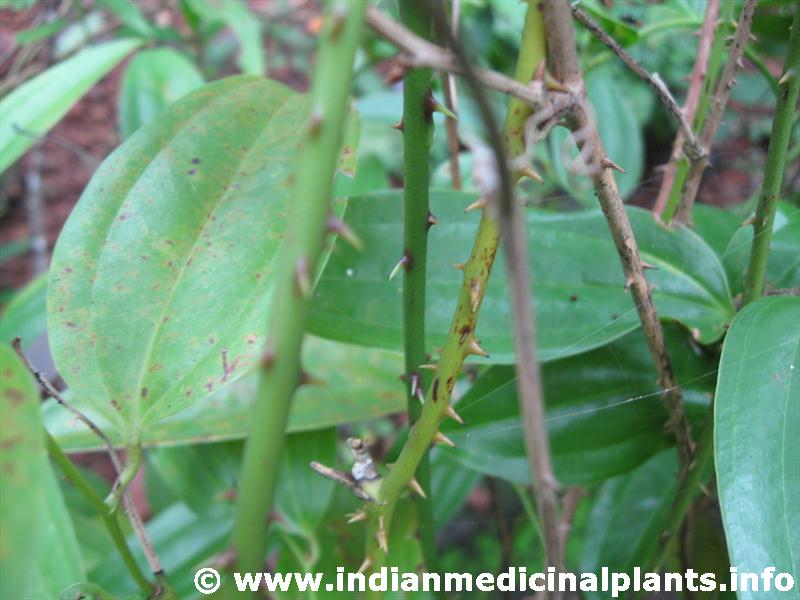
Botanical Name: Smilax zeylanica Linn.
Family: Liliaceae
Introduction:
Its properties are similar to Smilax china. One of the strong antibiotics in Ayurveda.
Latin name Smilax = Sarsaparila plant, smile = rasping or scrapping – the prickly stems. A grapping chisel: zeylanica = of ceylon or ornata.
Smilax, genus of about 200 species, of the lily family, mostly herbs and woody climbing and trailing plants, cosmopolitan in distribution but best represented in temperate and tropical regions. In some species—for example, in the greenbriers—the stems are often very prickly. The roots or rootstocks of several species yield sarsaparilla, a flavoring. About 12 American species exist; the best known are carrion flower, with herbaceous stems, and the common greenbrier, or horse brier.
Names in different Indian languages
| English | |
|---|---|
| Hindi | |
| Kannada | |
| Malayalam | Kattu chenapavu, arikanni, kareelanchi |
| Sanskrit | |
| Tamil | Kattukodi , Malai-thaamara |
| Telugu | |
| Unani | Jangali Ushbaa |
| Folk |
Synonyms
Classification according to Charaka, Susrutha & Vagbhata
| Charaka | |
|---|---|
| Susrutha | |
| Vagbhata |
Varieties & adulterants – (CV – controversy, AD – adulterants)
Indian variety
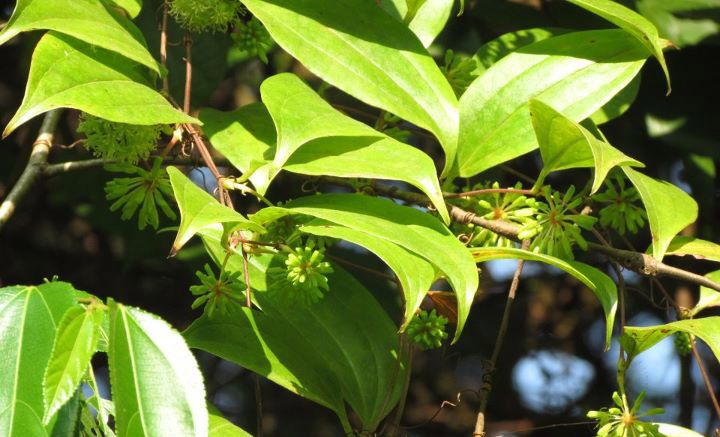
Morphology
A woody climber, with small thrones.
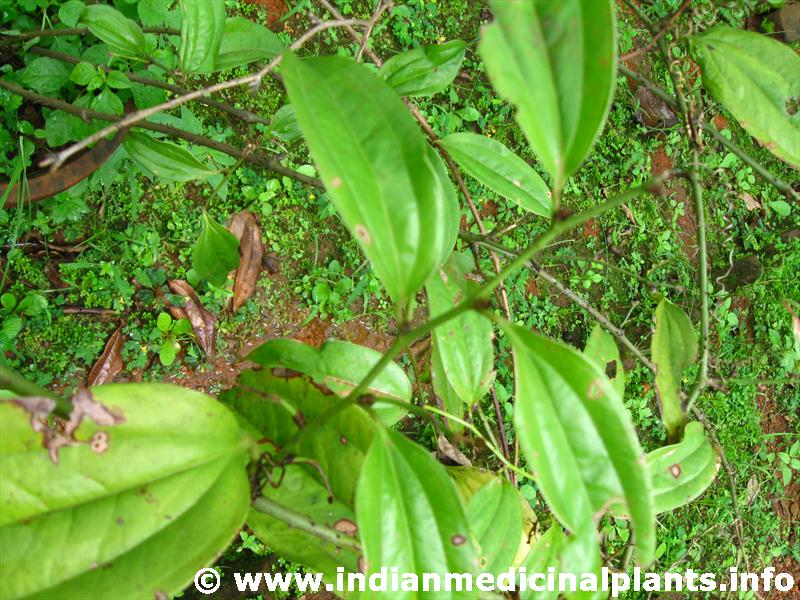
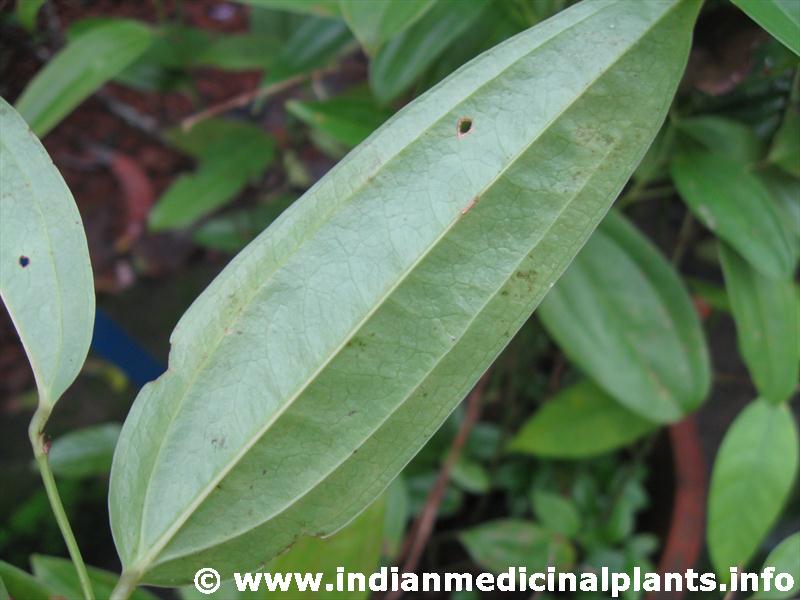
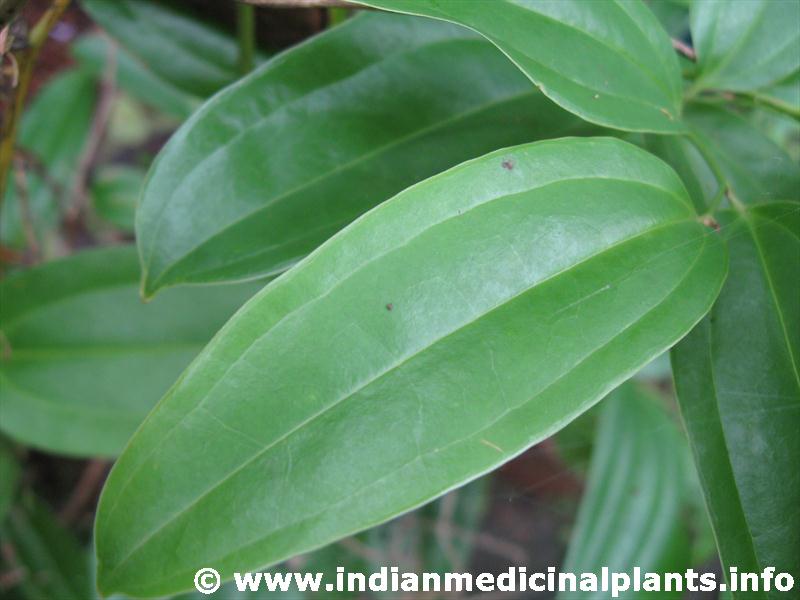
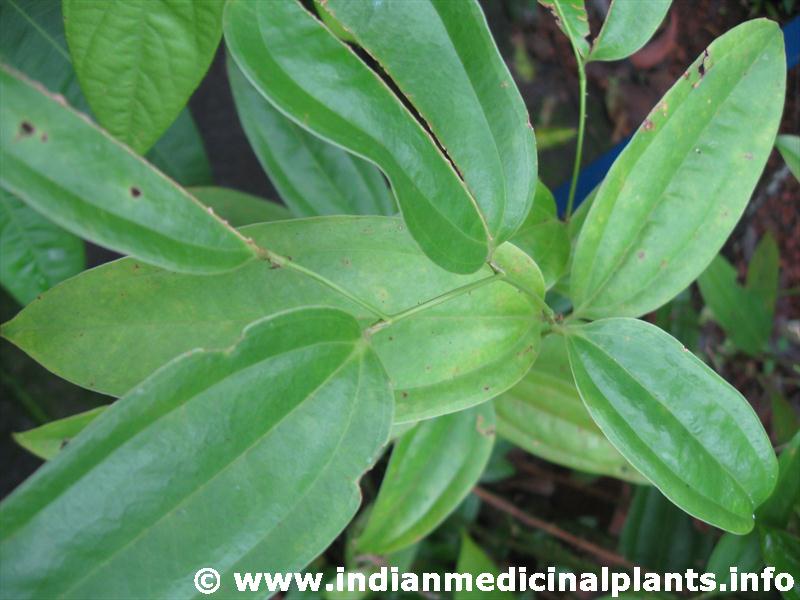
Leaves – simple, alternate, lanceolate-ovate
Flower – yellowish, small, umbel
Fruit – berry
Distribution & Habitat
In forests, all over india
Chemical constituents:
Diosgenin
Properties:
Similar to smilax china
Indication:
venereal diseases, ulcer, cough, fever, abscesses, boils, swellings , rheumatism, dysentery
Part used:
Rhozome
Dosage:
Powder 2-4 g
Decoction 50-100 ml