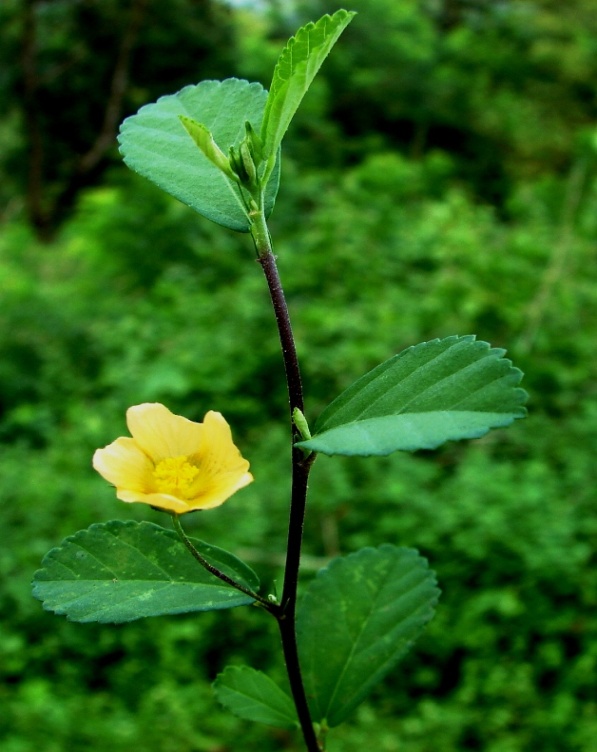
Botanical Name: Sida rhombifolia Linn.
Family: Malvaceae
Introduction:
Its properties similar to ‘bala’
Names in different Indian languages
| English | Common Bala |
|---|---|
| Hindi | Barela, lalbarela |
| Kannada | Binnegangagida, bolamgadale |
| Malayalam | Van kuruntotti |
| Sanskrit | Atibala |
| Tamil | Sittamutti , kuruntotti , Tennacham |
| Telugu | Pulagamu, gubatada, athobalacettu |
| Unani | Bariyaara |
| Folk |
Synonyms
Sida orientalis Cav.
Sida alba Cav
Classification according to Charaka, Susrutha & Vagbhata
| Charaka | Balã, Brmhaniya, Prajãsthapana, Madhuraskandha |
|---|---|
| Susrutha | Vãtasamgamana |
| Vagbhata |
Varieties & adulterants – (CV – controversy, AD – adulterants)
1.S.acuta Burm – AD
2.S.restusa– AD
3.S.spinosa- AD
4. Abution indicum (Linn.) Sw. – CV
5. A. asiticum – CV
6. Sida fryxellii
Sida fryxellii
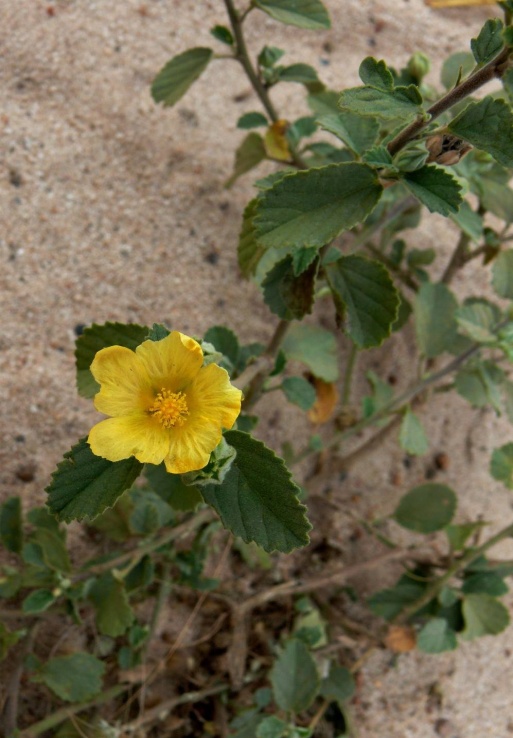
Sida rhombifolia ssp. Retusa
Bhãvamisra mentioned four varieties
| (i) Balã (ii) Atibalã (iii) Nãgabala (iv) Mahã balã |
S. cordifolia Abution indicum S. veronicaefolia S. rhombifolia |
|---|
Morphology
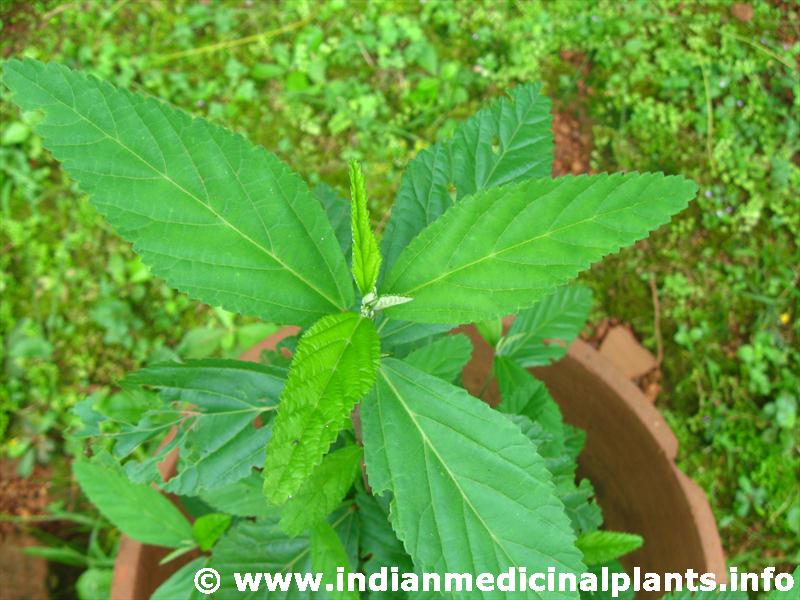
A small woody erect herb or shrub, 1.2 m. in height, with long branches.
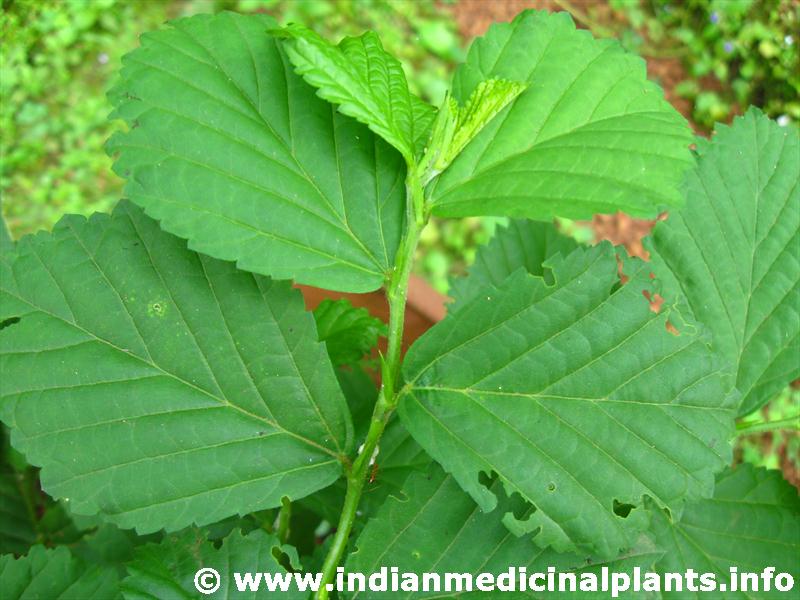
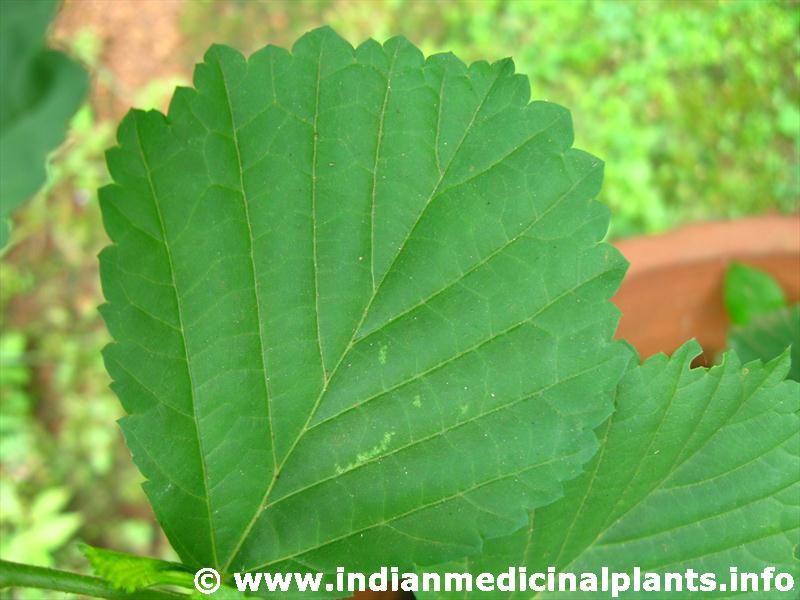
Leaves- simple, alternate, lanceolate-ovate or ovate oblong, very downy on both surfaces; petiole is small
Flowers small, tawny yellow or white, carpels 10.
Fruits- with a pair of awns on each carpel. (Flowers and grows wild along the roadsides, throughout sub-tropical and tropical India, ascending up to 1,200 m.)
Distribution & Habitat
All over India
Chemical constituents:
Major components of seeds are alkaloids. Alkaloid contains mainly ephedrine. It also contains fatty acid, mucin, potassium nitrate and resin, hypaphorine, vasicinone, vascicine, vasicinol, choline, betaine, phytosterol, phytosterols, resin, resin acids, mucin and potassium nitrate. etc.
Properties:
RASA-madhur, kashaya
GUNA– Laghu, Snigdha, Picchila
VIRYA-sita
VIPAKA-madhur
Karma –balya, vranahara, rasayana, stambana, vrisya, krimighna
Sour, astringent, acrid, spermatopoietic, demulcent, antibacterial and antipyretic
Srotogamitva:
Dosha Alleviates vata&pitta
Dhatu Rakta. mansa, shukra(vridhikar).
Mala : Purisha (astringent)
Indication:
Raktapitta, Vatavyadi, Prameha, Ksaya,
tuberculosis , rheumatism, hemiplegia, facial paralysis, sciatica, polyuria, dysuria, cystitis, strangury , hematuria; leucorrhoea , general debility
Part used:
Root
Dosage:
Powder 2-4 g
Decoction 50-100 ml
External use: Paste is analgesic and alleviates oedema. It is locally applied over inflammation and eye disorders.
Internal use
Central nervous-system : Being neural tonic and vatasharnak, it is useful in vata disorders like paralysis, facial palsy etc
Digestive system : Emollient and astringent. Useful in flatulence.
Circulatory system : Cardiac tonic and alleviates
haemorrhagic disorders, hence used in cardiac debility, haemorrhagic disorders .
Reproductive system: Aphrodisiac and useful in spermatorrhoea
Urinary system : Diuretic, so useful in dysuria.
Temperature: Useful in fever being a febrifuge
Satmikaran : Being tonic, it is helpful in general debility. tuberculosis and undernourishment
Important Yogas or Formations:
Atibala rasayana
Therapeutic Uses:
(1) Slipada— Balã and Atibalã are taken with milk early in the morning.
(2) Mitrakrcchra-Decoction of Atibalã will be useful (C.D. & B. P.)
(3) Rakta Pradara— Root powder of Atibala is given with sugar & honey (B. P.)
Descriptions on Ayurveda books / Nighandu:
1
2
3
4
5
6