Botanical Name: Rotula aquatica Lour.
Family: Borginaceae
Introduction:
This plant mainly using in south India for urinary calculi.
Names in different Indian languages
| English | |
|---|---|
| Hindi | |
| Kannada | Paashaanbheda |
| Malayalam | Kallurvanchi |
| Sanskrit | Paashaanbheda |
| Tamil | Cheppu-nerinjal |
| Telugu | Paashaanbheda |
| Unani | |
| Folk |
Synonyms
Rhabdia lyciodes C. B.
Clarke in part non Linn.
Shretia cuneata Wt.
Classification according to Charaka, Susrutha & Vagbhata
| Charaka | |
|---|---|
| Susrutha | |
| Vagbhata |
Varieties & adulterants – (CV – controversy, AD – adulterants)
Morphology
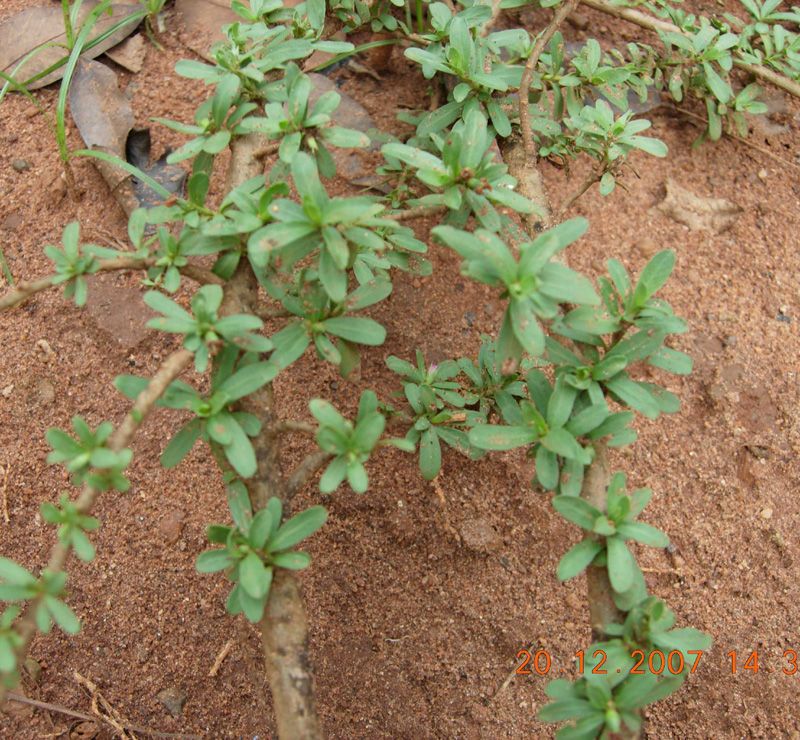
It is a shrub, grows up to 30-50 cm height
Leaves – simple, sessile, ovate, bunchlets
Flower – pink
Fruit – subglobose.
Distribution & Habitat
Southern India, Andamans.
Chemical constituents:
Allantoin, rhabdiol
Properties:
RASA- Madura ,Tikta –
GUNA–guru
VIRYA-sheeta
VIPAKA-madhur
Karma –
diuretic
mutrala, hridya, vasti shudi, yoni dosha , grahi, tridosha hara
Indication:
Mutrakrichra, gulma, pliha roga,premeha , vrana
Urinary calculi, syphilis
Part used:
Root
Dosage:
Powder 2-4 g
Decoction 50-100 ml
Therapeutic Uses:
Root decoction tender coconut water useful in calculi