Botanical Name: Randia dumetorum Poir.
Family: Rubiaceae
Introduction:
This drug mainly used as vamana dravya also it shows veerachana properties. Its thorns used in poisons.
Names in different Indian languages
| English | Emetic nut tree |
|---|---|
| Hindi | Mainaphal, madan |
| Kannada | Kare, mangri, banegaru |
| Malayalam | Malankara, karacculi |
| Sanskrit | Madanah |
| Tamil | Marukkaaraikai, Madkarai. |
| Telugu | Manga, marrga, manda |
| Unani | Mainphal, Jauz-ul-Qai |
| Folk |
Synonyms
Madana, Chhardana, Pindi, Shalayaka, Vishapushpaka
Karahata, Pinditaka, Rãtha
Randia spinosa Poir.
Randia brandisii Gamble.
Randia longispina W. & A.
Randia tomentosa W. & A. non Blume.
Xeromphis spinosa Keay.
Classification according to Charaka, Susrutha & Vagbhata
| Charaka | Asthapanopaga, Anuvasanopaga, Vamanä dravya, Phalini |
|---|---|
| Susrutha | Aragvadhadi, Mustakãdi, Urdhabhagahara |
| Vagbhata | Aragvadhadi |
Varieties & adulterants – (CV – controversy, AD – adulterants)
1. Madana -R. durnetorum
2. sveta pinditalca. – R. uliginosa
3. Suksma Pinditaka
4. Mãhã Pinditaka
Morphology
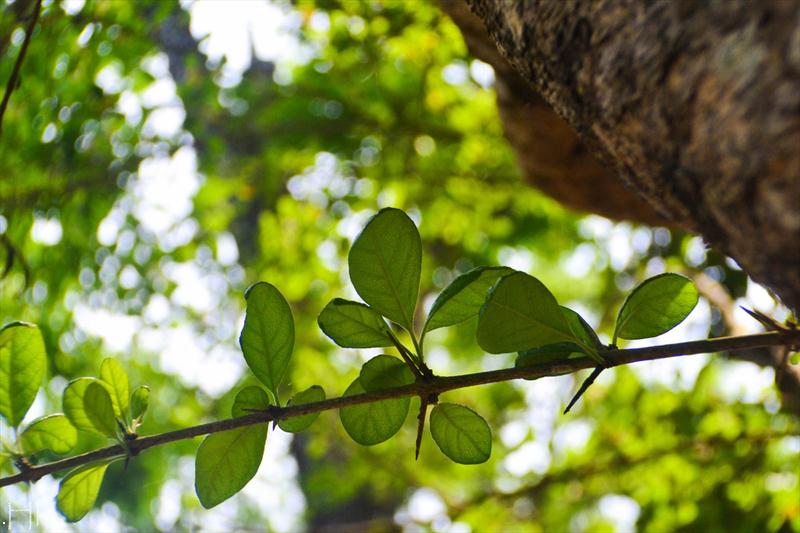
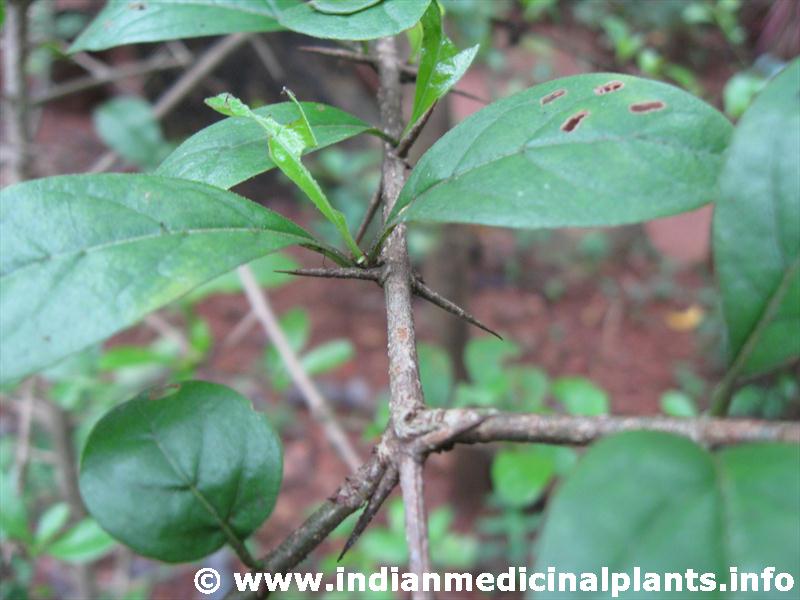
A large shrub or small tree about 6-10 m. with strong spines 1-3 cm. long; branches horizontal and dry. short.
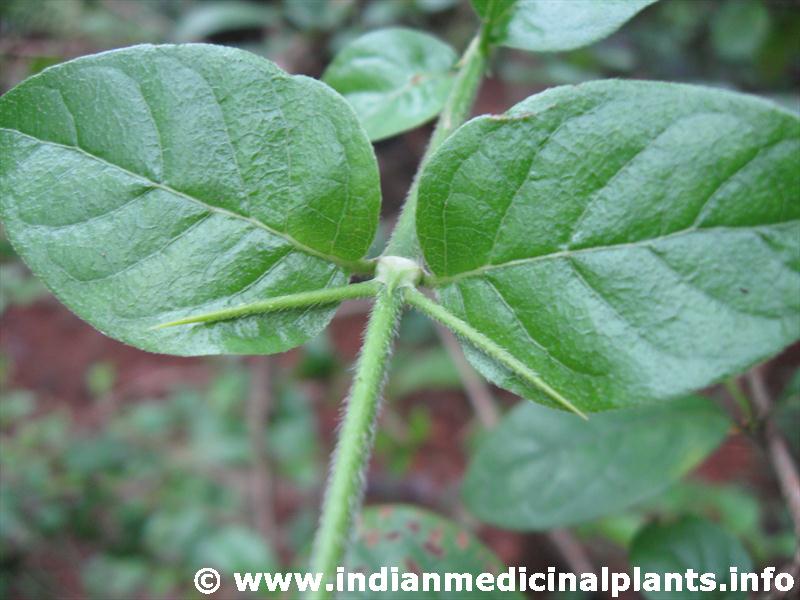
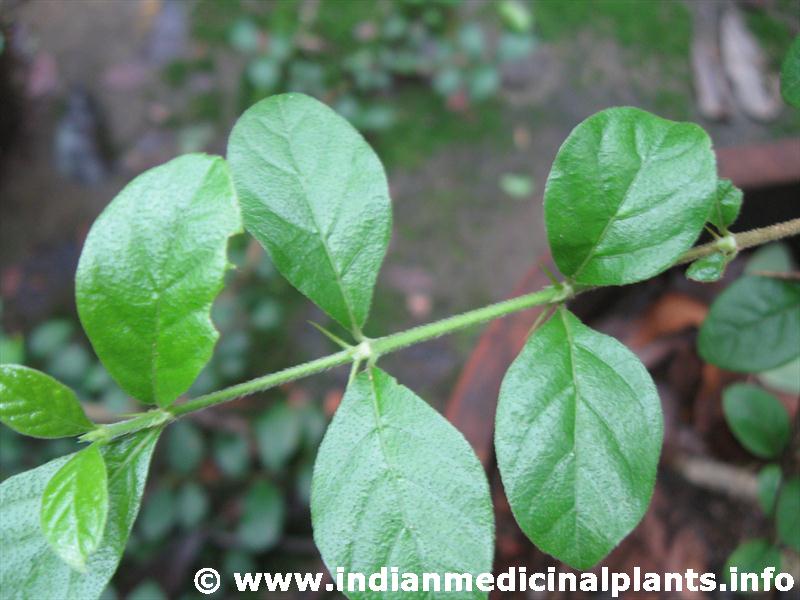
Leaves- simple, opposite, fascicled on the suppressed branches, 3.5-5 x 2-3 cm., obovate, obtuse, wrinkled, shining above, pubescent above, base cuneate; petioles about 3 mm long, densely pubescent; stipules ovate, acuminate.
Flowers- First white then turns into yellow, appears at the end of short leaf-bearing branch lets, solitary or 2-3.
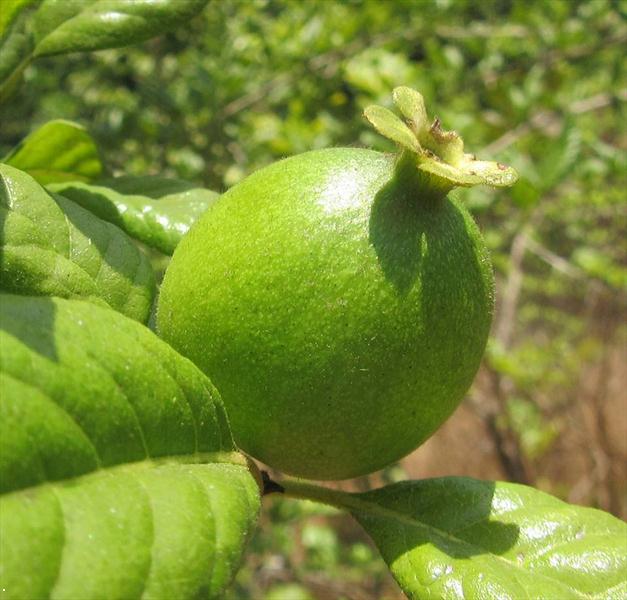
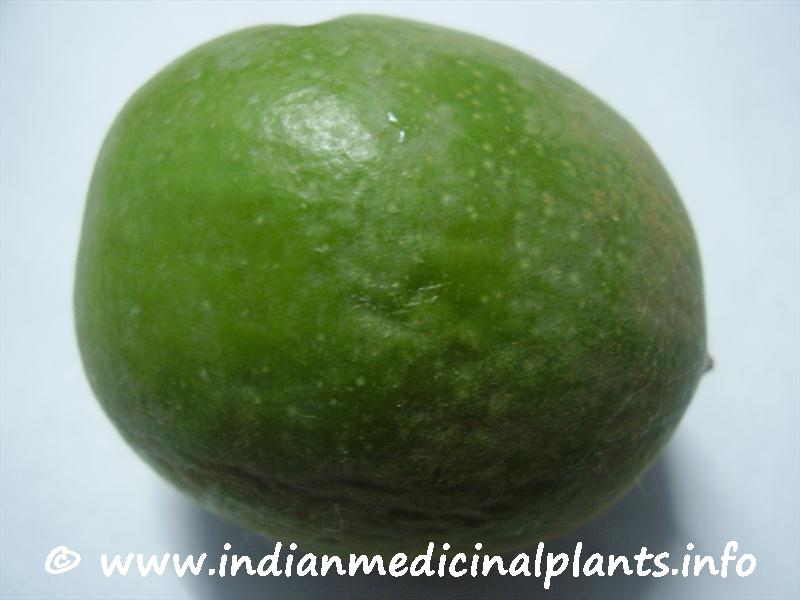
Fruit- globose, like a small crab-apple, yellowish, globose or brodly ovoid, longitudinally ribbed, 2-celled; pericarp thick.
Seeds- many, flat, imbedded in the pulp.
Distribution & Habitat
All over India
Chemical constituents:
randialic or neutral saponin and randialic acid or acid saponin, Ursosaponin, ursosaponin, dumetoronins A,B,C,D,E & F; randoside A; arachidic, lignoceric, linoleic, oleic, palmitic & stearic acids
Properties:
Rasa Madhura, Tikta
Guna Laghu, Ruksa
Virya – Usna
Vipãka Katu
Karma – Kapha-vãta hara, Chardana, virechana,Lekhana,
nervine, calmative, antispasmodic, emetic, anthelmintic, abortifacient
anti inflammatory, carminative, expectorant
Srotogamitva:
Dosha: Eliminates kapha and pitta, vata (carminative).
Dhatu : Rakta (cures abscess), rasagami.
Mala : (enema), detoxifies kapha mala.
Indication:
Visha roga, Pratisãya, Kustha, Vrana, Vidradhi, Gulma, Jvara
chlorosis, common cold,gout, asthma, cough, ulcer, colic, constipation, fever, rhinitis and obstinate skin diseases
Part used:
Fruit, seed
Dosage:
Refer Vama dravya special specification in charaka Kalpa sthanâ
Powder 2-4 g
Decoction 50-100 ml
Internal uses:
Nervous system : Rind of fruit alleviates vata. Generally decoction is used.
Digestive System: Madanaphala has been used so extensively for inducing emesis in shodhan chikitsa that its name has become syonymous with emesis. It is extremely suitable for emesis as it does not cause any complications. Fruit rind and seeds are used for emesis- Fruit is emetic and also purgative, chotagogue and anthelmintic.. Rind is astringent. To induce emesis, powder of whole fruit (approximately 3-4 mass) is soaked in 1/2 chahatak water overnight. This liquid is filtered through cloth and is given to the patient after adding honey and saindhav Emesis starts in an hour if given on empty stomach, For instant emesis, dose of the seeds should be increased
Circulatory system: Since it purifies blood and alleviates swelling, it is used in many blood disorders and oedema induced by kapha and pitta. Fruit ground in a paste is applied over abscess.
Respiratory system : Being an expectorant; it removes the obstruction of kapha and cures common cold, asthma and cough.
Reproductive system : Being an emmenagogue, it is useful in dysmenorrhoea and painful labour.
Skin: Emit is diaphoretic and cures dermatoses, It can be used internally and externally in dermatoses.
Temperature : Since it is diaphoretic and dosha purifier, it is used for instant relief in fever which occurs after meals and that which is induced by kapha.
Satmikaran : Madanphala is curative and antidote. It is used in obesity because it shows effect on the fats
Important Yogas or Formations:
Caraka alone has described 133 formulations in his Kalpa sthanâ.
Màdanaphaladi varti, Madanãdi cürna etc.
Therapeutic Uses:
(1) Apasmara- Powder of Madanaphala and seeds of Pinditaka (l0g.) are grinded with water and given orally (V.S.)
(2) Garbha sañga- Madanaphala is used for vaginal fumigation (S.S.a.10/l11).
(3) Jvara- Madanaphala, Pippali, Indrayavá and Madhuka should be given with warm water to induce vomiting in case of fevers (C.S.Ci.3/228).
Descriptions on Ayurveda books / Nighandu:
1.
2
3
4
5
6
7
8
9
10
11
12