Botanical Name: Piper longum Linn.
Family: Piperaceae
Introduction:
Pippali used as rasayana & treatment of piles, kasa. In Indian mythology reveals that Pippali has its origin during Samdura mathana along with Amrta (elixer).
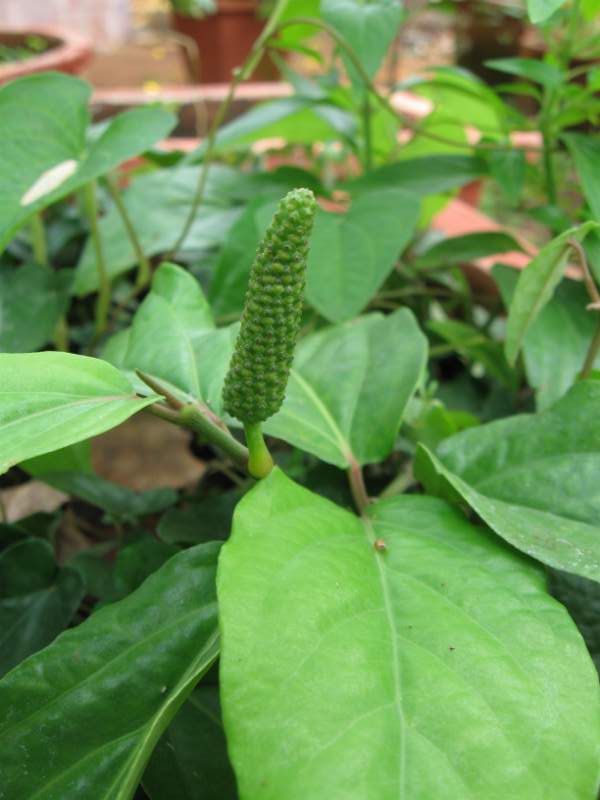
Names in different Indian languages
| Hindi | Pipala, pipal |
|---|---|
| Telugu | pippallu |
| Tamil | Tippili, pippili, Arisi thippili |
| English | Long pepper |
| Bengali | pipali |
| Marathi | pipali |
| Panjabi | Maghaun |
| Kannada | Hipli |
| Malayalam | Tippali |
| Sanskrit | Pippali, magadhi |
| Unani | Filfil Daraaz, Daarfilfil |
Root
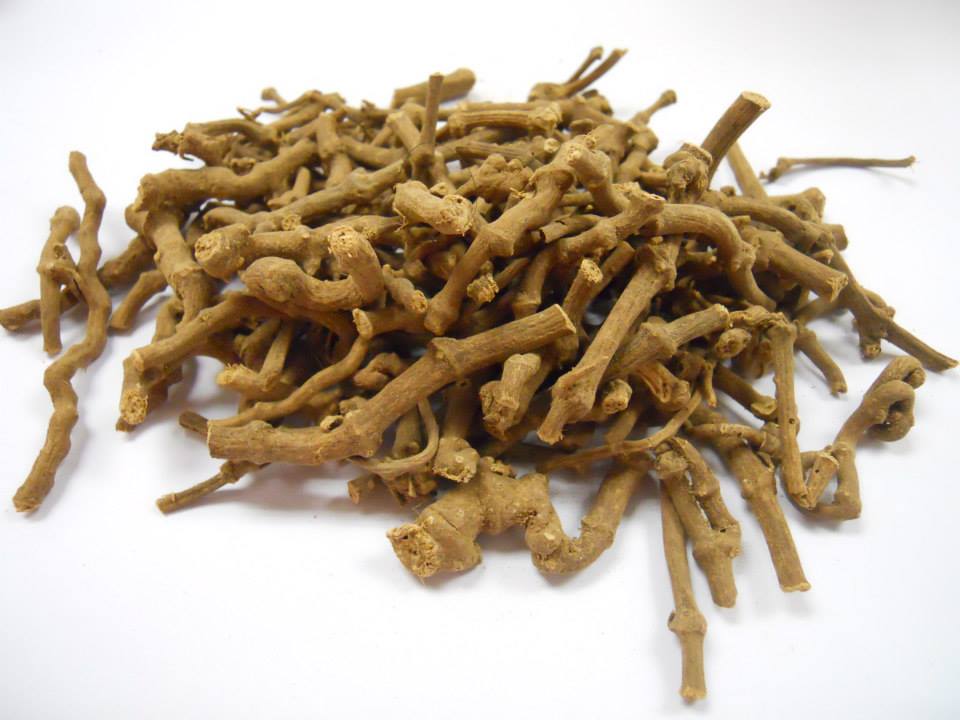
Synonyms
Maagadhi, Maagadha, Maagadhaa, Maagadhikaa, Magadhodbhavaa, Vaidehi, Upkulyaa, Pippalikam, Chapalaa, Kanaa, Krishnaa. Uushnaa, Shaundi, Kolaa, Tikshna-tandulaa
Classification according to Charaka, Susrutha & Vagbhata
| Charaka | Dipaniya Kanthya, Asthapanopaga, sirovirecanopaga, sitaprasamana, süla prasamana, Kãsahara, Hikkanigrahana, Trptighna,Vamana. |
|---|---|
| Susrutha | Pippalyãdi, urdhvabhagahana, Tryusana (Trikatu) Amalakäyãdi, sirovirecana |
| Vagbhata | Pippalyãdi (A.S.) |
Varieties & adulterants – (CV – controversy, AD – adulterants)
1. Pippali – P. longum
2.Gaja Pippali -P. chaba
3. Simhali Pippali – Cylone variety
4. Vana Pippali.
5. Assam pippali
6. Piper salvelous
Vana Pippali.
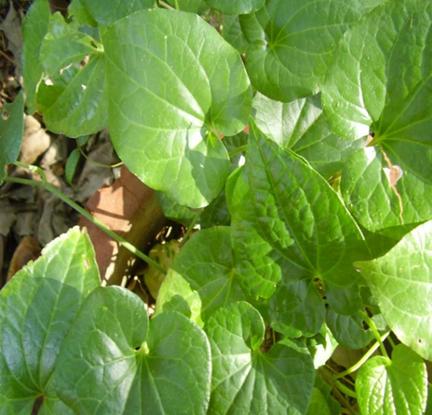
Assam pippali – leaves are small
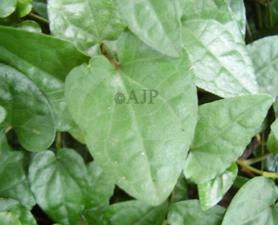
Morphology
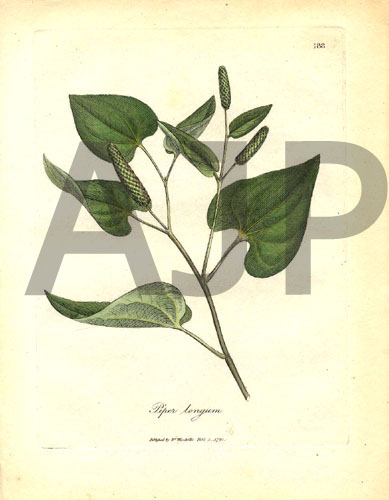
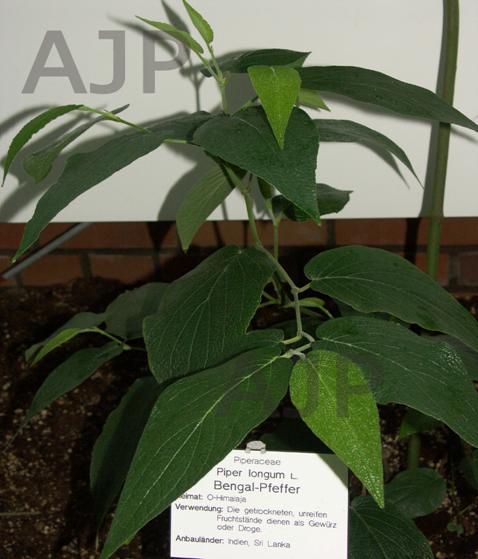
An aromatic slender climber.
Stems— Creeping, jointed, attached to other plants while climbing. swollen at nodes
Leaves— alternate, 6-10 cm x 3-5 cm, subacute, entire, glabrous, reticulate venation, cordate at the base. Lower one broadly ovate, cordate, upper one oblong, oval
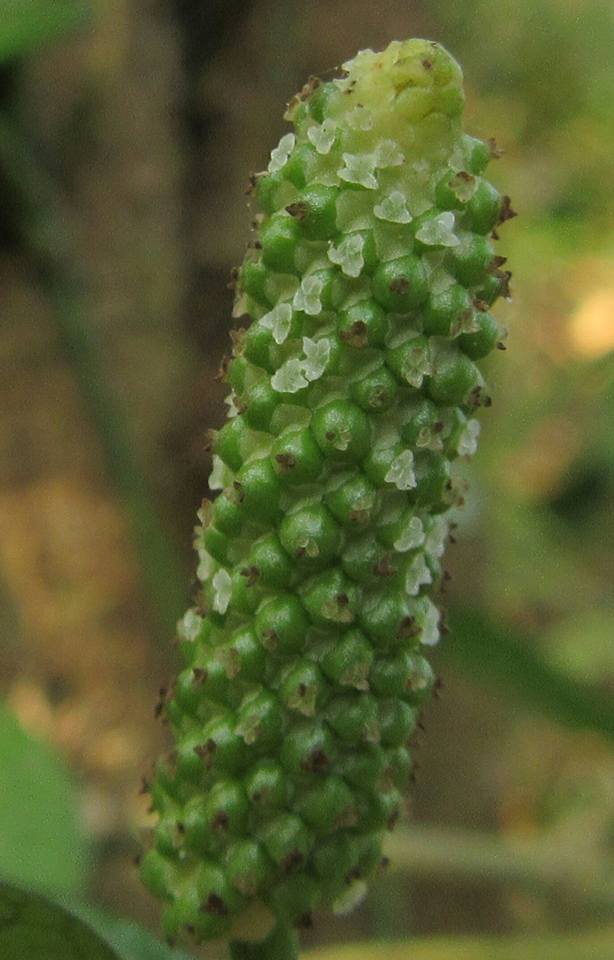
Flowers— in pendulate spikes. straight; male larger and slender; female 1.5-2.5 cm x 4-5 mm dia.
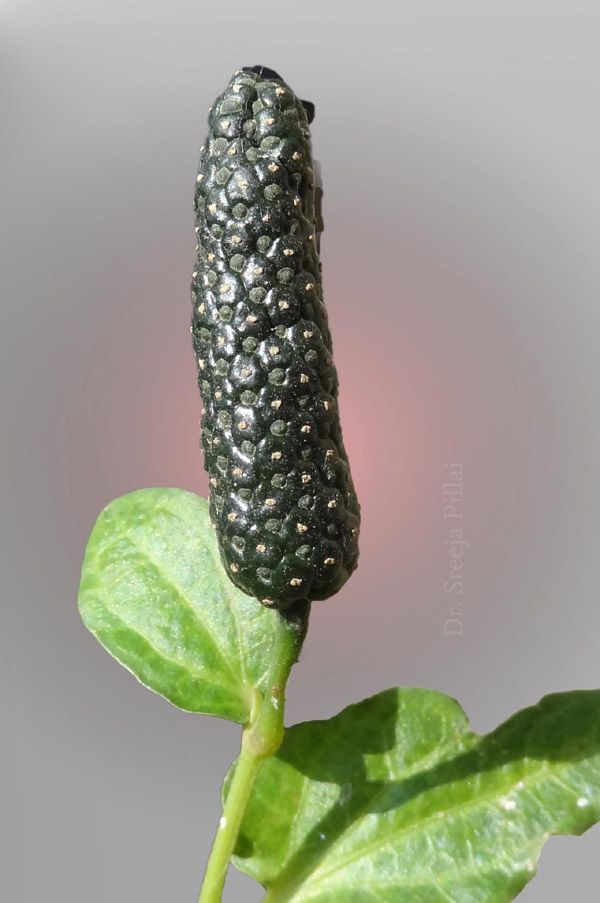
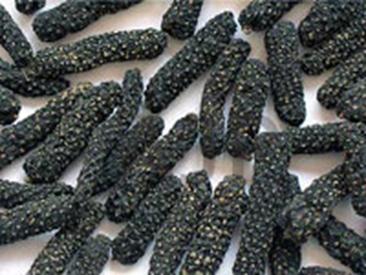
Fruits— yellowish orange berries , aboid, sunk in fleshy spike.
Flowers in rainy season and fruits in autumn.
Habitat & Distribution
Found in the hotter parts of India, from central
Himalayas to Assam, Khasi and Mikir hills. Also found in forests
of western ghats from Konkan to Kerala.
Chemical Constituents
Piperine, aristolactams, dioxoaporphines, isobutyl amide, longamide, besides guineensine, the lignans, pluviatilol, methyl pluviatilol (fargesin), sesamin , asarinine, Essential oil, mono- and sesquiterpenes, caryophyllene (mainly). piplartine, piperlongumine, pipercide. sesamin, – four aristohtctams (cepharanonle B. aristolactum All. piperlactum A and piperolactam B.)
Properties
Rasa Katu
Guna Laghu. Snigdha. Tiksna (Ardra—Guru)
Virya Usna (Ardra-Sita)
Vipãka Madhura
Karma – (Ardra-Kapha vardhaka), Dipana, Vrsya, Rasayana
digestive, appetizer, carminative, haematinic, expectorant, sedative
Indications— Udara. Pliharoga, jvara, Kustha, Prameha, Gulma, Arsas,sula, Amavata .
cough, bronchitis, asthma
Roots are bitter, thermogenic, diuretic, purgative, expectorant, digestive. Useful in gout, splenopathy, lumbago
Pipali are thermogenic, laxative, carminative, digestive, anti septic. Useful in anorexia, colic, fever, epilepsy, haemorrhoids, gout
Part Used— Fruit, root
Dosage— Powder 1-2 g.
Important Yogas or Formations
Pippalyãdi ghrta, Pippalyasava, Vyosãdi
Vati, Yakritplihãri loha, Yãkrta pippali yoga, Causastaprahara pippali, Pippalyãdi leha.
Important research work going on
(1) antitubercular activity
(2) anti-inflammatory activity
(3) antifertility effect
(4) suppression of cough reflex
(5) respiratory stimulation
(6) serum proteins level
(7) central stimulant activity
(8)antipyretic activity
(9) anthelmintic activity
Therapeutic Uses—
(1) Kamala— Pippali is used as Nasya and Añjana (G.N.)
(2) Rasayana— Ghee prepared with Pippali & milk will be useful (V.S.).