Botanical Name: Phaseolus radiates Linn. non-Roxb. & auct
Family: Papilionaceae; Fabaceae
Introduction:
Latin name : Phaseolus a little boat like: mungo
In kerala Phaseolus radiates used as masaparni.
Names in different Indian languages
| English | Wild black Gram |
|---|---|
| Hindi | Banurd |
| Kannada | Kadu uddu |
| Malayalam | Kattuzhunnu |
| Sanskrit | Mashaparni |
| Tamil | Kattullunnu |
| Telugu | Adavi uddulu |
| Unani | Moong |
| Folk |
Synonyms
Vigna radiata (Linn.) Wilczek
Phaseolus sublobatus
Classification according to Charaka, Susrutha & Vagbhata
| Charaka | |
|---|---|
| Susrutha | |
| Vagbhata |
Varieties & adulterants – (CV – controversy, AD – adulterants)
Teramnus labialis (Linn) – CV
Phaseolus dalzelli Cooke -CV
Atylosia goensis Dalz -CV
Morphology
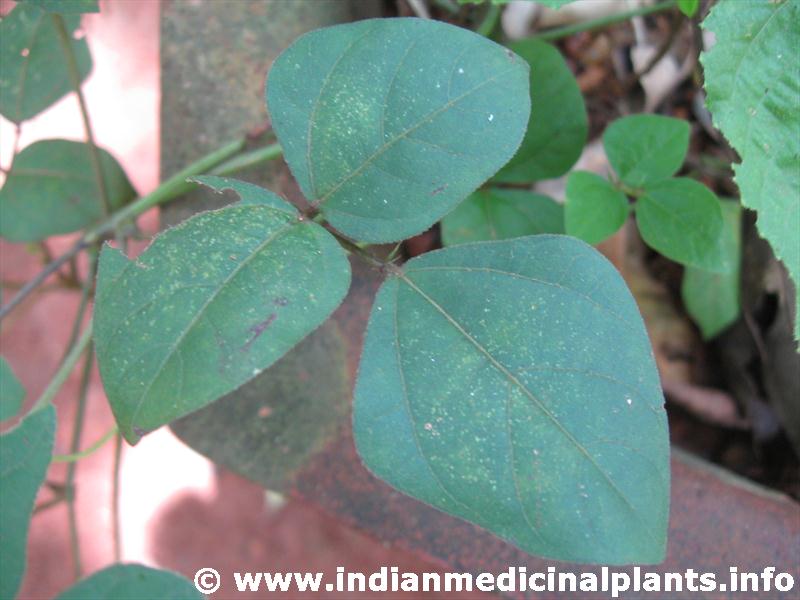
A creeper grows wildly.
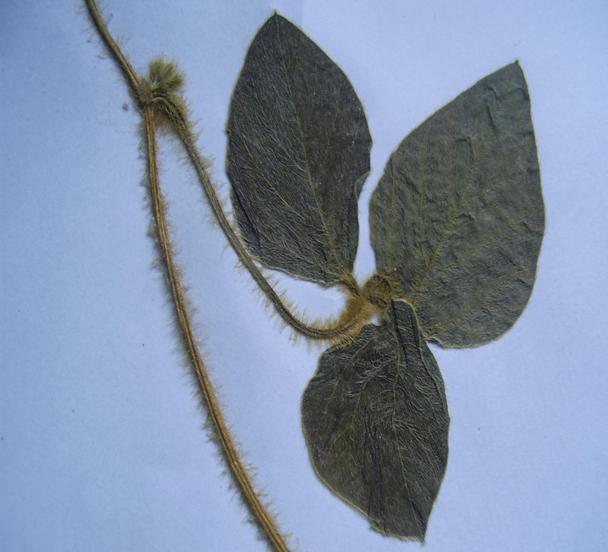
Leaves – 2 to 4 cms. long, compound and trifoliate. Leaflets – oval shaped.
flower stalk – bears ,yellow flowers. Axillary racemes
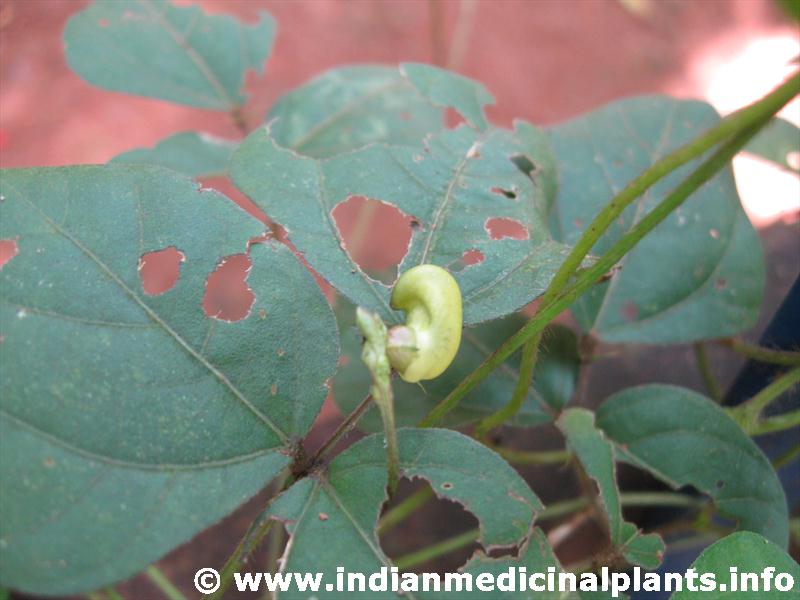
Legume – 3 to 6 cms. long, slightly crooked containing 8 to 10 seeds.
Distribution & Habitat
All over India
Chemical constituents:
friedelin, epifriedelin, stigmasterol , tannins, methionine, tryptophan, tyrosine, strepogenin, uridine, diphosphate-galacturonic acid
Properties:
Guna: laghu, snigdha;
Rasa : madhur. tikta;
Vipaka: madhur;
Virya : sheeta:
Karma –suklavardhaka, balya,vrysya
sedative, cooling, antibilious, digestive, constipating, anti inflammatory
Srotogamitva:
Dosha : Vatapittaghna, kaphavardhak.
Dhatu : Rakta (bleeding disorders), shukra (spermatorrhoea and aphrodisiac), rasayan.
Mala : Purisha (astringent).
Organs : Joints, brain and intestines.
Indication:
Raktha pittha, ksaya, jwara, sukla amaya, kasa, vatha,
Colic, flatulence, facial paralysis, fever, skin disease, general debility
Part used:
Root, seed
Dosage:
Powder 2-4 g
Decoction 50-100 ml
Internal uses:
It is used in the treatment of Bell’s palsy, hemiplegia, rheumatoid arthritis, bleeding disorders, abdominal colic, spermatorrhoea. burning sensation and pthisis. Charak has advised to feed the cow with leaves of mashaparni and to consume cow’s milk as an aphrodisiac.
Parts used : Whole plant and roots. Usually mudgaparni and mashaparni are used in combination.
Therapeutic Uses:
- Seed powder in milk useful in general debility
Descriptions on Ayurveda books / Nighandu:
1.
2
3
4
5
6
7
8
9
10
11
12