Botanical Name: Paederia foetida Linn.
Family: Rubiaceae.
Introduction:
This is an anti-inflammatory drug used in Ayurvedic.
Names in different Indian languages
| English | |
|---|---|
| Hindi | Gandhaprasarani or Pasaran |
| Kannada | |
| Malayalam | Gandhaprasaarini, appinaari |
| Sanskrit | Gandhaprasaarini, somaraji |
| Tamil | Talanili, Mudiyar Kundal. |
| Telugu | Takkeda |
| Unani | |
| Folk | Gandhabhaaduli |
Synonyms
Gañdhãdhyã, Balyã, Rãjabalã, Sarani
Classification according to Charaka, Susrutha & Vagbhata
| Charaka | |
|---|---|
| Susrutha | |
| Vagbhata |
Varieties & adulterants – (CV – controversy, AD – adulterants)
1. Merremia tridentate – [CV]
2. Laptadenia spartium – [CV]
3. Convolvulus arvenis – [CV]
4. P. scandens [CV]
5. Prasarani – CV (north Indians calls)
Morphology
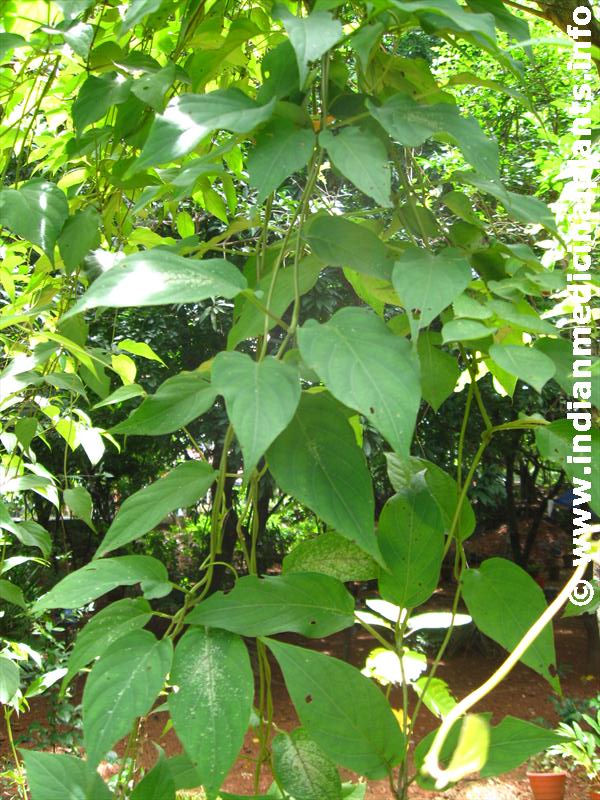
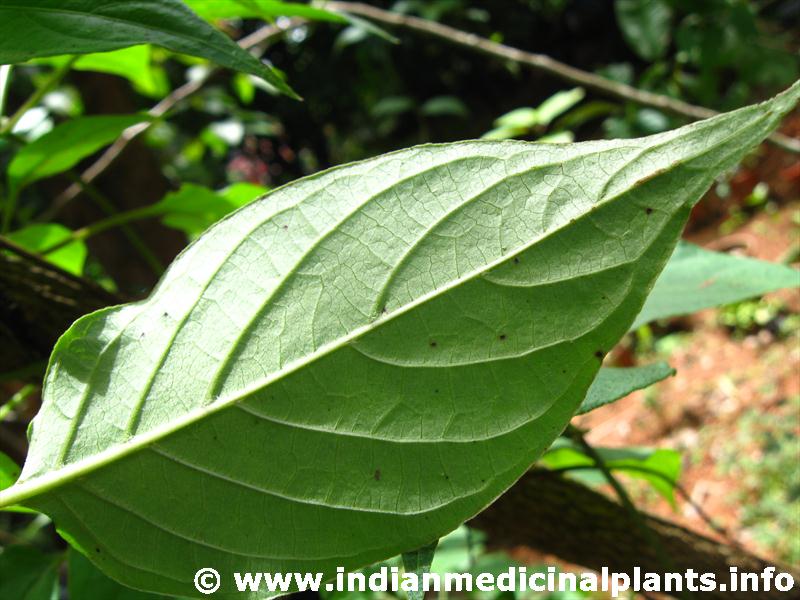
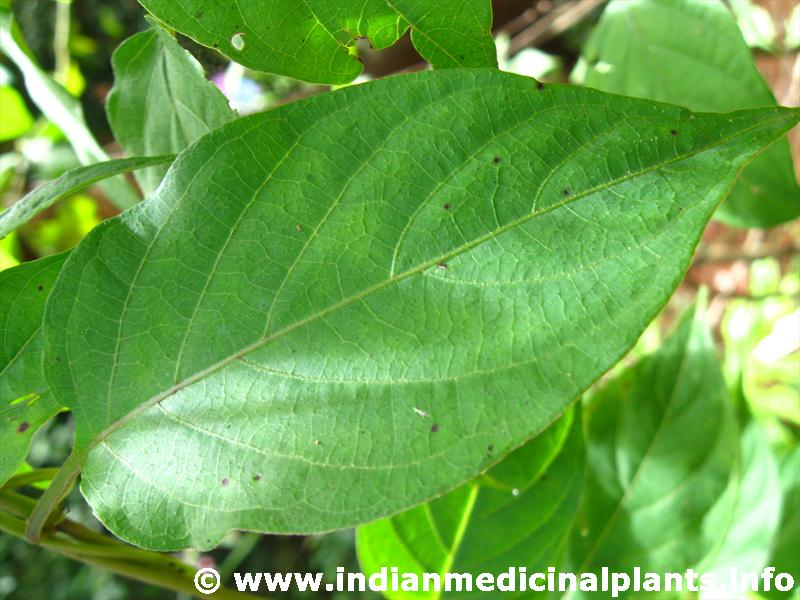
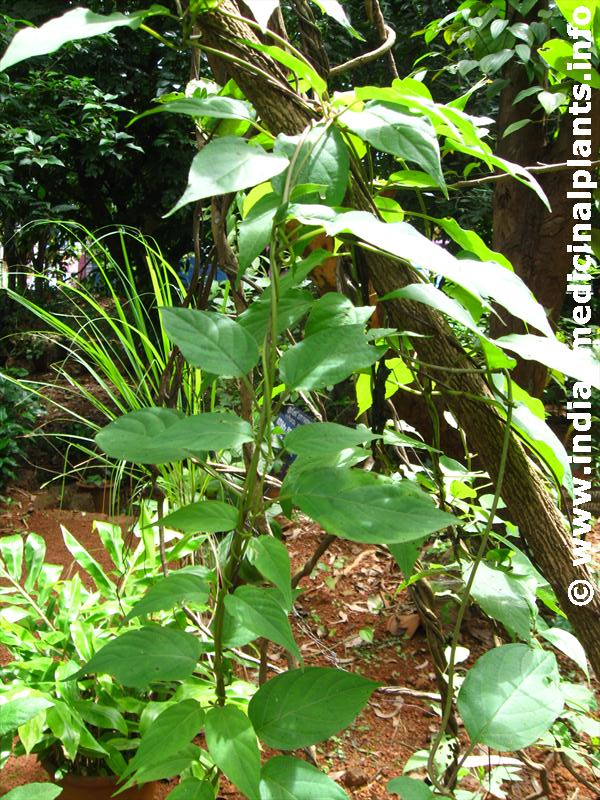
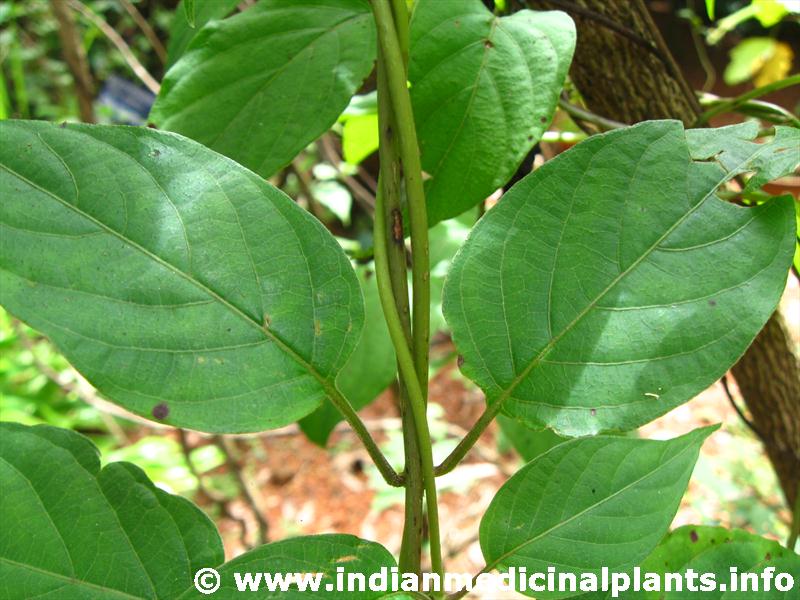
Glabrous or twining shrub.
Leaves simple, opposite ovate or lanceolate, acute or cuspidate; 6-8 cm x 2.5- 3.5 cm; petioles 2-3 cm long.
Flowers- in panicles, 15 cm long, violet coloured flowers.
Fruit- orbicular, wings pale, 1.0 cm. across.
Distribution & Habitat
Central and Eastern Himalayan ranges, West Bengal.
Chemical constituents:
iridoid glycosides, sitosterol, stigmasterol, campesterol, ursolic acid, hentriacontane, hentriacontanol, ceryl alcohol, palmitic acid and methyl mercaptan (foul smell)
Properties:
Rasa Tikta
Guna Guru, Sara
Virya Usna
Vipaka Katu
Karma – vrishya,keshya, kandudhna, kushtaghna
carminative, antiinflammatory, astringent, spasmolytic, antidiarrhoeal, diuretic, antilithic
Srotogamitva:
Dosha Tridoshaghni.
Dhatu Shukra (aphrodisiac), asthi (bones), rakta (vatarakta).
Mala Purisha (mild laxative), (malavishtambhaharini-relieves piles).
Indication:
Vãta Vyãdhi, Amavãta, Mütrakrcchra
rheumatic infections, piles,cough, inflammations of the liver, spleen
Part used:
Root, leaf
Dosage:
Leaf juice 10-15 ml
Powder 2-4 g
Decoction 50-100 ml
External use Analgesic. anti-inflammatory. Therefore it is used in all the vata disorders. It is the best medicine for it
Internal uses:
Digestive system : It is an antiflatulent and mild laxative. So it is used in abdominal pain, flatulence and constipation with hard stool. Cooked leaves or the warm paste of leaves is given in abdominal pain.
Circulatory system : It purifies the blood by its tikta rasa and alleviates vata by its ushna veerya. Therefore it is used in vatarakta.
Reproductive system : Aphrodisiac by guru property. So used in infertility.
Therapeutic Uses:
(1) Amavãta— Prasãriñi decoction, jaggary and Lasuna are fermented together for 7 days and then given orally with Pañchakola curna (C.D.)
(2) Mutrakrichra— Prasãrini paste is taken with coconut water (V.M.)
Descriptions on Ayurveda books / Nighandu:
1
2
3
4
5
6
7
8
9
10
11
12