Botanical Name: Operculina turpethum (Linn.) Silva Manso.
Family: Convolvulaceae
Introduction:
Tivrit used as the best herbs for ‘Sukha virecana’ (laxative).
Names in different Indian languages
| English | Indian Jalap, Turpeth |
|---|---|
| Hindi | Nisoth, tarbut |
| Kannada | Sigade |
| Malayalam | Trikolpakkonna, triputa, sivata |
| Sanskrit | Trivrt |
| Tamil | Sivatai, kumbham |
| Telugu | Tegada |
| Unani | |
| Folk |
Synonyms
Ipomoea turpethum R. Br.
Merremia turpethum (Linn)
Classification according to Charaka, Susrutha & Vagbhata
| Charaka | |
|---|---|
| Susrutha | |
| Vagbhata |
Varieties & adulterants – (CV – controversy, AD – adulterants)
1. Arulã
2. Syãma.
3. sveta
4. Marsedenia tenasissima [AD]
Morphology
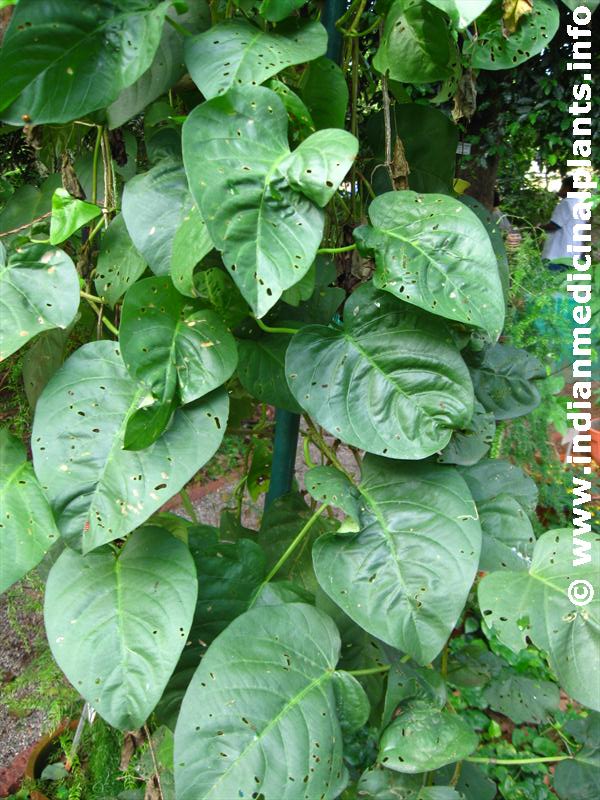
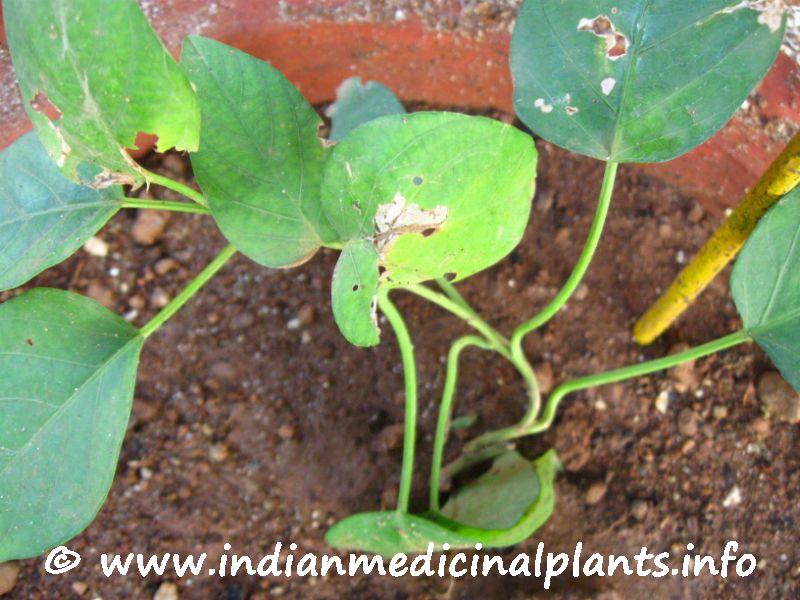
A stout twinner with quadrangular stem; winged, compressed
or nearly round.
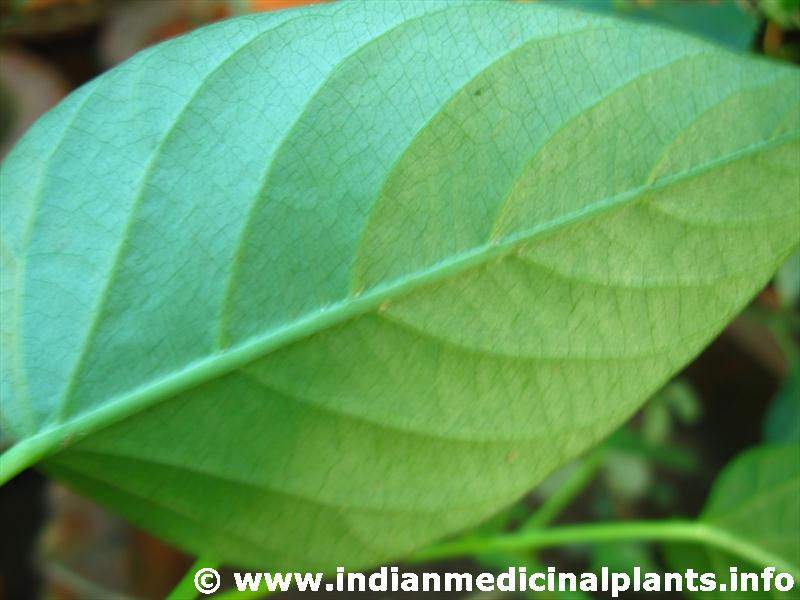
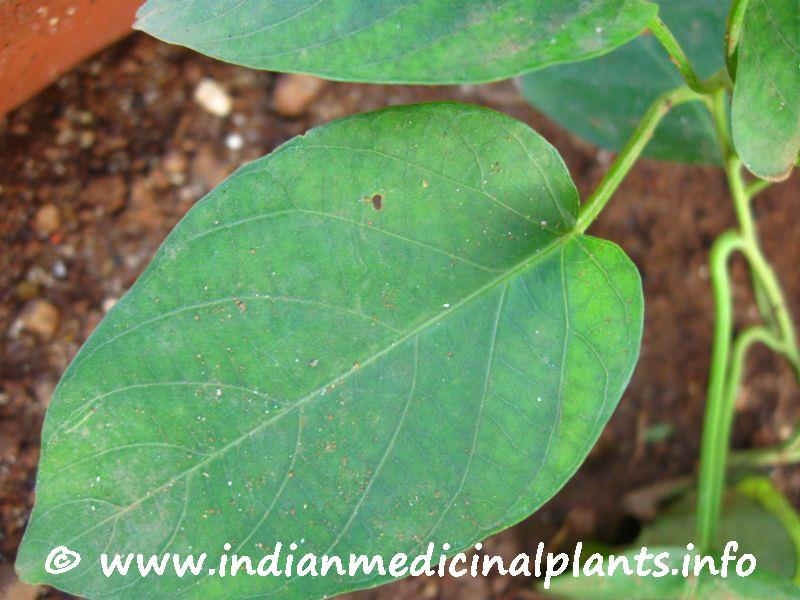
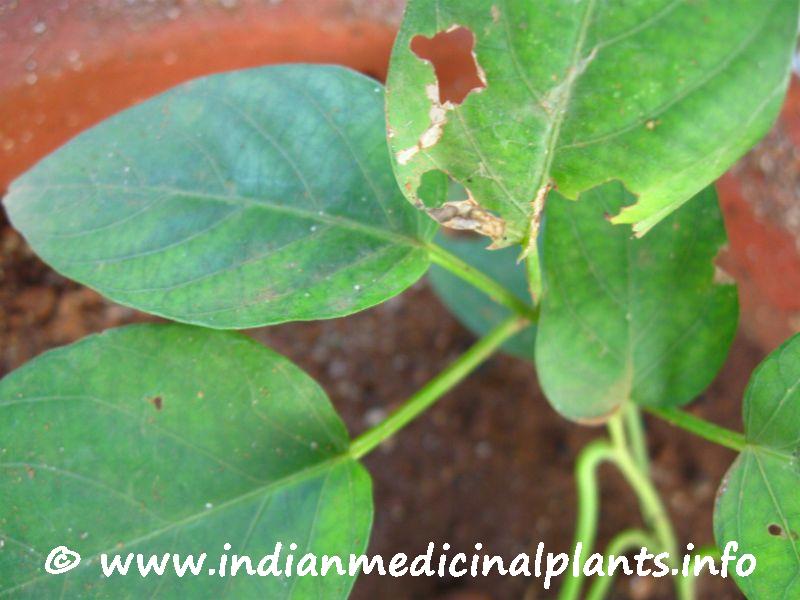
Leaves— simple,alternate, ovate or oblong, base caudate or obtuse, muonate, base cordate or truncate.
Flower—few-flowered cymes; bract oblong, caudous, often pinkish; sepals ovate (much enlarged in fruit), softly pubescent; petals white, tubular-campanulate.
Fruit—globose capsule, enclosed in enlarged brittle imbricate sepals.
Seeds— 4-seeded, smooth, black.
Flowers and fruits during May-November.
Distribution & Habitat
Common In waste places and thickest throughout India ascending upto 1000m.
Chemical constituents:
Properties:
RASA- Tikta, Katu
GUNA– Laghu, Ruksa, Tiksna
VIRYA– Usna
VIPAKA-katu
Karma –virechana, murccha, daha, kushtaghna, pittahara, krimighna, sophahara, kasaghna
Purgative, anthelmntic, expectorant, antipyretic, hepatic stimulant, hydragogue.
Srotogamitva:
Dosha : Vatavardhan, pittashodhari, shleshmashodhan, .
Dhatu : Rasa (fever), rakta (spleen, anaemia).
Mala Purisha purgation, purgation of pitta results in yellow stools.)
Organs : Intestine. .
Indication:
Kushta,visha, daha, athmana, murccha
colic, constipation, dropsy, obesity, ascites, inflammation, paralysis, ulcers, erysipelas, haemorrhoids, tumours, jaundice, fever , ophthalmia, cough
Part used:
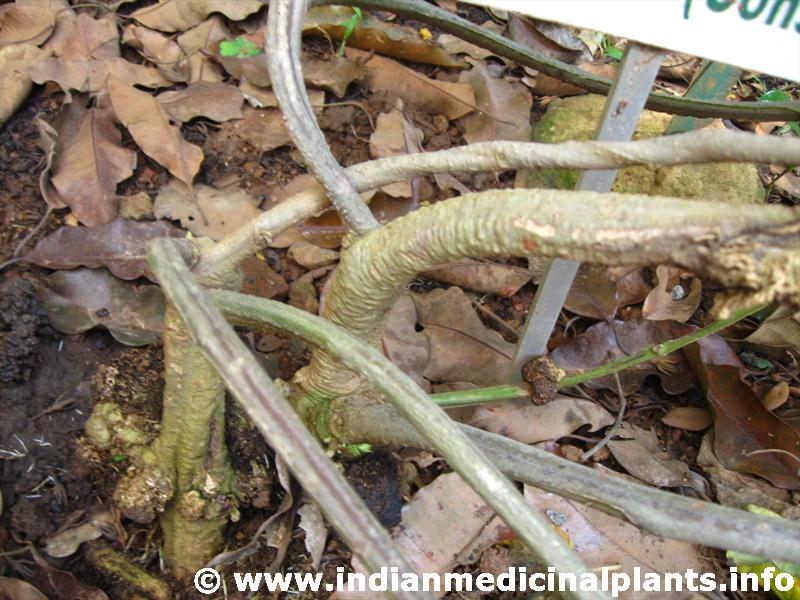
Root , leaves
Dosage:
Leaf juice 10-15 ml
Powder 2-4 g
Decoction 50-100 ml
Internal uses:
Digestive system : It has cathartic and purgative actions. It is the best drug for mild laxation. It has similar properties to Jalap, This drug causes yellow coloured loose motions with mild griping pain. It has been mentioned that it is used for purification in various enteric diseases due to its kaphapitta and malashodhan actions. Useful as purgative in many diseases viz, chronic flatulence, constipation, haemorrhoids, jaundice gaul rheumatoid arthritis, cough, asthma and oedema. Mixture of trivut and triphala is used for piles.
Circulatory system : It is used for purgation in skin disorders caused due to kapha and pitta, erysepelas, spleen enlargement, Trivrut eliminates watery excreta out of the body, thus reducing
Important Yogas or Formations:
Trivrutadi churna, Trivnitadigutika, Trivrutadighrita. Avipàttikara cürna, Trivrt leha.
Therapeutic Uses:
(1) Vãtarakta— Decoction of Trivrt, Vidãri a is useful (B.P. & V.S.)
(2) Stanyasodhana— Trivrt is given with Triphalä decoction
(C.S.Ci. 30).
(3) Visama Jvara— Trivrt is taken with honey (V.M.).
(4) Netraroga— Rasa kriya of Trivrt should be given with sugar and honey (S.S.Ut. 10).
Descriptions on Ayurveda books / Nighandu:
1.
2
3
4
5
6
7
8
9
10
11
12