Botanical Name: Ocimum kilimandscharicum Guerke.
Family: Labiatae; Lamiaceae
Introduction:
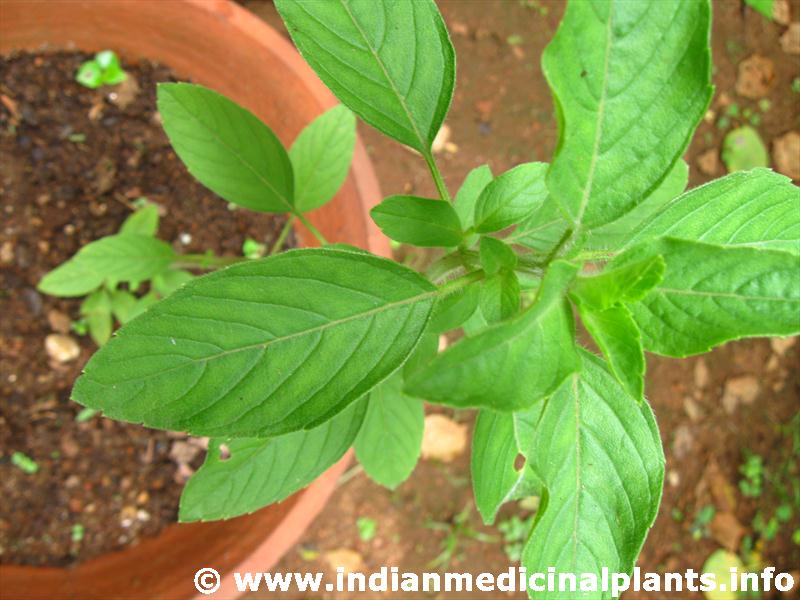
This plant have the smell of camphor , when leaves are crushed.
Names in different Indian languages
| English | Camphor Basil |
|---|---|
| Hindi | Karpura Tulasi |
| Kannada | Karpura Tulasi |
| Malayalam | Karpura Tulasi |
| Sanskrit | Karpura Tulasi |
| Tamil | Karpura Tulasi |
| Telugu | Karpura Tulasi |
| Unani | |
| Folk |
Synonyms
Ocimum camphora Guerke
Classification according to Charaka, Susrutha & Vagbhata
| Charaka | |
|---|---|
| Susrutha | |
| Vagbhata |
Varieties & adulterants – (CV – controversy, AD – adulterants)
Morphology
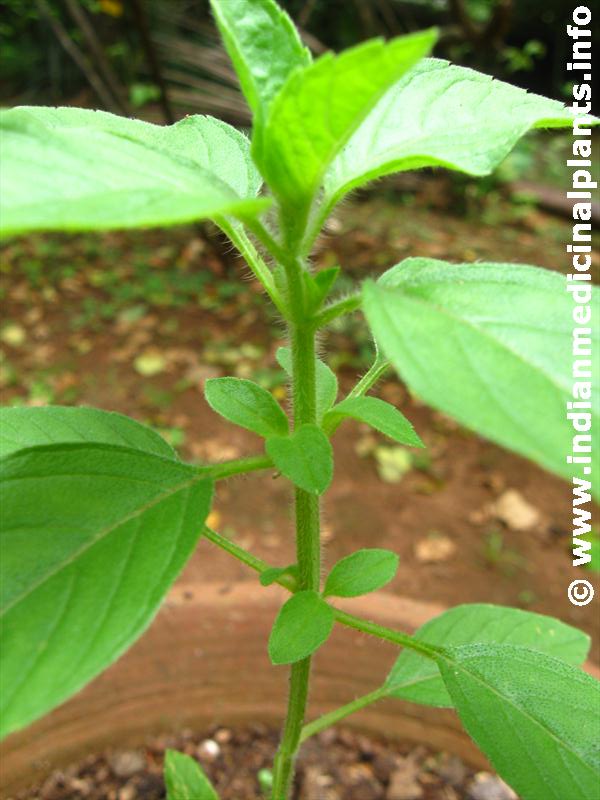
Branched, aromatic under shrub 30-50 cm high, sometimes woody, hairy.
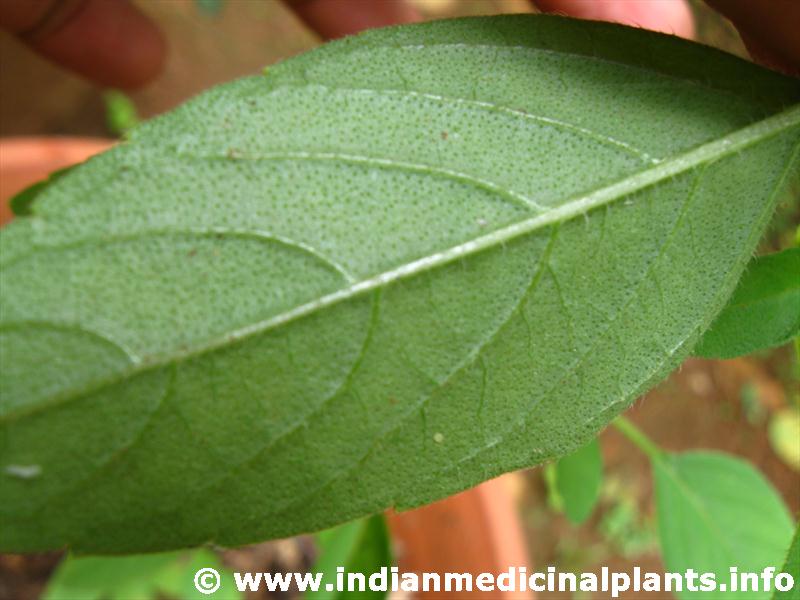
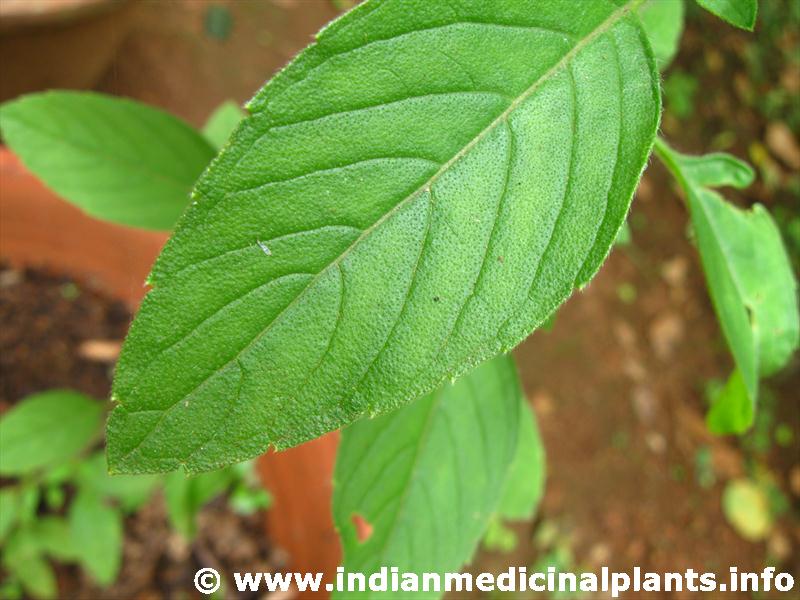
Leaves—simple, opposite, ovate-oblong, – entire or subserrate. Petioles slender hairy
Flowers— very small, pale white, borne in terminal and axillary racemes.
Fruits— subglobose or broadly oblong nutlets.
Flowers and fruits almost throughout the year (mainly during September-February).
Distribution & Habitat
Cultivated
Chemical constituents:
camphor, pinene, limonene, terpinolene, myrcene, beta-phellandrene, linalool, camphene, p-cymene, borneol and alpha-selinene
Karma –
spasmolytic, antibacterial,aromatic,antiviral
Indication:
Cough, ulcer, anorexia, infections
Part used:
Whole plant
Dosage:
Leaf juice 10-15 ml
Powder 2-4 g
Decoction 50-100 ml
Therapeutic Uses:
- Leaf juice useful in cough
Descriptions on Ayurveda books / Nighandu:
1