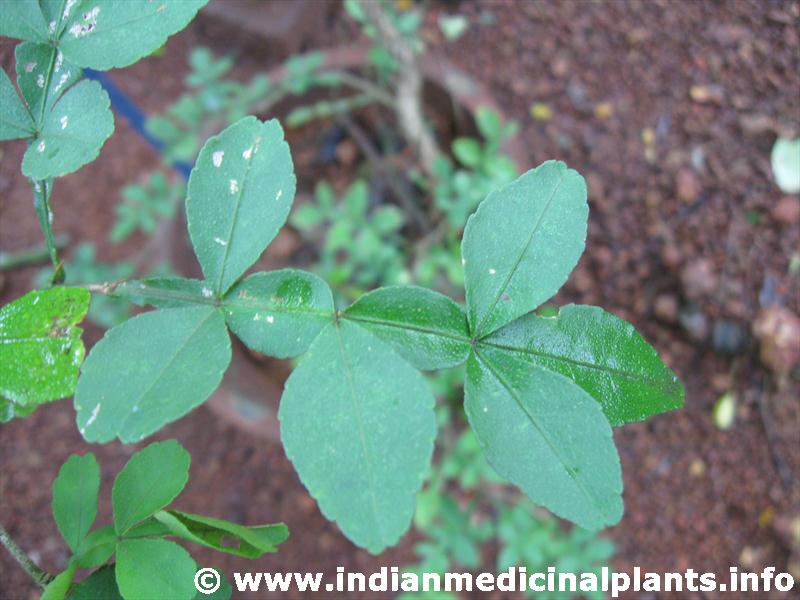
Botanical Name: Naringi crenulata(Roxb.)
Family: Rutacea
Introduction:
Its properties very similar to Limonia acidissima ie kapittha
Names in different Indian languages
| English | Elephant apple |
|---|---|
| Hindi | Tondsha |
| Kannada | |
| Malayalam | Kattu narakam, narinarakam, vilathi |
| Sanskrit | Bilvaparni |
| Tamil | Nayvila, magavilvam |
| Telugu | |
| Unani | |
| Folk | Ran-limbu, Beli, Bainthaa. |
Synonyms
Limonia crenulata Roxb
Hesperethusa crenulata (Roxb.) M. Roem.
Classification according to Charaka, Susrutha & Vagbhata
| Charaka | |
|---|---|
| Susrutha | |
| Vagbhata |
Varieties & adulterants – (CV – controversy, AD – adulterants)
Morphology
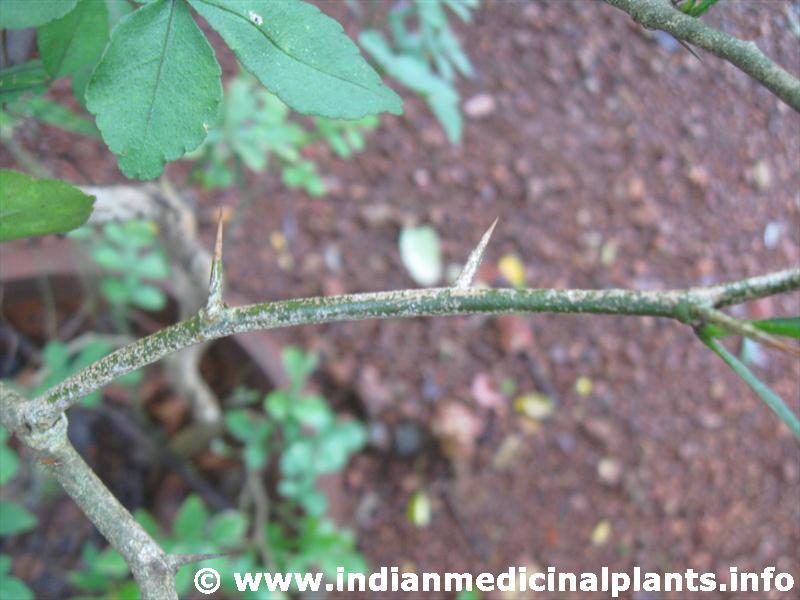
It is a shrub
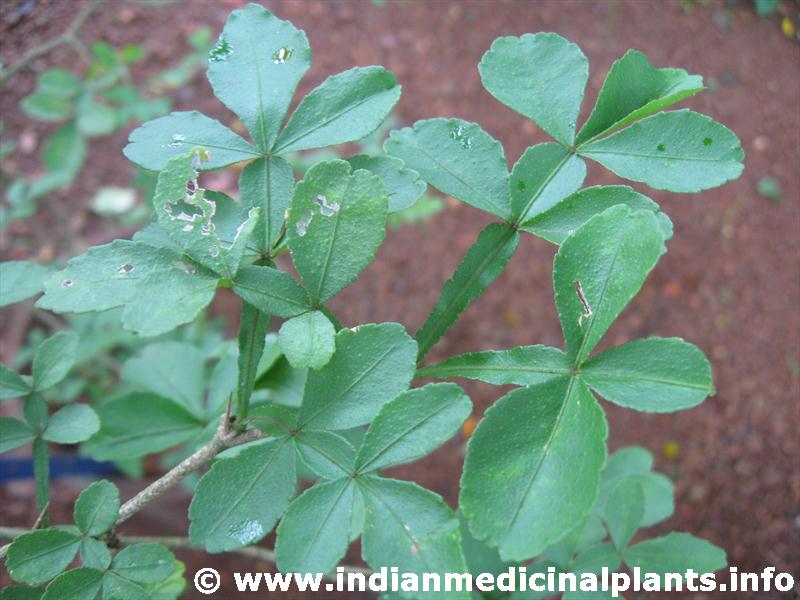
Leaves are compound , trifoliate, two trifoliate leaf may seen step like manner
Flower – white
Fruit – capsule
Distribution & Habitat
South India
Chemical constituents:
geraniol, alphaand beta-pinene, cineole, elemol acetate, linool, alpha-terpinolene, camphor, eudesmol, p-cymene, camphane, azulene, borneol acetate, alphaterpenol, alpha-curcumene, alpha thujone, limolene, myrcene and betaocimene.
Karma –
anti-inflammatory, purgative
Indication:
Stomachic, fever,
Part used:
Root, fruit , leaves
Dosage:
2-4 g
Therapeutic Uses:
- Fruit useful in constipation.