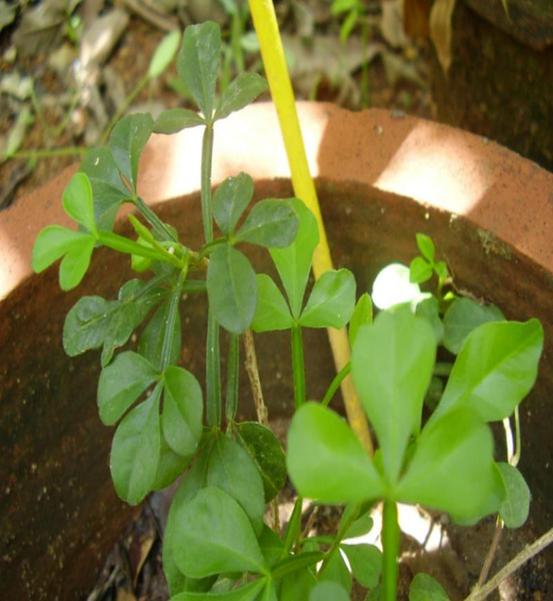
Botanical Name: Naregamia alata Wight & Arn.
Family: Meliaceae
Introduction:
In folk it used for malarial fever.
Names in different Indian languages
| English | Goanese Ipecacuanha |
|---|---|
| Hindi | Tinparni |
| Kannada | Nelanaringa, nepanringa |
| Malayalam | Nilanarakam |
| Sanskrit | Amlavalli, triparnika |
| Tamil | Nilanaragam |
| Telugu | Pagapapu |
| Unani | |
| Folk | Nilanaaringa, Bhumi-Naagaranga, Pitta-vela, Tinpaani |
Synonyms
Classification according to Charaka, Susrutha & Vagbhata
| Charaka | |
|---|---|
| Susrutha | |
| Vagbhata |
Varieties & adulterants – (CV – controversy, AD – adulterants)
Morphology
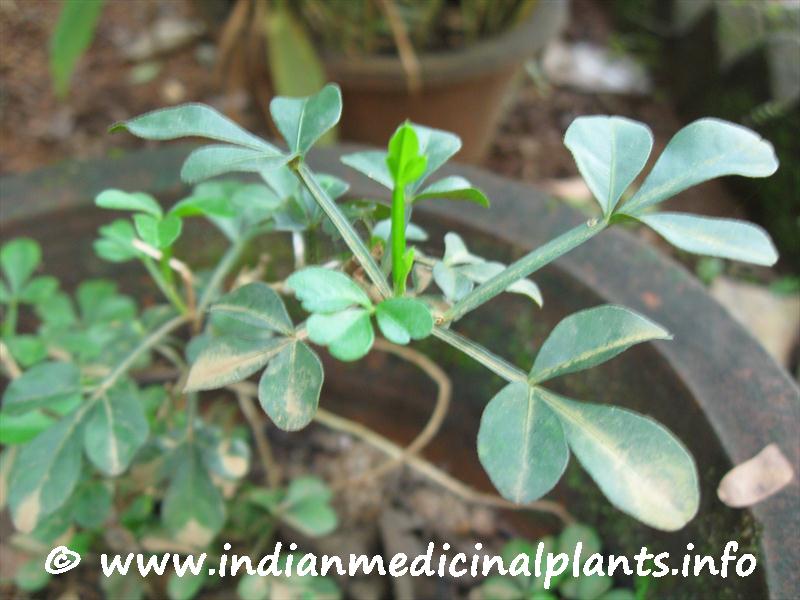
It is an under shrub , grows up to 25-40 cm height
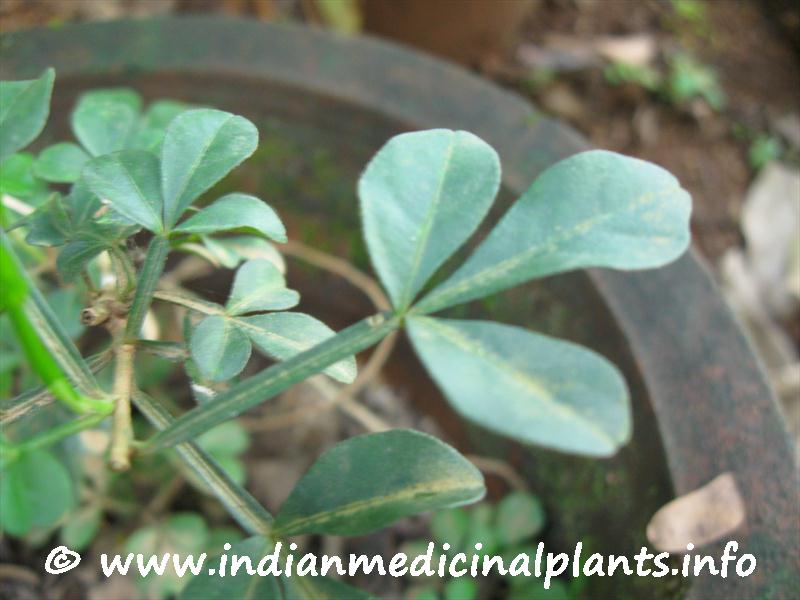
Leaves – trifoliate, alternate , leaflets – cunate- obovate
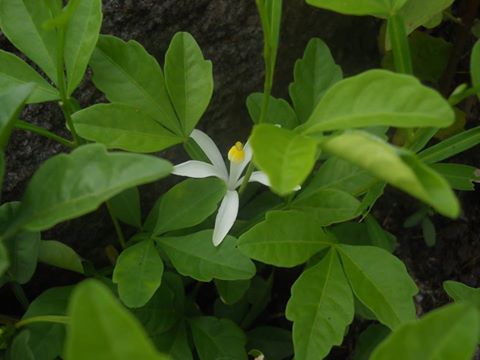
Flower – white, solitary
Fruit – capsule
Root – pungent smell
Distribution & Habitat
All over India
Chemical constituents:
heneicosane, beta-sitosterol, stearic and palmitic acids.
Properties:
RASA-madhur
GUNA–guru
VIRYA-sita
VIPAKA-madhur
Karma –vishahara, swasa hara, kasahara
emetic, cholagogue, expectorant, antidysenteric
Srotogamitva:
Dosha : pittaghna
Dhatu :rasa
Mala :mutrala
Organ : liver
Indication:
malarial chronic fevers, anaemia, enlarged spleen, gout, scabies, catarrh, asthma
Part used:
Whole plant
Dosage:
10-15 ml
2-4 g
Therapeutic Uses:
- Root powder useful in dysentery
- Plant decoction useful in fever.
Descriptions on Ayurveda books / Nighandu:
1.
2