Botanical Name: Jatropha gossypifolia Linn.
Family: Euphorbiaceae
Introduction:
It is native to Brazil, cultivated as an ornamental.
Names in different Indian languages
| English | Tua-Tua, Bellyache bush, cotton leaf, |
|---|---|
| Hindi | |
| Kannada | |
| Malayalam | Chuvana kadalavannakk, adala |
| Sanskrit | Rakta-Vyaaghrairanda |
| Tamil | Adala, atalai, Stalai |
| Telugu | |
| Unani | |
| Folk | Laal Bagharenda |
Synonyms
Classification according to Charaka, Susrutha & Vagbhata
| Charaka | |
|---|---|
| Susrutha | |
| Vagbhata |
Varieties & adulterants – (CV – controversy, AD – adulterants)
Morphology
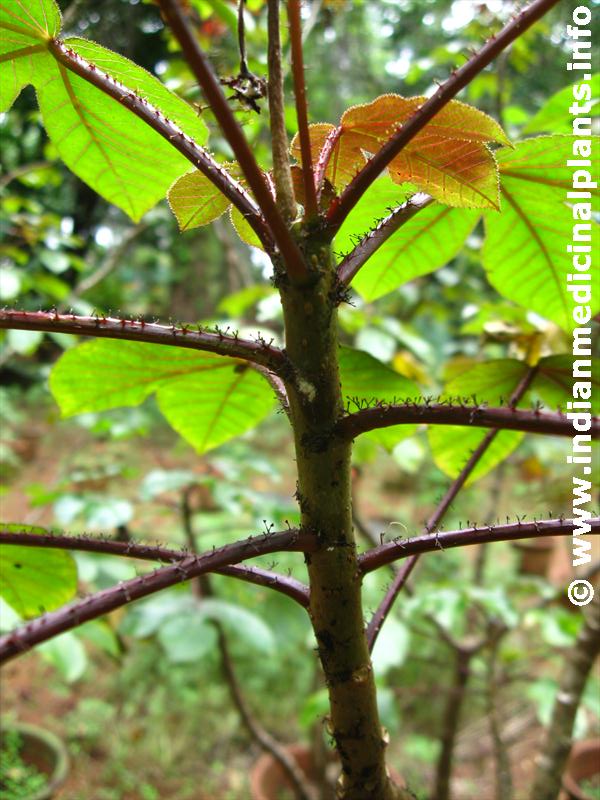
Soft wooded shrub, grows 2-3 m height.
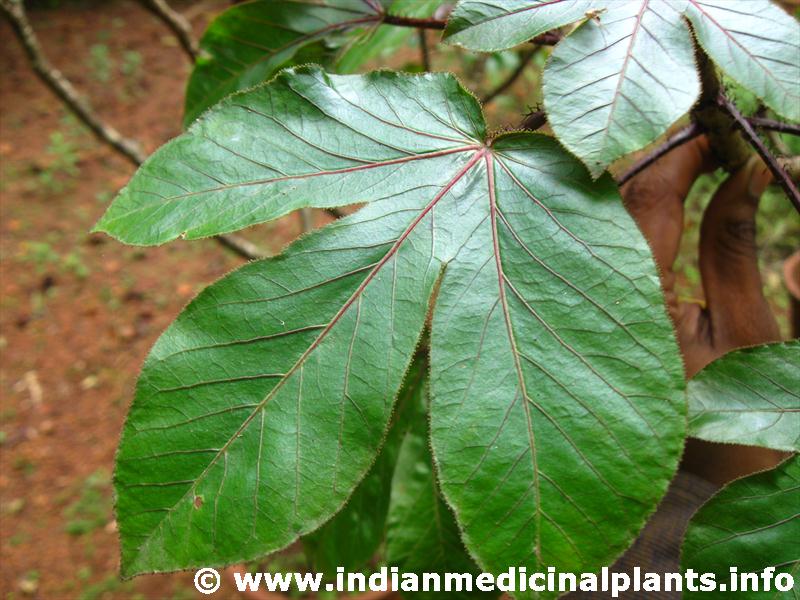
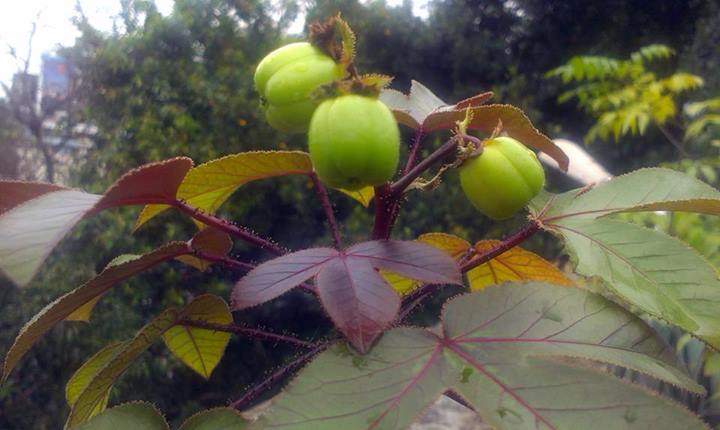
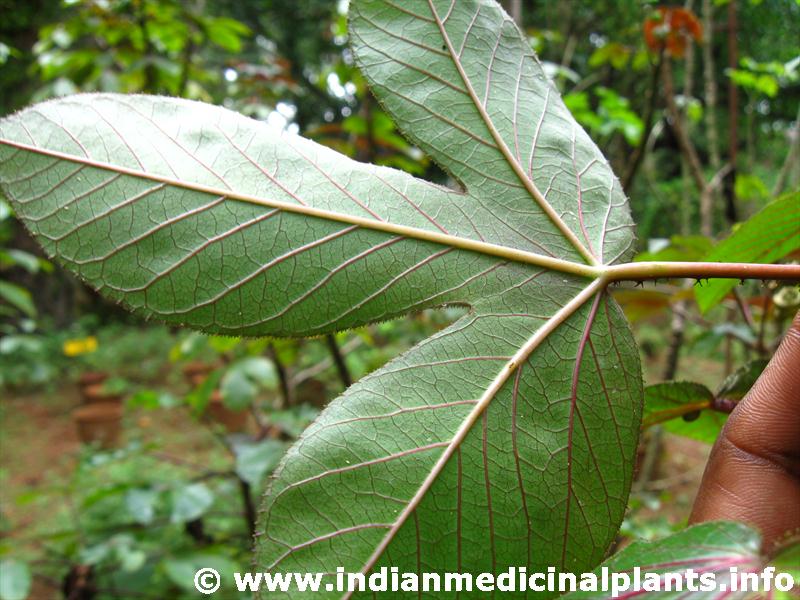
Leaves – simple, alternate, long petiole, leaf are 3 digitated.
Flower – reddish.
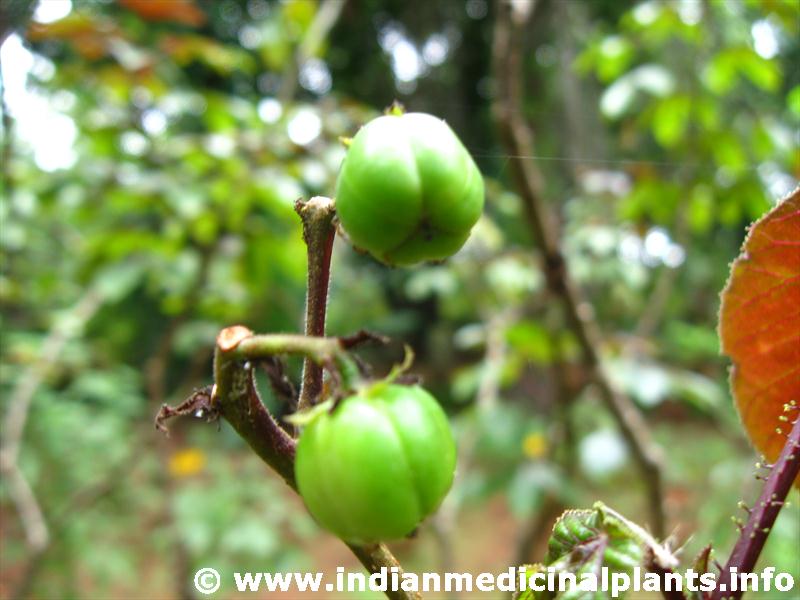
Fruit – globose
Distribution & Habitat
All over India
Chemical constituents:
diterpenes, jatropholone A and jatrophatrione
Karma –
purgative, emetic
Indication:
Malaria, scabies, ringworm, eczema
Part used:
Root, leaves, seed , seed oil
Dosage:
2-4 g powder
Internal uses:
Digestive system:
Purgative, emetic
Therapeutic Uses:
Seeds useful in constipation