Botanical Name: Ipomoea paniculata R. Br. Burm.
Family: Convolvulaceae
Introduction:
Latin name : Pueraria = after Mr. M.M.N. Puerari – scientist; tuberosa = tuberous rooted or lpomoia digitata, I. paniculata.
Names in different Indian languages
| English | Giant potato |
|---|---|
| Hindi | bhilayakhand |
| Kannada | nadakumbala |
| Malayalam | Palmutuku, anchila tali |
| Sanskrit | Kshira-vidaari |
| Tamil | Paalmudukkan kizhangu |
| Telugu | Nelagummundu |
| Unani | |
| Folk | Bilaaikanda. Bhuin Kakhaaru |
Synonyms
Kshira-vidaari, Kshirvalli, Payasvini, Swaadukandaa, Ikshukandaa, Gajavaajipriyaa, Kandapalaasha, Bhuumikuushmaanda
Ipomoea digitata Linn
Ipomoea paniculata R. Br. Burm.
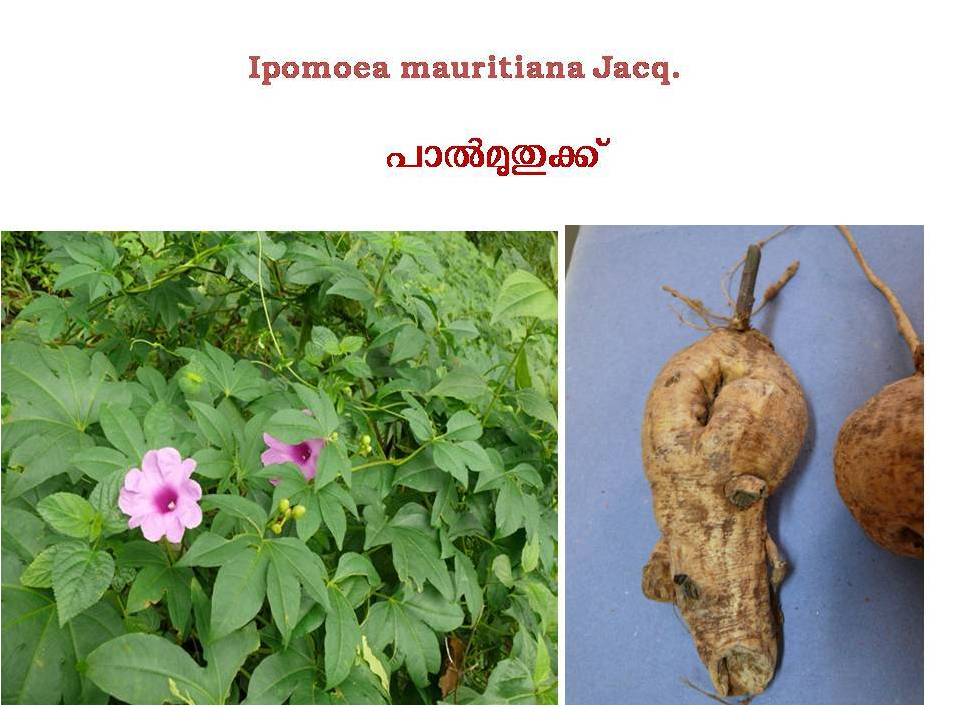
Ipomoea mauritiana Jacq.
Ipomoea mauritiana Jacq.
Classification according to Charaka, Susrutha & Vagbhata
| Charaka | |
|---|---|
| Susrutha | |
| Vagbhata |
Varieties & adulterants – (CV – controversy, AD – adulterants)
Pueraria tuberosa DC – CV
Morphology
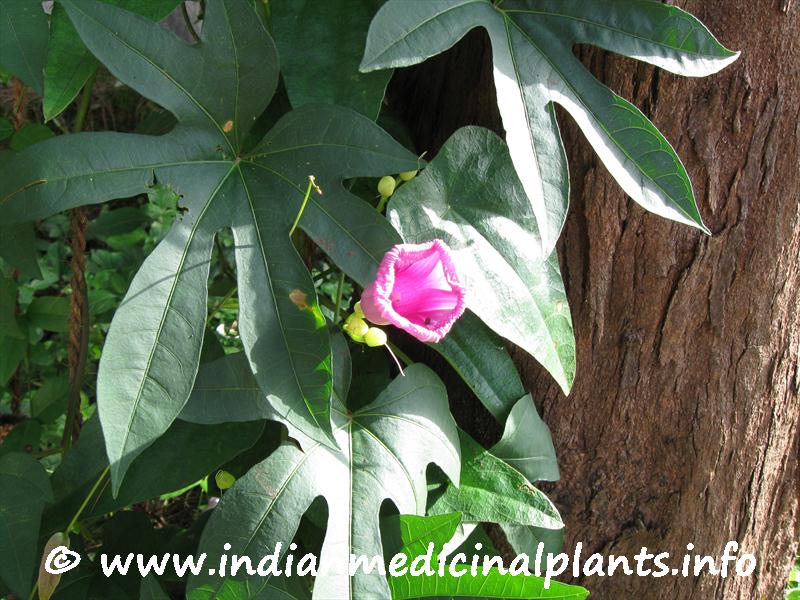
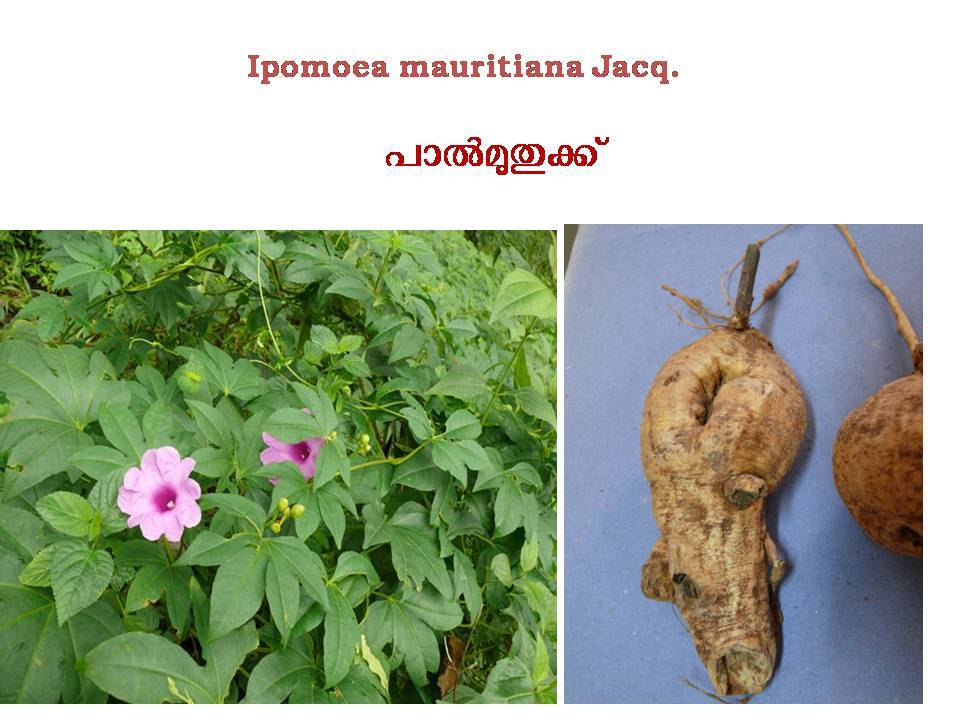
A wide spreading creeper, Its stalk has pores.
Leaves – trifoliate, simple, alternate
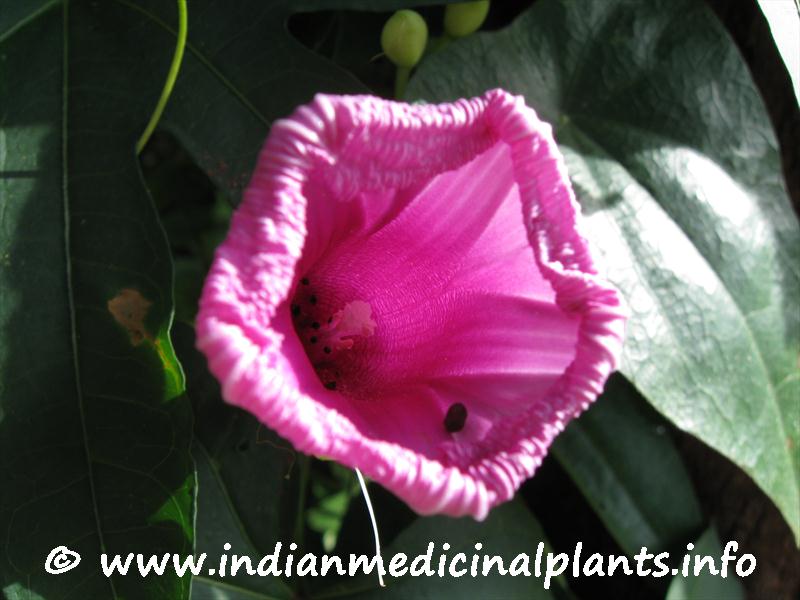
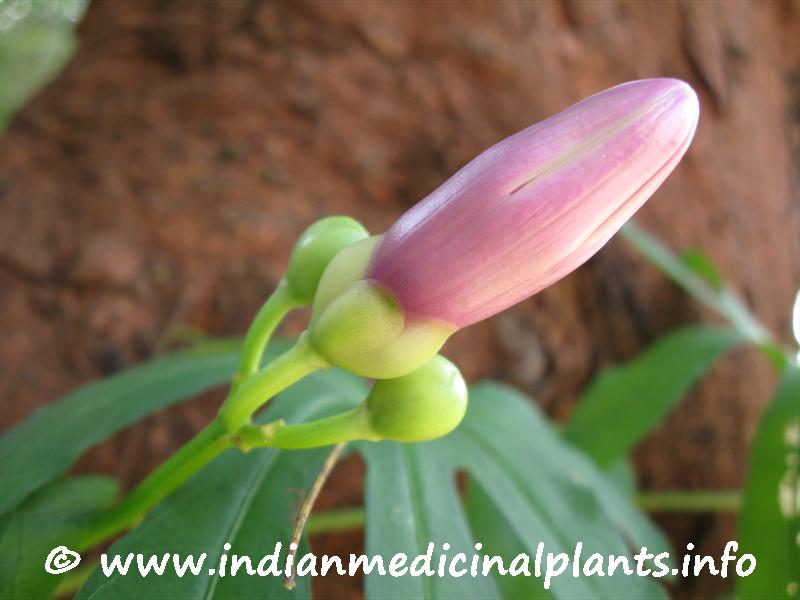
Flower – pink
Fruits – 5 to 7 cms. long. Capsule
Tubers circular with a diameter of 30 to 40 cms.
There is another variety called ksheervidari the tuber of which oozes out a thick latex on cutting it
Distribution & Habitat
Himalayas, Nepal, Bengal, Assam; Punjab and Konkan region.
Chemical constituents:
Resin, sugar and starch (in large quantity)
Properties:
Guna : guru, snigdha;
Rasa: Madhura;
Virya : sheeta;
Vipaka– madhur
Karma –balyam, vriksyam
Cholagogue, galactagogue, alterative, demulcent, purgative
Srotogamitva:
Dosha : pitta vatha hara
Dhatu :rasa
Mala :purisha
Organ : spleen, liver
Indication:
enlargement of liver and spleen, menorrhagia, syphilis , vomiting ,splenomegaly , hepatomegaly
Part used:
Rhizome
Dosage:
5-8 g
Important Yogas or Formations:
Vidyaradi ghrita and lehya
Therapeutic Uses:
- Powder in milk useful to increase breast milk
Descriptions on Ayurveda books / Nighandu:
1.
2
3
4
5
6
7
8
9