Botanical Name: Tribulus terrestris Linn.
Family: Zygophyllaceae.
Introduction:
It is the one of the important mutrala drugs in Ayurveda
Names in different Indian languages
| English | Land-Caltrops, Puncture Vine |
|---|---|
| Hindi | Gokharu |
| Kannada | Negalu, sennanegalu |
| Malayalam | Nerinnil |
| Sanskrit | Gokshura |
| Tamil | Sirunenunji, Nerinjil, Nerunjil. |
| Telugu | Palleru |
| Unani | Khaar-e-Khasak Khurd |
| Folk |
Synonyms
Gokshuraka, Kshudra (Laghu) Gokharu, Shvadamshtraa, Swaadu-kantaka, Trikanta, Trikantaka.
Classification according to Charaka, Susrutha & Vagbhata
| Charaka | Sothahara, Mutravirecaniya, Krmighna |
|---|---|
| Susrutha | Vidarigandhadi, Viratarvãdi, Laghu Pañcamüla Viratarvadi |
| Vagbhata | Vidarigandhadi |
Varieties & adulterants – (CV – controversy, AD – adulterants)
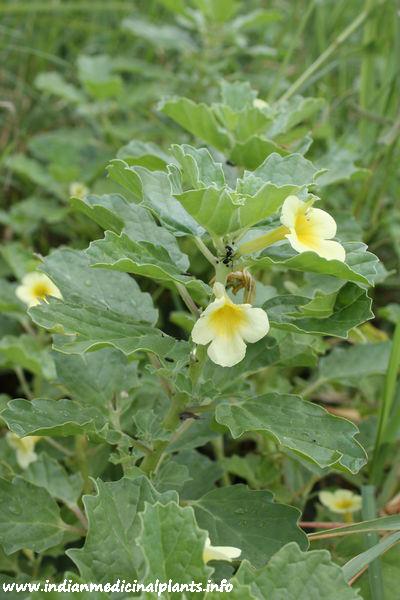
(Larger var. is equated with Pedalium murex Linn. The fruits of both the varieties are conical and have four spines, not three as the synonyms denote. Hence, Acanthospermum hispidum DC. andMartynia annua Linn. Have been suggested as the source of Trikantaka.)
1.Pedalium murex Linn
2. T. terrestris
3.xanthium strumarium
4.Martynia diandra
5.Acanthospermum hispidium
Pedalium mure (gaja gokshura)
Morphology
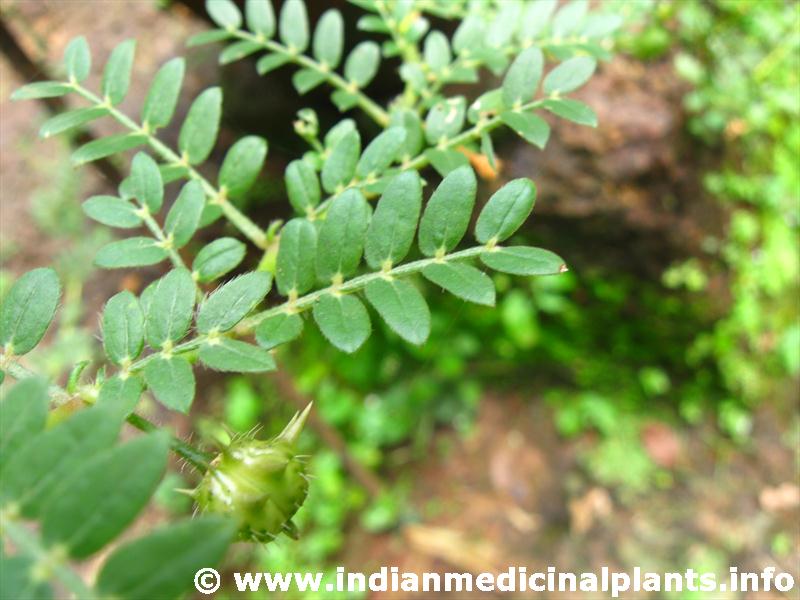
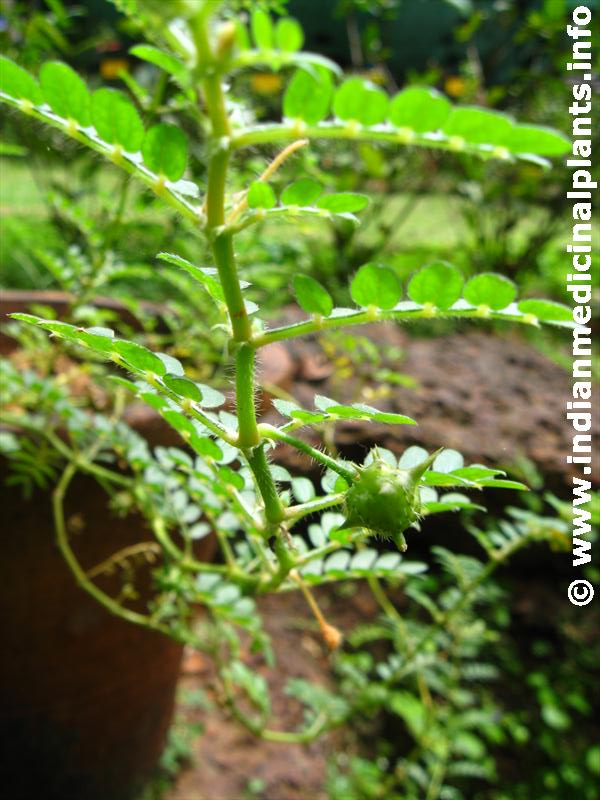
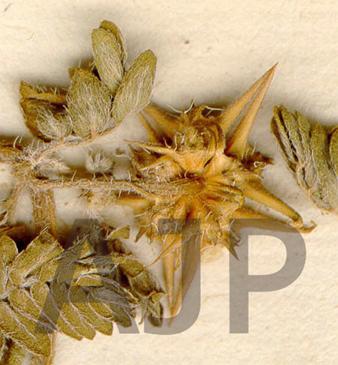
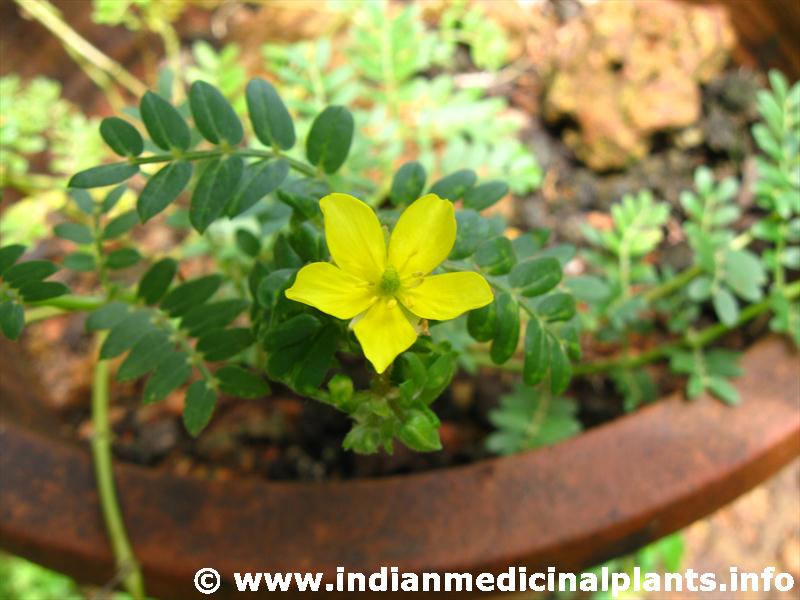
A small, prostrate, hirsute or silky hairy herb.
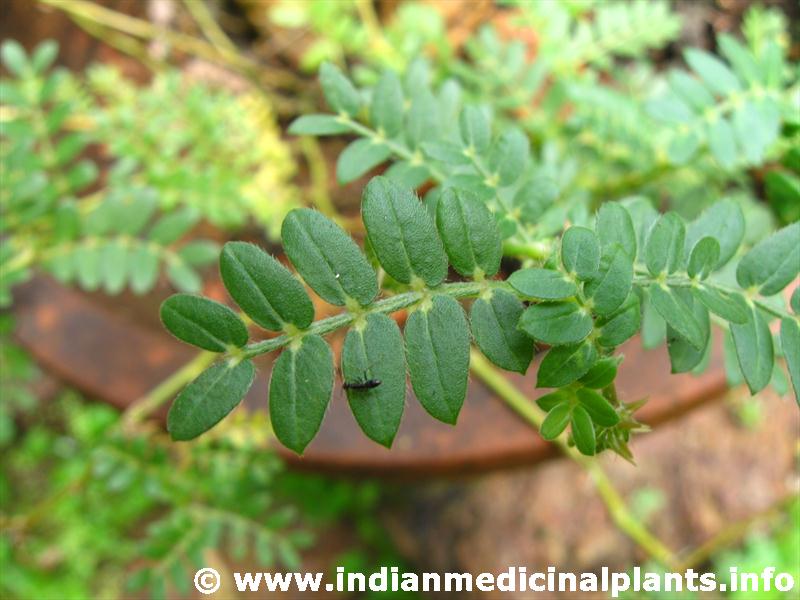
Leaves-stipulate, compound, pinnate, opposite, usually unequal , pinnate; leaflets 6-8 pairs, oblong
Flowers solitary, axillary or leaf-opposed, yellow or white.
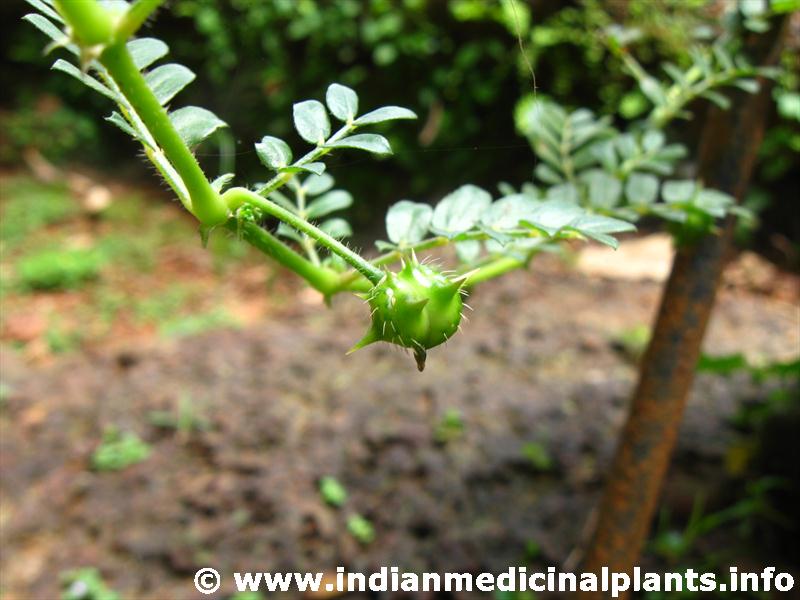
Fruits-globose, hairy, 5-angled, spinous with 2 long and 2 short spines on each cocci.
Seeds-obliquely pendulous. (Flowers and fruits during April- September).
Distribution & Habitat
Dry places in India
Chemical constituents:
Sapogenins,diosgenin, gitogenin, chlorogenin, ruscogenin, ,rutin, quercetin, kaempferol, kaempferol,-glucoside,rutinoside, , tribuloside, carboline , harmane , harmine. Harmol
Properties:
Guna : Guru, Snigdha
Vipaka : Madhura
Rasa : Madhura
Virya : Sita
Karma Vãta-pitta hara, Vrsya, Mutrala, Rasayana,deepana, hridya, sulaghna
diuretic, demulcent, anti-inflammatory, anabolic, spasmolytic, muscle relaxant, hypotensive, hypoglycaemic
Srotogamitva:
Dosha : vata pitta hara
Dhatu :raktha
Mala :mutrala
Organ : kidney , urinary bladder
Indication:
Mütrakrichra, Prameha, Hrdroga, Arsas, vãta-Kãsa, Klaibya.
Anorexia, calculus affections, urolithiasis, crystalluria,bcardiopathy, scabies, urinary discharges, pruritus, cough, asthma
Part used:
Whole plant
Dosage:
Leaf juice 10-15 ml
Powder 2-4 g
Decoction 50-100 ml
External use : Leaves are tied on wounds.
Internal uses:
Nervous system : Analgesic and vatashamak. Therefore used in neural debility, painful conditions and vata disorders.
Digestive system : Stomachic, astringent, antihelmintic, but laxative in large dose., appetite, piles and helminthiasis.
Circulatory system : It is a cardio tonic, anti-inflammatory and helps in haemorrhagic
Fruit juice is useful in amoebiasis and splenomegaly.
Respiratory system : used in cough and asthma.
Reproductive system : useful in preventing abortion, vaginal disorders, impotency and post-natal discharges.
Urinary system : Diuretic, dissolves calculi and amorphous calculi. Therefore useful in urinary calculi, dysuria and cystitis,
Satmikaran: Useful in debility
Important Yogas or Formations:
Dasamoola katutraya, brihtyadi kashya, dasamoola kashaya, dasamoola navaneetham
Therapeutic Uses:
(1) Vãjikarana— Powder of Goksura fruit is boiled with milk and consumed ( Ca. Ci)
(2) Amavãta— Decoction of Sunthi and Goksura will be of useful (C. D.)
(3) Kesa Vardhana— Göksura and the flowers of Tila are applied externally by making them into paste using honey (Sa. Sam.)