Botanical Name: Tectona grandis Linn. f.
Family: Verbenaceae
Names in different Indian languages
| English | Teak |
|---|---|
| Hindi | Saguan |
| Kannada | Tega, jedi |
| Malayalam | Teku |
| Sanskrit | Sakha, bhumisakha |
| Tamil | Tekku |
| Telugu | Peddateku, adaviteku |
| Unani | |
| Folk |
Synonyms
Shaaka, Bhuumisaha, Dwaaradaaru, Varadaaru, Kharachhada, Saagawaan, Saagauna
- Jatus grandis (L.f.) Kuntze
- Tectona grandis f. abludens Koord. & Valeton
- Tectona grandis f. canescens Moldenke
- Tectona grandis f. pilosula Moldenke
- Tectona grandis f. punctata Moldenke
- Tectona grandis f. tomentella Moldenke
- Tectona theca Lour.
- Theka grandis (L.f.) Lam.
Morphology
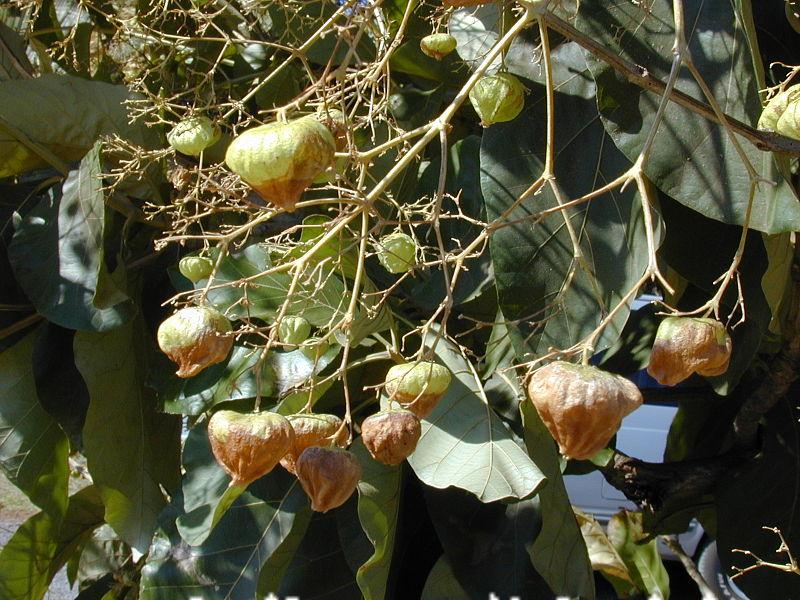
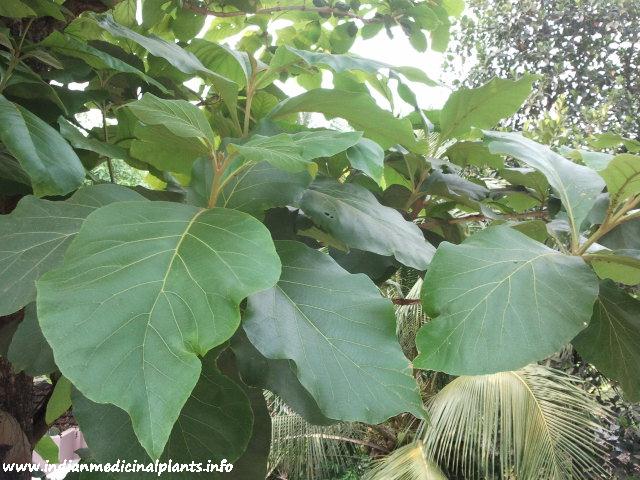
Teak is a large, deciduous tree up to 40 m (131 ft) tall with gray to grayish brown branches. Leaves are ovate-elliptic to ovate, 15–45 cm (5.9–17.7 in) long by 8–23 cm (3.1–9.1 in) wide, and are held on robust petioles that are 2–4 cm (0.8–1.6 in) long. Leaf margins are entire.
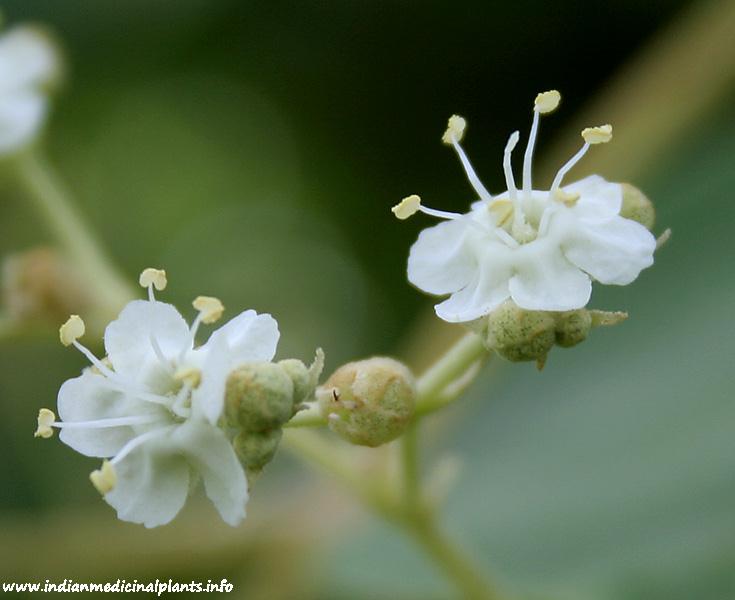
Fragrant white flowers are borne on 25–40 cm (10–16 in) long by 30 cm (12 in) wide panicles from June to August. The corolla tube is 2.5–3 mm long with 2 mm wide obtuse lobes. Tectona grandis sets fruit from September to December; fruits are globose and 1.2-1.8 cm in diameter. Flowers are weakly protandrous in that the anthers precede the stigma in maturity and pollen is shed within a few hours of the flower opening.[9] The flowers are primarily entomophilous (insect-pollinated), but can occasionally be anemophilous (wind-pollinated)
uses:
expectorant, anti-inflammatory, antibilious, anthelmintic
Chemicals
naphthalene , triterpenic, hemi-terpenic compounds, tectoleafquinone, tannin, lauric, myristic, palmitic, stearic, oleic, linolenic, arachidic acids
Descriptions on Ayurveda books / Nighandu: